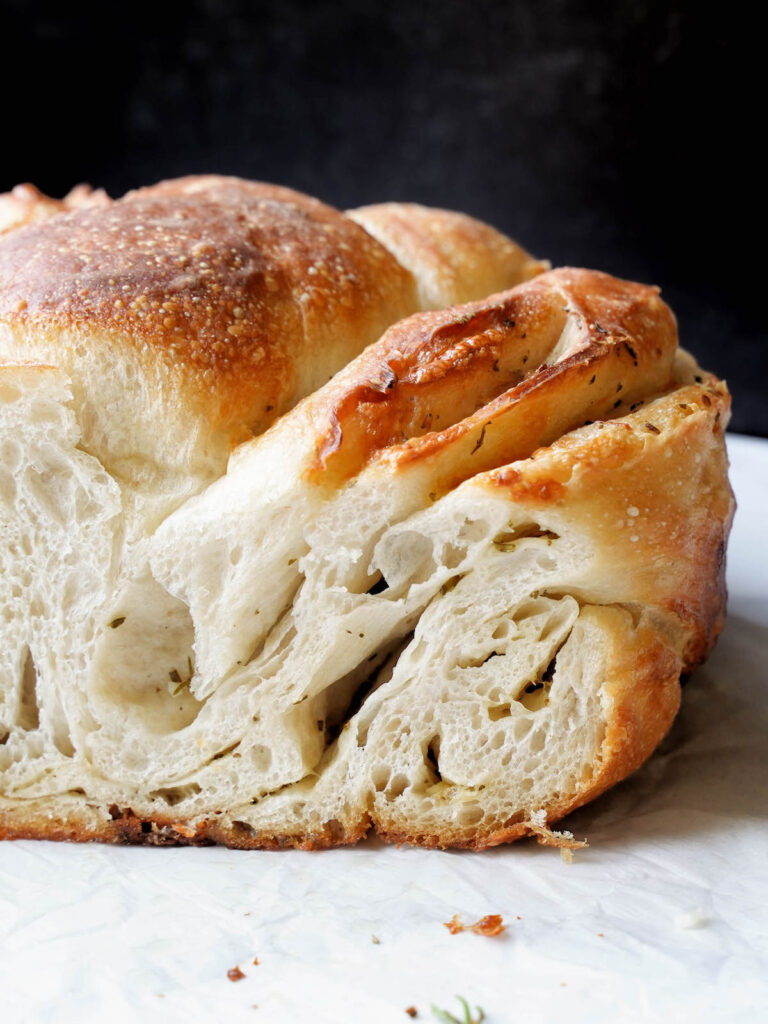
This no-knead garlic & herb sourdough bread is one of those recipes that’s extra delicious without being complicated. Instead of simply folding garlic and herbs into the dough, this loaf is rolled up with a garlic-herb-cheese butter, creating distinct layers of flavor.
The result is a loaf with a bubbly, golden crust, a tender, chewy crumb, and ribbons of buttery garlic and herbs spiraled throughout. It’s perfect for dunking into soup, tearing apart warm, or serving alongside dinner.
Table of Contents
- What makes this bread special
- Recipe overview
- Tools & equipment needed
- Quick timeline overview for garlic herb sourdough
- Bulk fermentation temperature guidance
- How to get the best garlic & herb flavor
- How to make garlic herb sourdough
- Pro baking tips for sourdough
- Garlic & herb sourdough troubleshooting
- Variations
- Storage & reheating
- Serving suggestions
- More swirled breads
- Garlic & Herb Sourdough Recipe
What makes this bread special
- No kneading required. This dough relies on time and simple stretch-and-folds instead of kneading.
- Rolled, not mixed. A garlicky herb butter is rolled into the dough for bold, layered flavor that makes it feel like savory sourdough meets garlic bread.
- Flavor-forward. Melty cheese, savory garlic, and fresh herbs add richness and savoriness throughout the loaf.
- Flexible schedule. I’ve included a rough baker’s timeline with options so you can make this bread work for your schedule.
- Visually stunning. The spiral twist creates a beautiful, unique look.
This bread is lightly cheesy. This isn’t a full-on cheese bread, but rather an herby sourdough with little cheesy pockets and crusty bits peppered throughout the crust. If you’re looking for a super cheesy bread recipe, check out my Cheesy Sourdough.
Recipe overview
Prep: ~20 minutes active
Bulk Ferment: ~4+ hours (room temp) + overnight in refrigerator
Final Proof: 2–4 hours
Bake: 45–55 minutes
Total: 12–14 hr (mostly hands-off)
🥖 Yield: 1 loaf/boule
💪 Skill level: Intermediate
😋 Flavor profile: Savory, buttery, garlicky, herby. Pairs well with: Soups, stews, pasta, roasted vegetables, pepper jelly, soft cheeses.
Tools & equipment needed
You really don’t need anything special to make this delicious garlic herb sourdough bread. There are certainly a few pieces of equipment that will make this easier, but all you really need is a large mixing bowl and a baking sheet.
I recommend you have these tools:
- 5-6 quart Dutch oven with lid (optional but recommended)
- Mixing bowls
- Rolling pin (not necessary, but helpful)
- Parchment paper
- Kitchen towel and/or plastic wrap
- Kitchen thermometer (optional but recommended)
Quick timeline overview for garlic herb sourdough
Day 1
- Mix dough
- Rest + stretch & folds
- Bulk ferment (until dough increases ~30–50%)
- Refrigerate dough overnight
Day 2
- Cool completely before slicing
- Roll out dough into a rectangle
- Spread with garlic-herb-cheese butter
- Shape into spiral twist
- Final proof (2–4 hours)
- Bake in preheated Dutch oven
Bulk fermentation temperature guidance
- Ideal dough temp: 74–78°F (23–26°C)
- In cool kitchens, expect longer bulk fermentation time
- In warm kitchens, dough may be ready sooner. Watch the dough, not the clock, looking for visual signals that your dough is ready.
Remember that sourdough doesn’t double during proofing time like yeast breads do. Aim for a noticeable increase in volume, visible bubbles, and a dough that feels airy and jiggly. You’re looking for about a 30–50% rise, not a full doubling.
How to get the best garlic & herb flavor
What makes this sourdough recipe so delicious is that the garlic and herbs are isolated in a butter layer, not mixed into the dough. Follow these tips for the best result:
- Finely mince garlic so it spreads evenly and doesn’t tear the dough
- Chop herbs finely to distribute evenly and avoid pockets
- Use very soft butter (it should spread easily without tearing)
- Leave a border around the edges so the filling doesn’t squeeze out during shaping
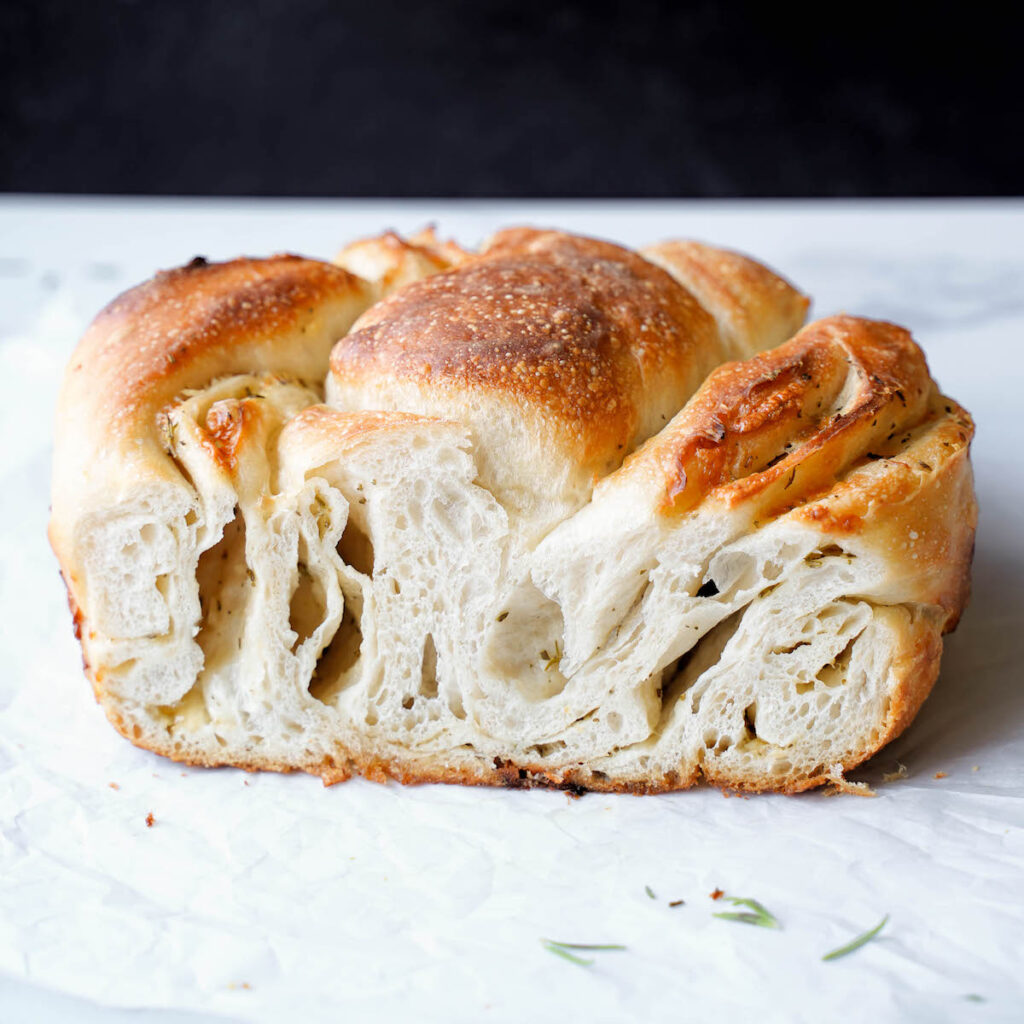
The herb butter melts into the crumb during baking, leaving behind a trail of garlic, herbs, and melted cheese. This infuses the loaf with flavor while giving it a spiraled texture, similar to a cinnamon roll.
How to make garlic herb sourdough
Find the full ingredients list and detailed recipe instructions in the recipe card at the bottom of this post. Here’s a quick step-by-step overview of how to make this herb & garlic sourdough:
Day 1: Mix dough, stretch, bulk ferment
- Mix the dough: Combine starter, water, flour, and salt until a shaggy dough forms. Cover and rest for 45–60 minutes.
- Stretch & fold: Over the next 2–4 hours, perform about 4 sets of stretch-and-folds, spaced about 30–45 minutes apart, until the dough becomes smooth and elastic.
- Cold rest: Cover the dough and refrigerate overnight to develop flavor and make shaping easier.
Day 2: Shape & bake
- Make the garlic herb butter: Mix softened butter with garlic & herbs.
- Roll & shape:
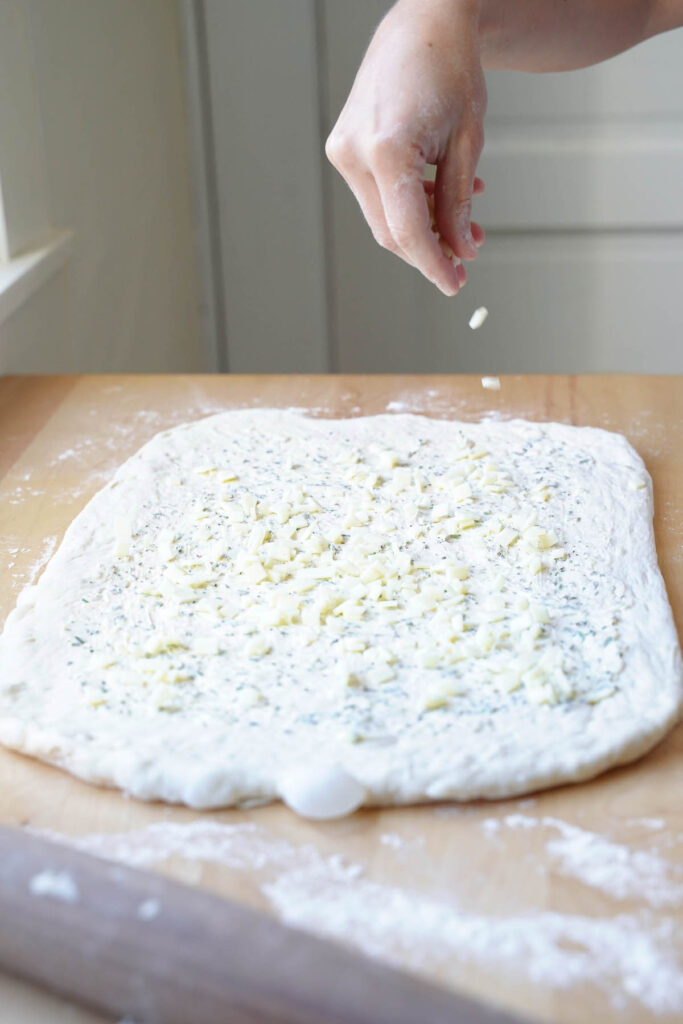
Roll dough into a rectangle. Spread the soft garlic herb butter all over it, then sprinkle it with cheese.
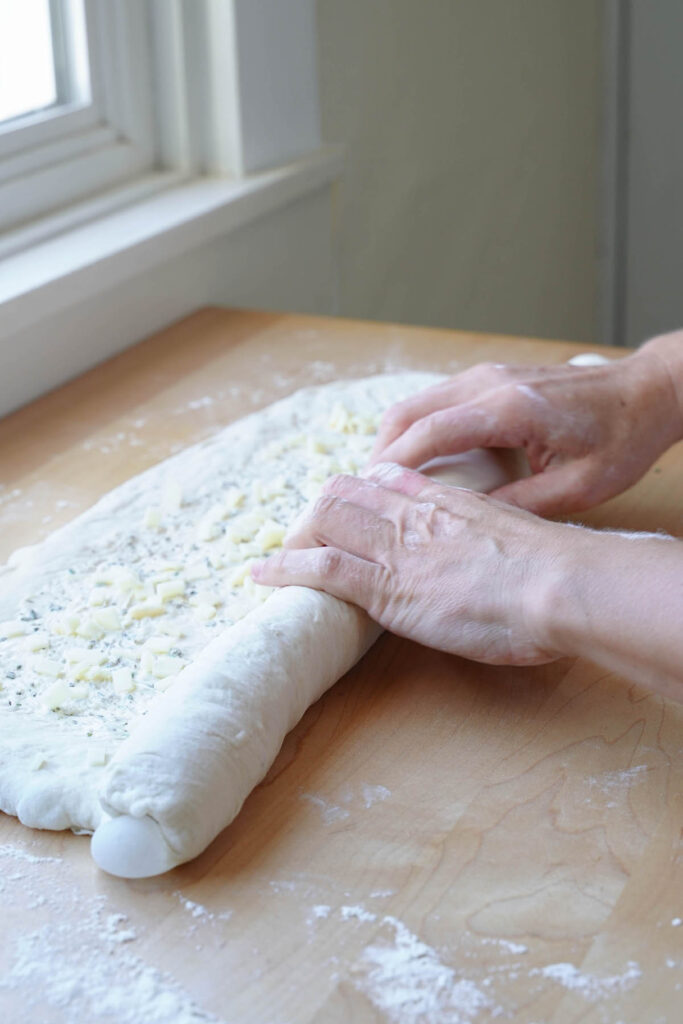
Roll the whole thing up into a tight log (just like making cinnamon rolls).
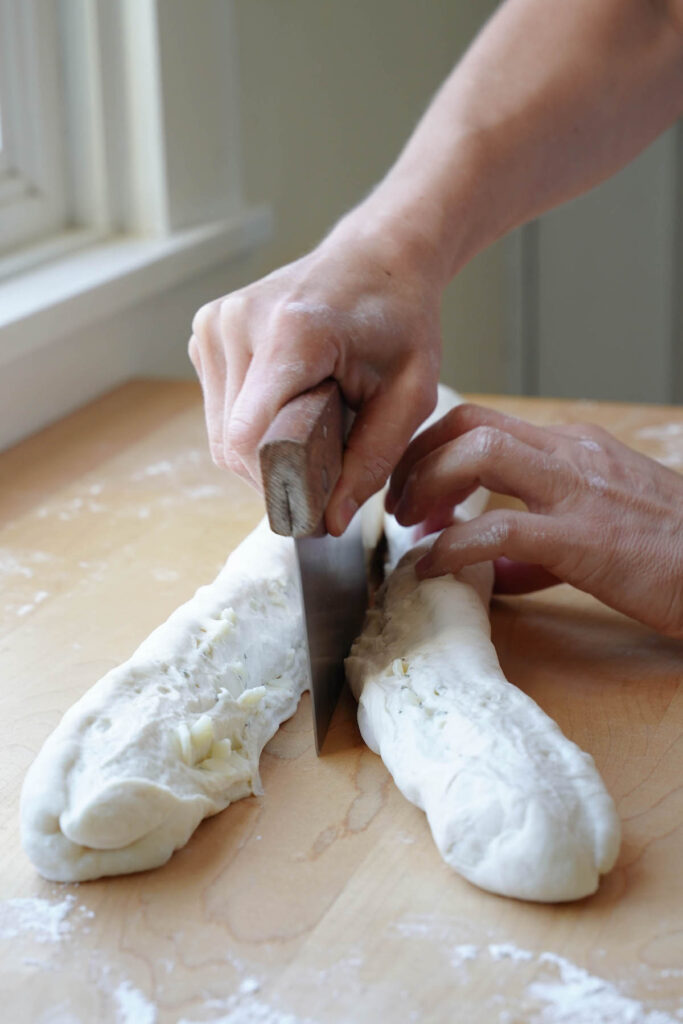
Slice the roll in half lengthwise almost to the top, leaving about an inch of dough connected at the top so the roll is still one piece.
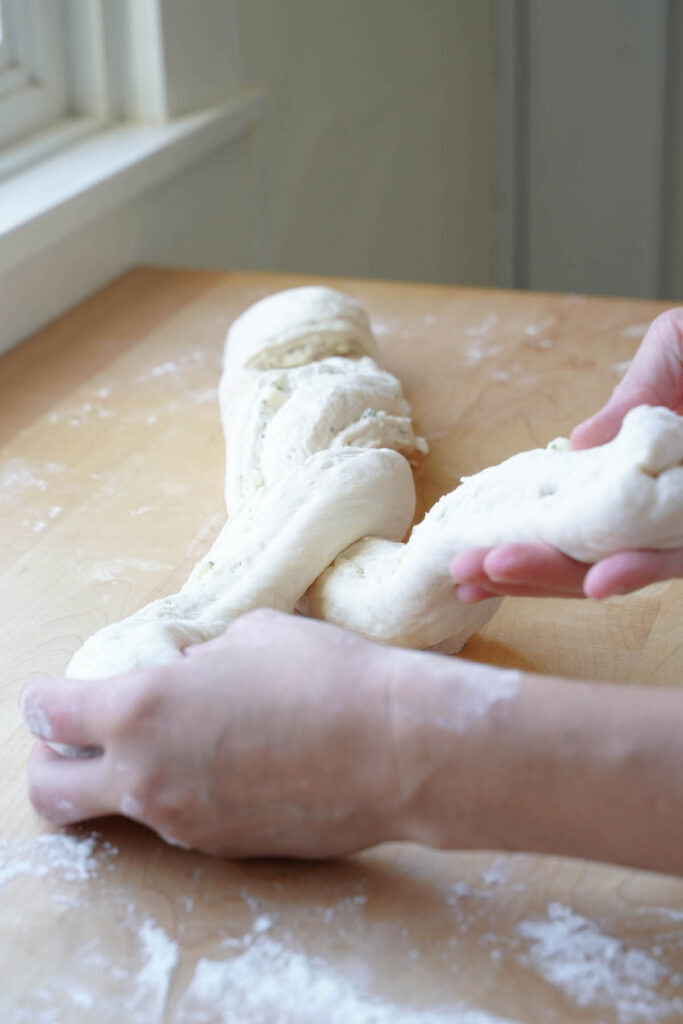
Gently twist the two sides of the roll around each other to make a simple braid, tucking the end under.
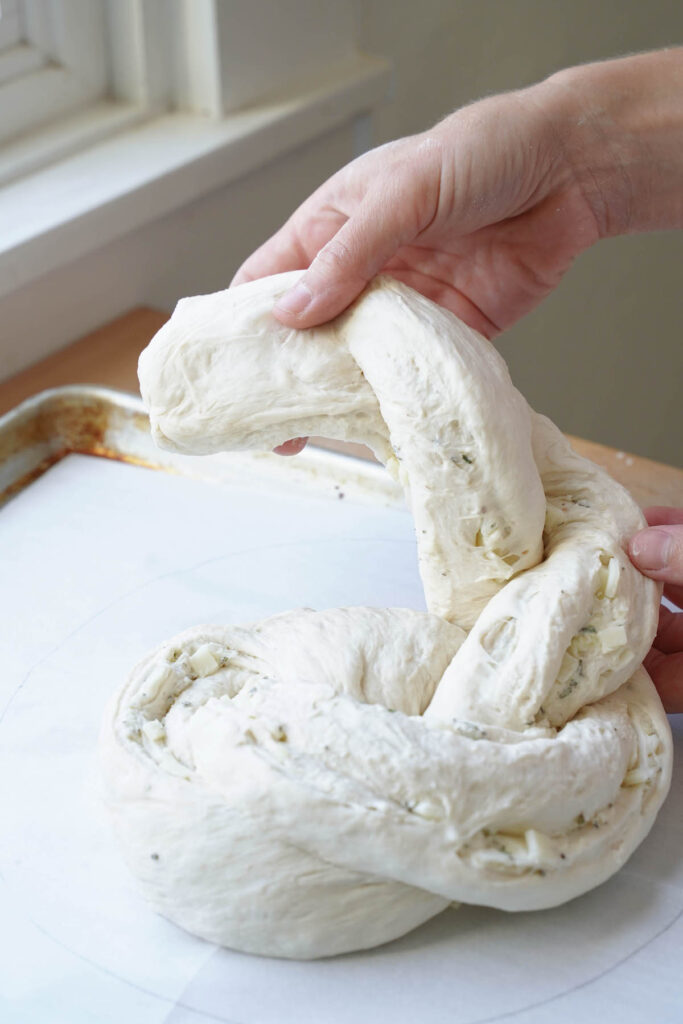
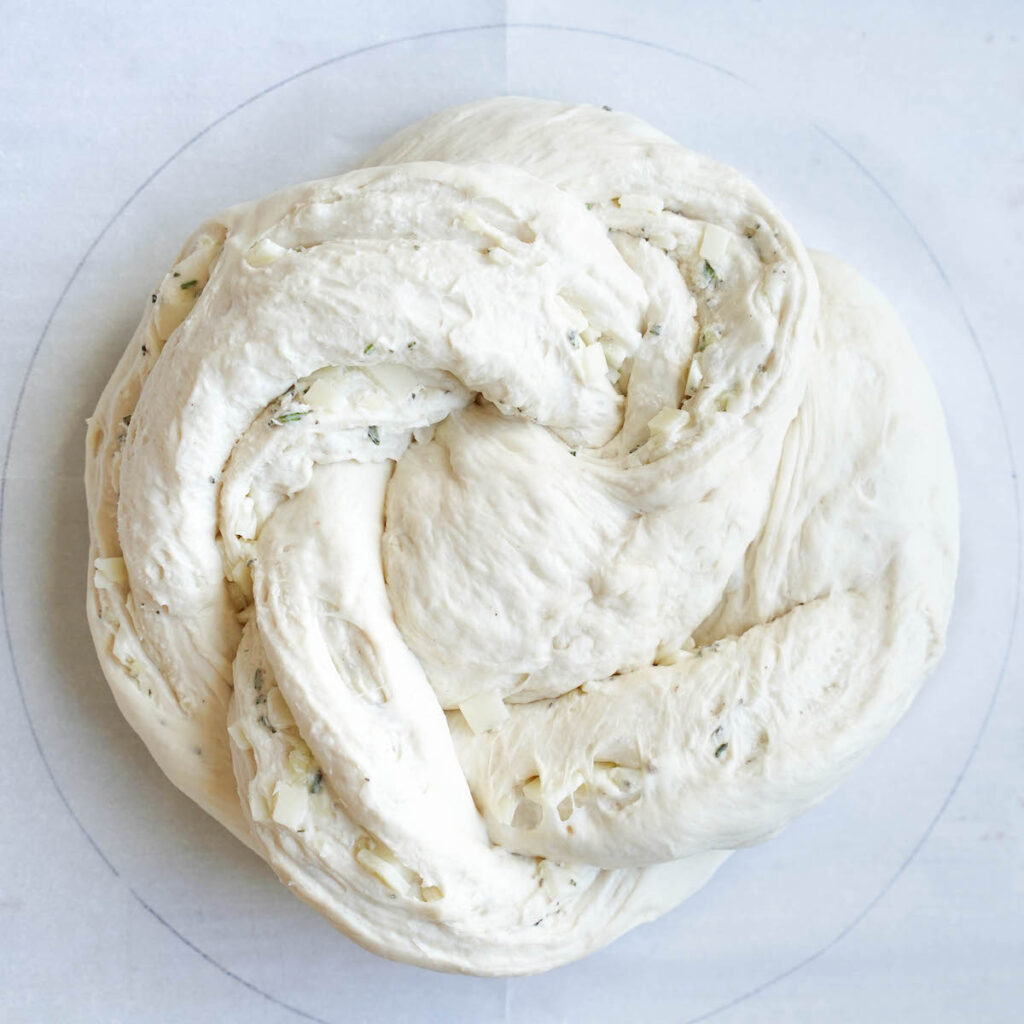
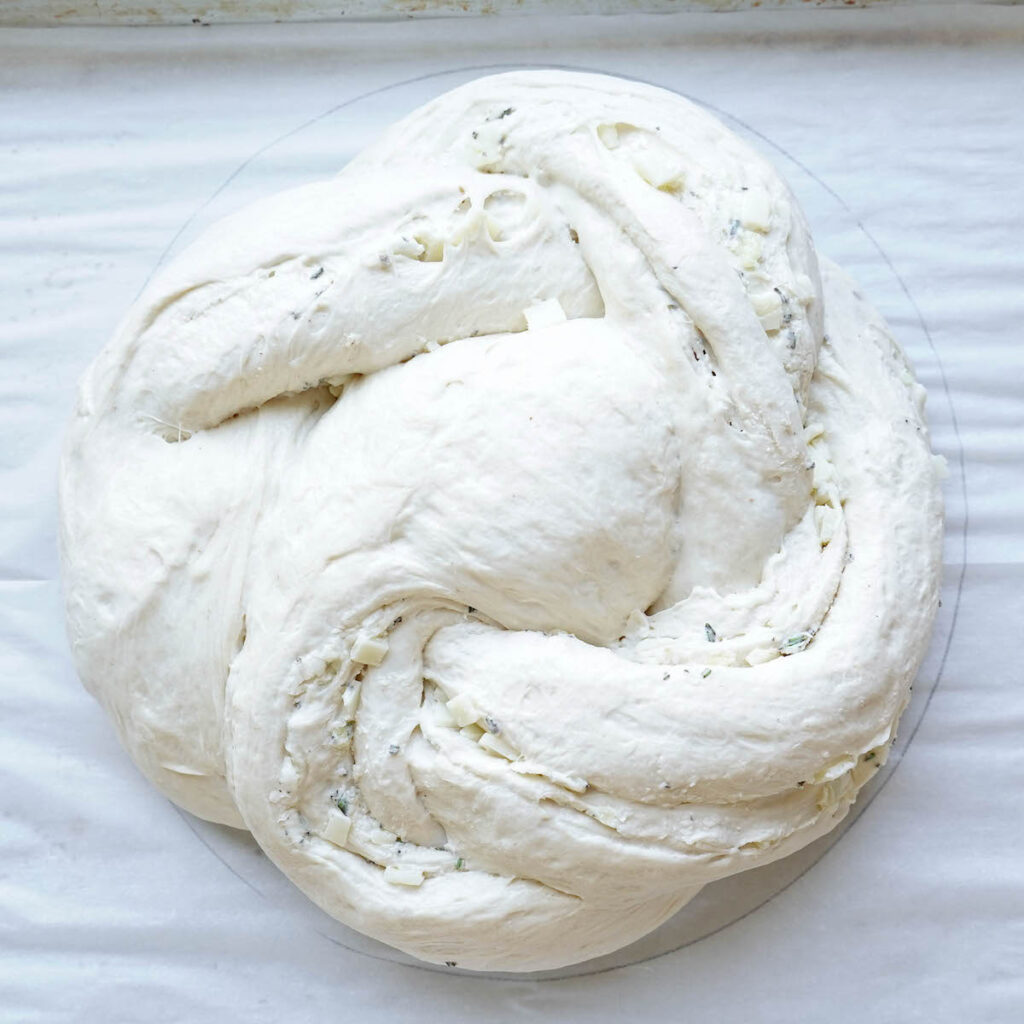
Place one end of the twist down on a baking sheet lined with parchment. Swirl the twist around itself, forming a spiral. Tuck end under.
- Final proof: Cover with a damp kitchen towel and proof at room temperature until puffy and slightly jiggly (2–4 hours).
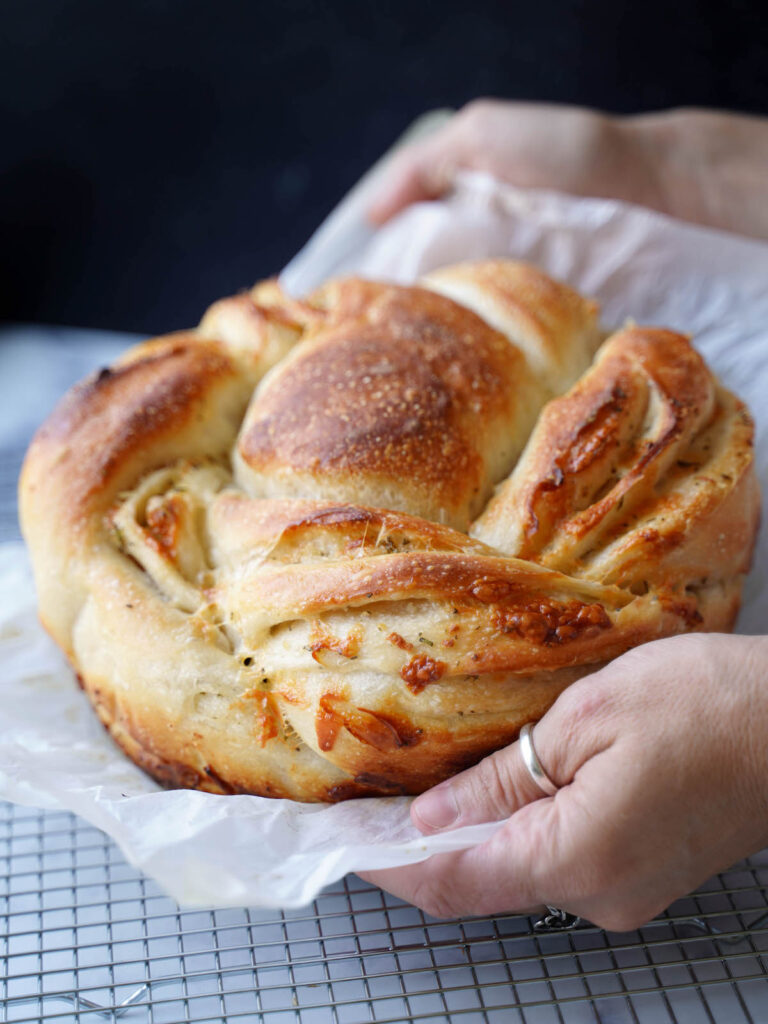
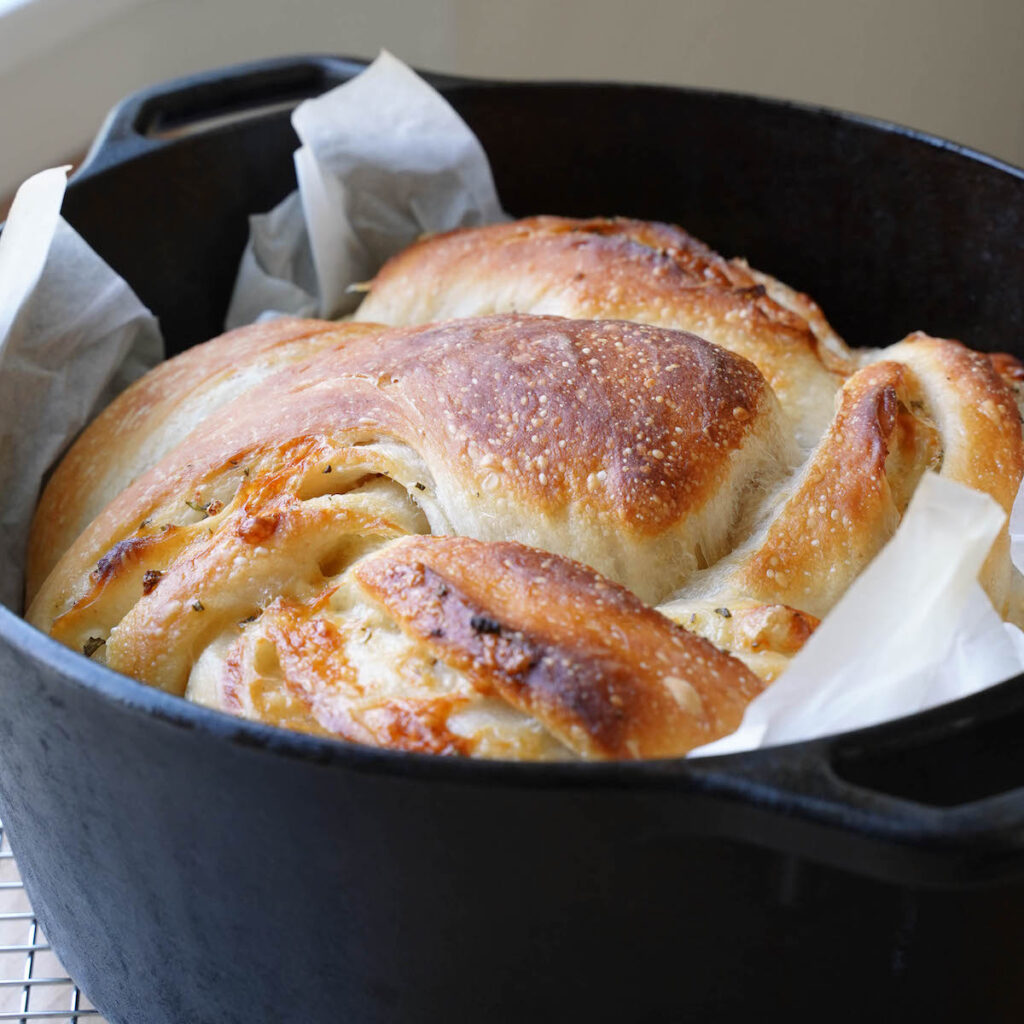
- Bake: Bake in a preheated Dutch oven at 450° F (25 mins covered, 20-25 mins uncovered) until golden and cooked through. Cool completely before slicing.
Pro baking tips for sourdough
Use an active, lively sourdough starter. It should be fed and doubled in size before you mix it into the dough. If you’re new to working with sourdough, check out these tips for taking care of your starter.
Use very soft butter, not melted. The butter should spread easily without tearing the dough. Melted butter will leak out and blur the spiral (and make a greasy mess of things).
Leave a border when spreading the filling on the dough. Keep a 1-2 inch border around the edges so the garlic herb butter stays inside the loaf during shaping and baking.
Roll tightly. A firm roll helps keep the swirl intact.
Chill the dough overnight before shaping. Cold dough is easier to roll, slice, and twist (and it helps the layers stay defined). A long, cold fermentation also contributes more flavor!
Watch the dough, not the clock. During bulk fermentation and the final proof, look for about a 30–50% rise, visible bubbles, and a jiggly dough that feels airy and elastic. Time will vary based on how active your starter is and how warm your house is.
No need to score this loaf! Since your spiral is exposed, scoring isn’t necessary for this sourdough recipe.
Let it cool completely before slicing. Sourdough needs time to cool and set its structure. Cutting too early can compress the crumb and make the final texture of the bread feel gummy and dense.
Garlic & herb sourdough troubleshooting
Sourdough doesn’t need to fully double like yeast breads do. Look for a 30–50% rise, visible bubbles, and a jiggly dough.
Underbaking, slicing too soon, or under-fermentation are common causes. Make sure to bake your sourdough until the internal temperature reaches 205–215° F and let the loaf cool fully (about an hour) before slicing.
Yes! You can also bake the sourdough on a preheated baking stone or sheet pan. Cover the loaf with a large inverted oven-proof bowl for the first 25 minutes, then remove the bowl and finish baking.
If the crust is darkening too fast, tent the loaf loosely with foil during the uncovered portion of baking. Ovens vary, and loaves with butter and cheese can brown faster.
Variations
Roasted garlic version: For a sweeter, deeper flavor, roast whole cloves of garlic first. Then dice them up or mash them and add them to the herb butter. You could also try my Roasted Garlic Parmesan Sourdough if you’re looking for tons of garlic flavor.
Cheese variations: Just about any hard cheese will do! Try parmesan, asiago, gruyère, gouda, sharp cheddar, or a mix of your favorite cheeses. If you’re looking for a seriously cheesy bread recipe, try my Cheesy Sourdough or Jalapeño Cheddar Sourdough.
Herb variations: I used a mixture of fresh thyme and rosemary for this bread, but you can use whatever herbs you like. Fresh oregano, marjoram, or chives would also work beautifully. You could even use a dried herb mix, like Herbs de Provence – just remember that dried herbs are more concentrated than fresh.
If you’re into herby sourdough, you will absolutely love my Rosemary Sea Salt Sourdough – it’s my most popular recipe for a reason!
Alternate shapes. Feel free to shape your dough differently if you don’t want to make the spiral shape. Here are a few ideas that would also work:
- Classic sandwich loaf shape with a spiral inside
- Braided loaf
- Pull-apart loaf (spread herb butter & cheese in between rectangles of dough and stack them in a loaf pan)
Storage & reheating
Store sourdough bread at room temperature, loosely wrapped for 4-5 days.
To freeze, slice the loaf, wrap slices tightly, and freeze for up to 3 months.
To reheat: Toast slices using a toaster, broiler, and hot oven. Or warm the whole loaf at 350° F for 10–15 minutes to re-crisp the crust.
Serving suggestions
Enjoy this delicious savory bread on its own or alongside your favorite soup. My favorite way to eat it is to dunk thick slices of it into steaming bowls of tomato soup. Magic!
Here are some other ways to enjoy this versatile sourdough:
- Warm with (more) butter
- Dipped into olive oil and/or balsamic
- Served with pasta or roasted vegetables
- Used for savory toast or grilled cheese
- Alongside soups (especially good with tomato or chicken & rice soup)
- Made into sandwiches
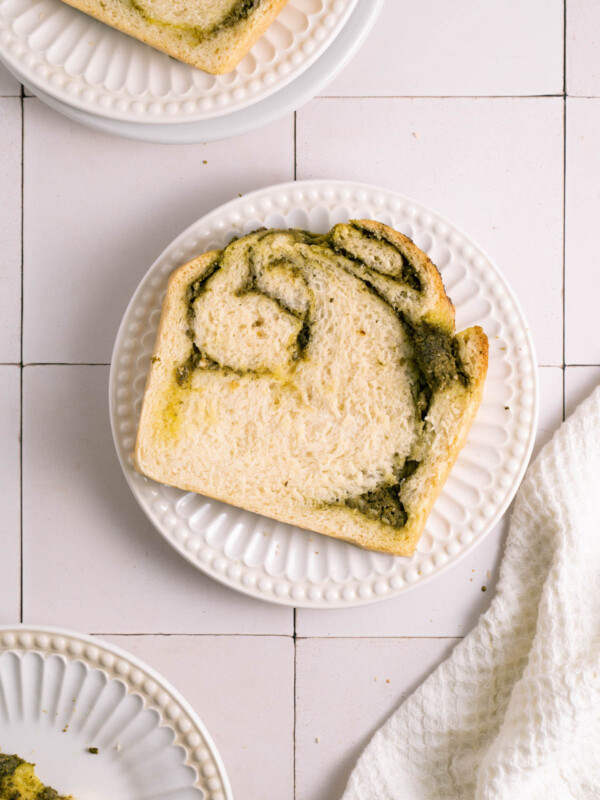
More swirled breads

If you make this Garlic & Herb Sourdough Bread, please leave a star rating and comment below. I’d love to hear what you think or answer any questions. Thank you!
Garlic & Herb Sourdough
Equipment
- Dutch oven optional but recommended
- Rolling pin
- Bench scraper or sharp knife
Ingredients
Sourdough
- 150 grams active, bubbly sourdough starter
- 330 grams warm water
- 9 grams fine sea salt
- 500 grams bread flour
Garlic & Herb Butter
- 6 tablespoons salted butter, soft, room temperature
- 3 cloves garlic, minced
- 1 tablespoon fresh herbs, (I used thyme & rosemary)
- 4 slices provolone, chopped into small pieces, or 1/2 cup grated parmesan
Instructions
- Mix the dough. Combine 150g sourdough starter, 330g water and 9g salt. Whisk to combine. Add 500g bread flour; stir into starter mixture. Finish mixing by hand, folding mixture until it forms a rough ball. Cover with plastic wrap or a damp towel and let rest 45-60 minutes.
- Complete stretch-and-folds & bulk fermentation. Over the next few hours, give the dough a stretch & fold about every 30-45 minutes. Plan to stretch & fold 4 times total. To stretch the dough, pull dough from one side and give it a long stretch, folding the dough back to the middle. Turn the bowl a quarter turn, stretch again and fold back to the middle. Repeat on all four sides, cover dough back up, and allow to rest again until the next stretch & fold.
- Once you've completed all the stretches, allow the dough to rest at room temperature until puffy, bubbly, and jiggly, 2-4 hours (this is the bulk fermentation stage). Then put the dough in the refrigerator to rest overnight.
The next day:
- Make the garlic herb butter. Combine 6 Tbsp soft butter, 3 cloves minced garlic, and 1 Tbsp herbs together in a small bowl. Have your cheese ready in a separate bowl.
- Shape the dough. Roll dough out on a lightly floured surface into a rectangle that's roughly 12 x 18 inches. Spread with the garlic herb butter, leaving a 1-2 inch border around all the edges. Sprinkle with cheese.
- Starting on one of the long sides, roll the dough up just like you would a cinnamon roll. Start from the center and work out to the edges as you go, making sure to keep it fairly tight. Once fully rolled, pinch the seams together.
- Using a sharp chef's knife or a bench scraper, slice the roll in half lengthwise almost to the top, exposing the interior swirl. Leave about an inch at the top so the roll is still one piece. Gently twist the two sides of the roll around each other to make a simple braid, tucking the end under.
- Place one end of the twist down on a baking sheet lined with parchment paper. Swirl the twist around itself, making a spiral shape, and tuck the end under.
- Proof. Cover with a damp kitchen towel and allow to rest 2-4 hours. Dough should rise by 30-50% and become puffy, jiggly, and full of bubbles.
- Bake. Place your Dutch oven and lid in the oven and preheat oven to 450° F. When oven comes to temperature, carefully lift your parchment paper with your sourdough twist and lower it into the hot Dutch oven. Put the lid back on and bake, covered, for 25 minutes.
- Remove lid from Dutch oven and continue to bake uncovered for another 20-25 minutes, or until bread is golden and cooked through. The best way to tell if bread is done is to take its internal temperature with a digital thermometer – it should be 205 – 215° F.
- Cool. Remove from oven and gently lift bread out of Dutch oven, using the parchment paper as handles. Allow to cool completely before slicing.
Did you try this recipe?
Be sure to leave a comment below!