
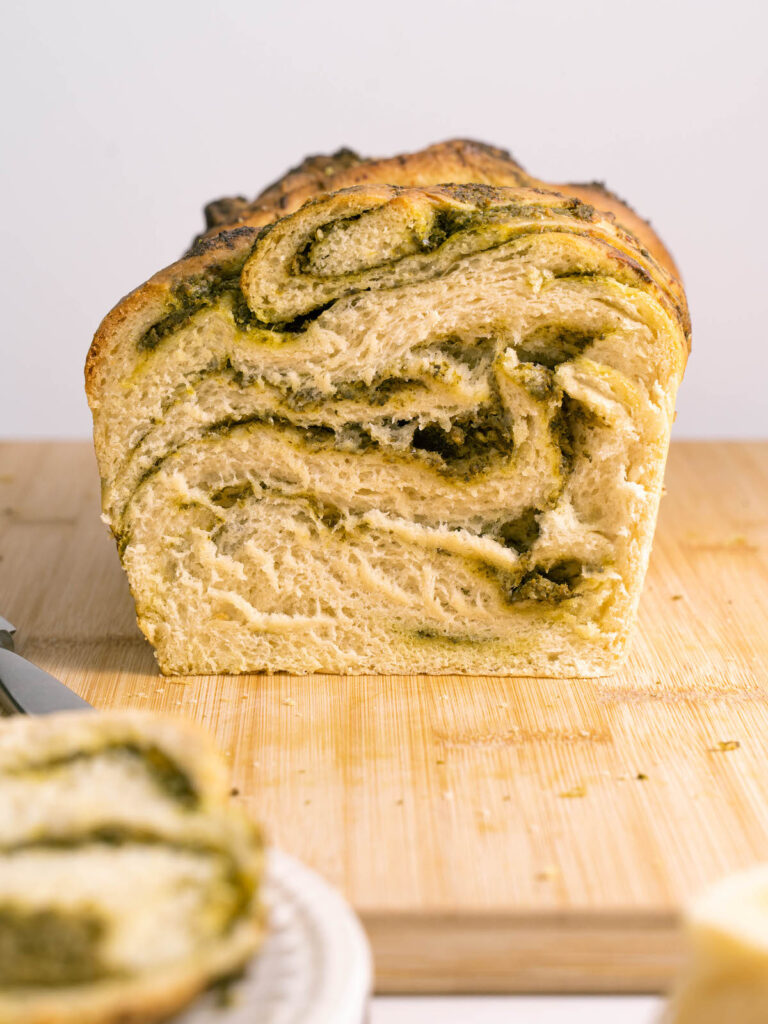
I am SO excited to share this very special Nettle Pesto Bread with you! Imagine soft, buttery dough swirled with a savory, bright green pesto made from stinging nettles.
This is probably my favorite variety of pesto to date, made with one of my favorite foraged ingredients. Plus, the bread is based on a recipe for sandwich bread that I used to make for a James Beard award-winning restaurant I worked at years ago. This recipe is good, really really good.
While the pesto and the bread themselves are quite easy to make, this bread does require a romp through the woods to harvest plants that might sting you. So, it’s definitely for the adventurous! It’s so insanely delicious and unique that I swear it’s worth the risk.
Nettle pesto bread highlights
- Extra-special pesto made with freshly foraged stinging nettle leaves
- Buttery enriched bread with a soft and chewy texture
- Impressive looking spiral that’s surprisingly easy to achieve
- Quick & easy yeast bread recipe thanks to a simplified technique
Recipe overview
⏱️ Prep: ~20 min • Proof: ~3 hrs • Bake: ~45 min • Total: ~4 hrs
🍴 Yield: 1 standard loaf
💪 Skill level: Beginner (except for foraging the nettles!)
😋 Flavor profile: Buttery, savory, bright, cheesy. Pairs well with: Salted butter, cream cheese, soups, salads, pasta, eggs, breakfast.
Foraging & cooking nettles
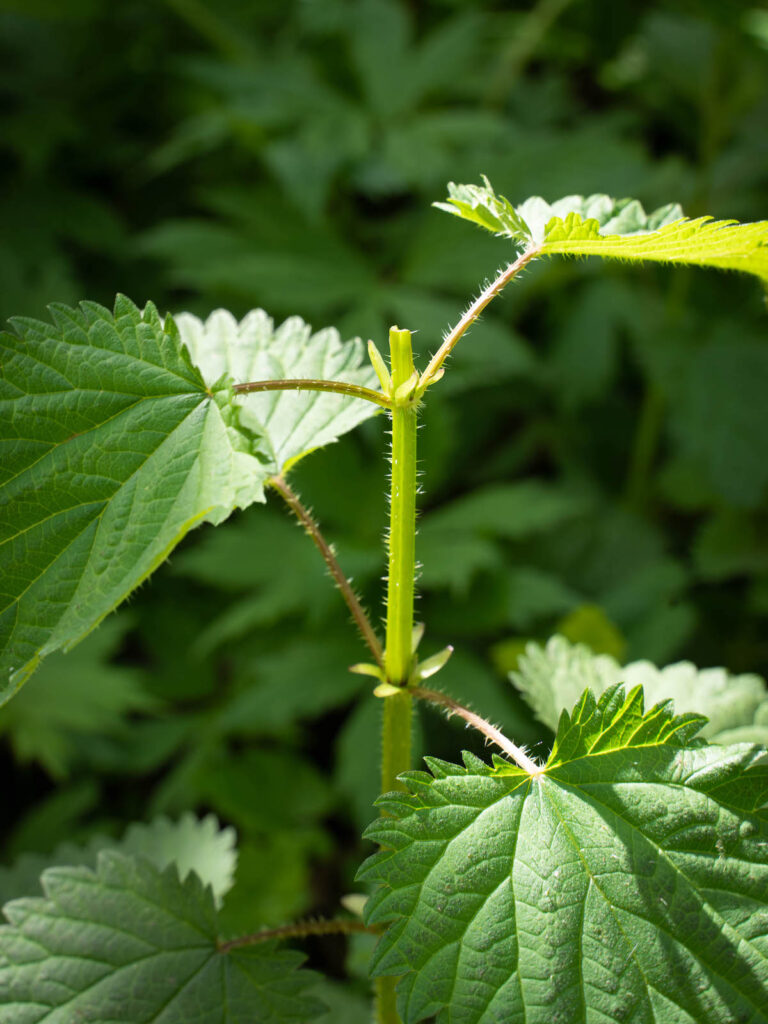
If you’re into wildcrafting and you live in the Pacific Northwest, you’ve probably harvested nettles before. We’re blessed to have an abundance of them here. They’re super tasty and they’re full of vitamins and minerals, too.
Here’s a few quick tips to keep in mind when harvesting nettles:
- Wear gloves. These plants sting! Garden gloves are ok, but sturdier work gloves are even better. Nettles can sting through breathable gloves.
- Harvest before the plants flower, in early spring. This is when the leaves are the most tender. Once they have just a few sets of leaves is a perfect harvesting window, as the plants are big enough to handle their tops being snipped, but young enough that their stems aren’t tough.
- Take just the tops. Use your (gloved) fingers to pinch off the top few sets of leaves, or use scissors to chop them.
- Bring a good bag or basket. You’ll want a large bag or harvest basket with you to store leaves as you go. One large plastic produce bag full of leaves and tender stems will be more than enough to make this recipe.
- Only take what you’ll use. This is a principle of responsible foraging!
👉 Learn more: Read my complete guide to foraging & cooking nettles
Blanching the nettles
Once your hike is over, it’s time to prep the nettles. Cooking nettles is essential to take their sting away. Some people say you can make pesto with raw nettles, as the pulverizing action also deactivates the sting. However, I worry that the formic acid and histamine that cause the stinging sensation are still viable if they’re uncooked, so I don’t love the idea of making a raw nettle pesto. Use your best judgment here and do what makes you feel comfortable!
I used tongs to roughly measure my stinging nettles before cooking them and found that six cups of loosely packed nettles turned into about one cup of cooked greens, the perfect amount for this pesto.
To blanch the nettles:
- Give them a light rinse in a colander. Use tongs!
- Bring a big pot of salted water to a boil. Prepare an ice bath in a large bowl.
- Drop the nettles into the boiling water using tongs, gently pushing them under the water to submerge them. Turn the heat down and simmer 2-3 minutes, depending on how tender your greens are.
- Remove the nettles using the tongs or a slotted spoon and plunge them immediately into the prepared ice bath.
- Once cool, drain them from the cold water. They’re now de-stung and ready to use!
🌿 Have extra nettles? Make these delicious Savory Nettle Ricotta Rolls!
How to make nettle pesto bread
For full recipe instructions, scroll down to the recipe card at the bottom of this post. Here’s a quick step-by-step overview on how to make this recipe:
- Make pesto. Pulse walnuts a few times to break them into smaller pieces, then add blanched nettles, parmesan, garlic, lemon, and salt & pepper. Blend until everything is well combined and nettles are well broken down, then drizzle olive oil in gradually with the mixer running.
- Make the bread. Blend the wet ingredients together, then add the dry ingredients and knead until the dough is smooth and shiny, about 10 minutes.
- First rise: Place dough in an oiled bowl, cover with plastic wrap or a kitchen towel, and let rest until doubled in size, 1 – 1 ½ hours.
- Roll: Roll dough into a rough rectangle, about 12 x 16 inches.
- Add fillings: Spoon nettle pesto onto dough and use the back of a spoon to spread it evenly over the dough, leaving some space around the edges. Sprinkle parmesan evenly on top.
- Roll into a log: Roll dough up into a tight log and pinch the seams together, then flip the log over so the seam side is down.
- Shape: Cut the dough log in half vertically, keeping the top inch or two still intact. Twist the two sides over each other, creating a simple braid. Tuck the end under.
- Second rise: Place bread carefully into a buttered 9×5-inch loaf pan. Cover and let rest until doubled in size, 1-2 hours.
- Bake: Preheat the oven to 350° F. Bake until the bread is golden brown on top and fully baked through. Cool completely before slicing.
Step-by-step shaping the swirl:
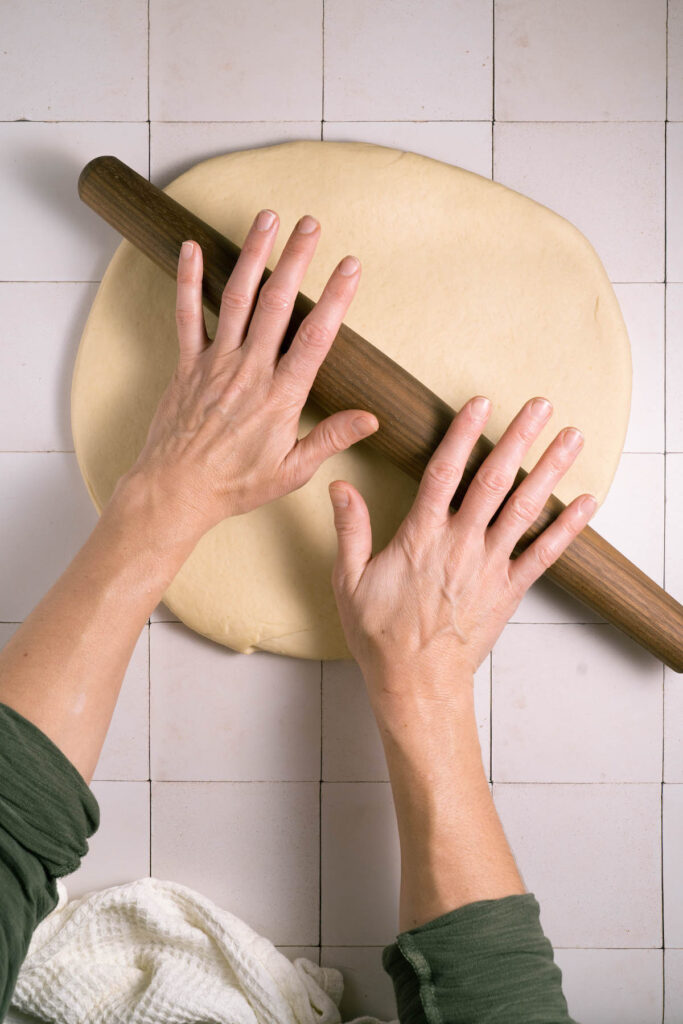
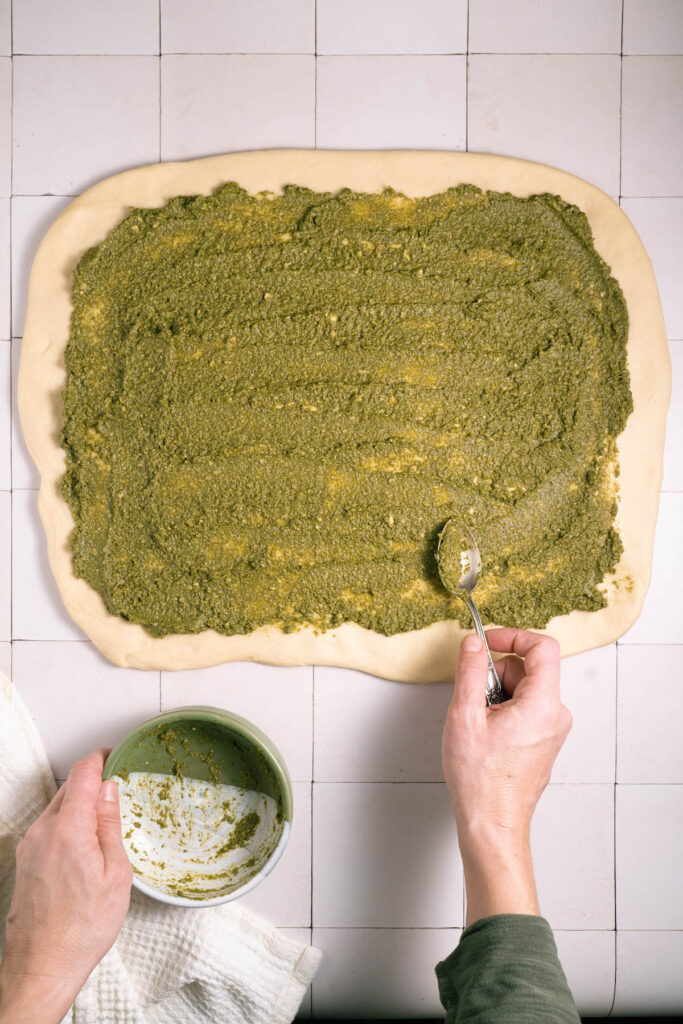
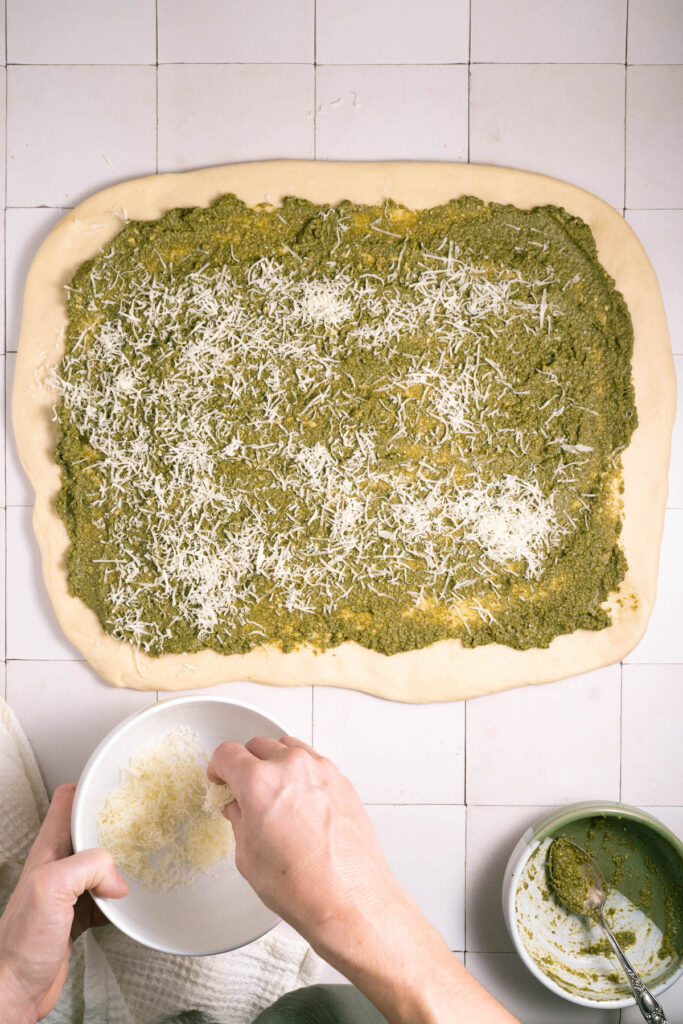
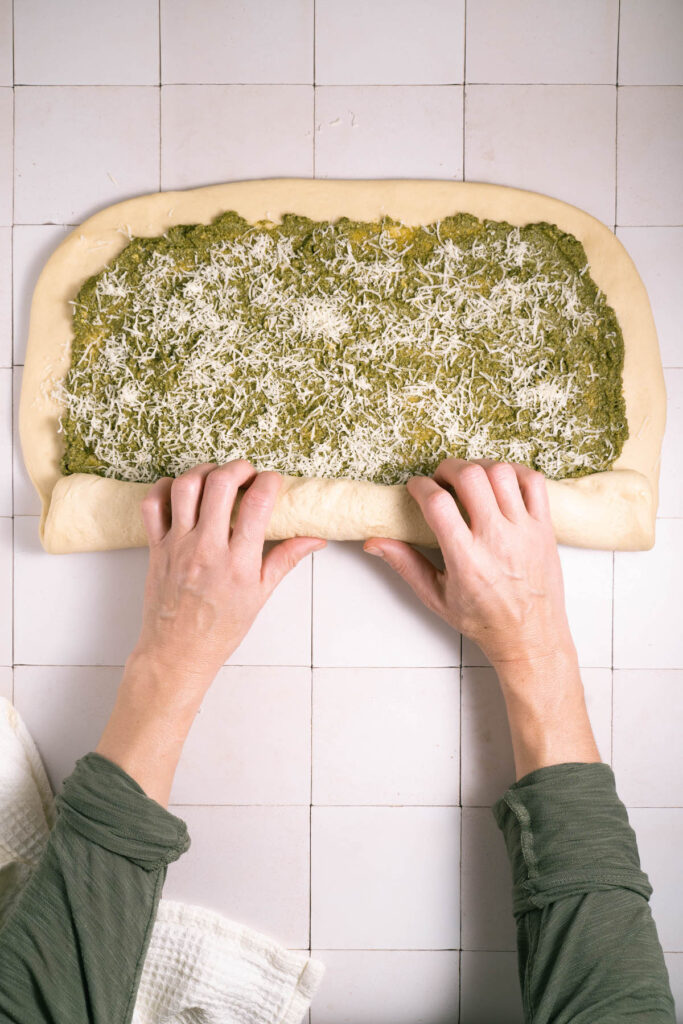
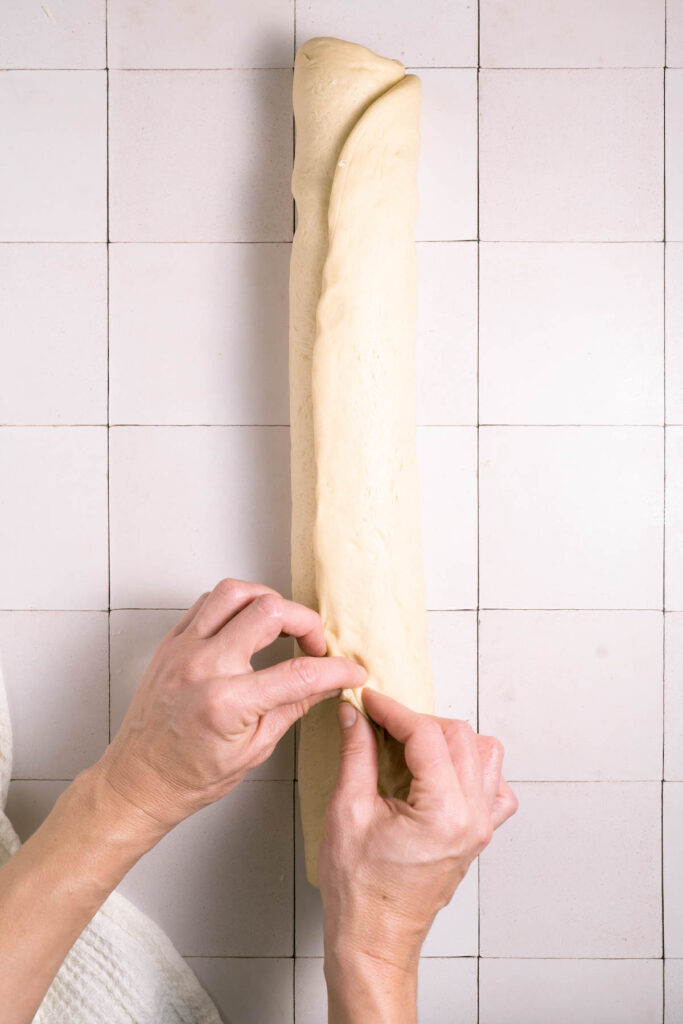
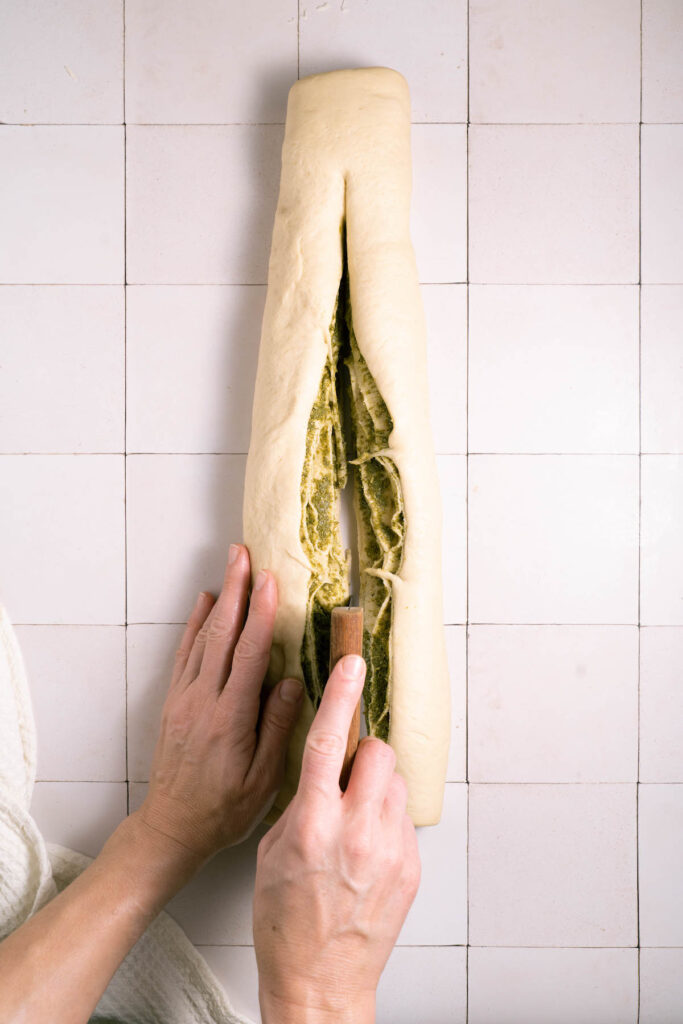
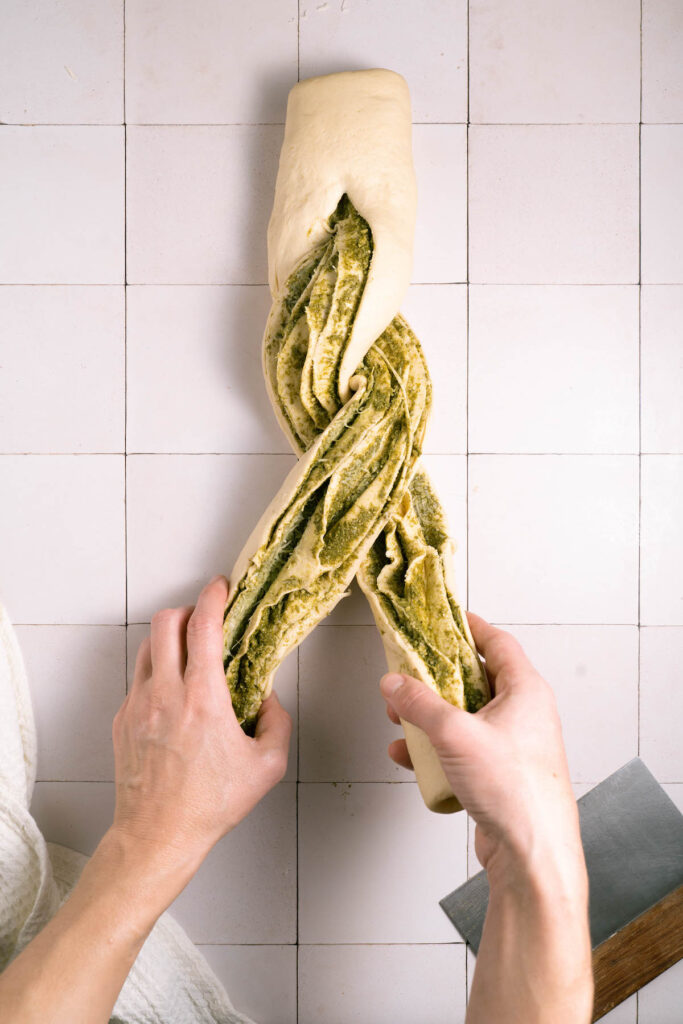
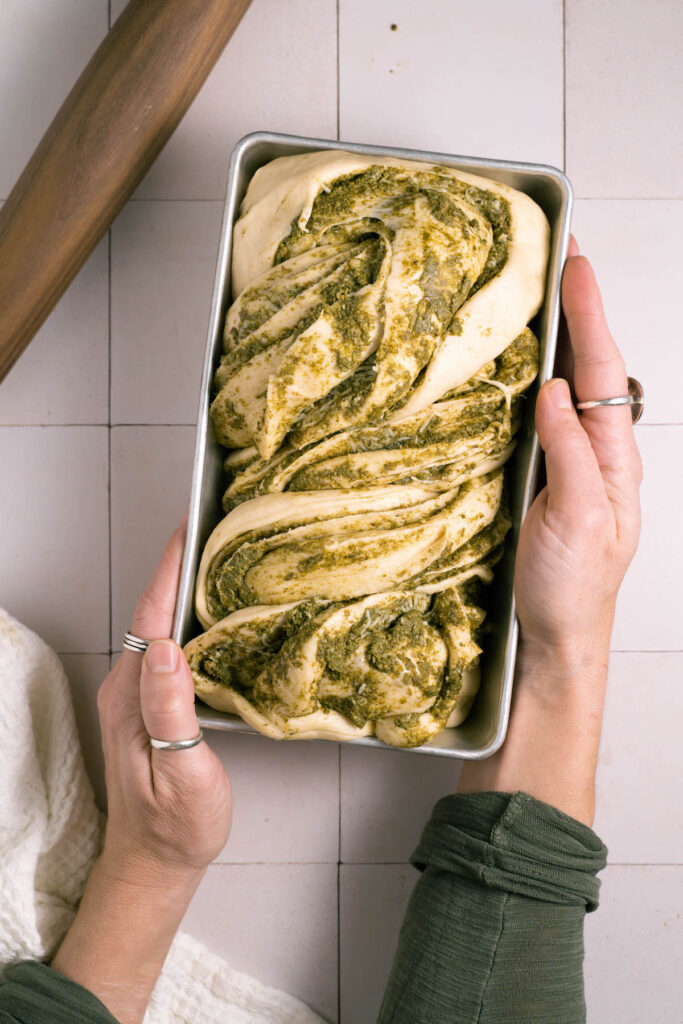
This simple technique for twisting filled bread creates a beautiful spiral pattern. It’s the same method I use for my Cinnamon Swirl Bread and even this Garlic Herb Sourdough.
Pro tips for perfect nettle bread
Know how to safely handle nettles. If in doubt, read my tips above or check out my full guide to foraging and cooking nettles.
Warm wet ingredients to the proper temperature. You want your mixture of milk, water, and melted butter to be between 90-110°F. This is the perfect temperature for yeast to thrive.
Use a digital thermometer to check bake time. This is how I recommend testing any bread for doneness, although it’s a little trickier with this recipe. If you stick the thermometer into a pocket of pesto, it may read low, so be sure to check in a few spots.
Other visual cues the bread is done: Look for a golden brown top and bread that pulls away from the sides of the pan. If you press down on the center of the bread, you should feel resistance rather than softness.
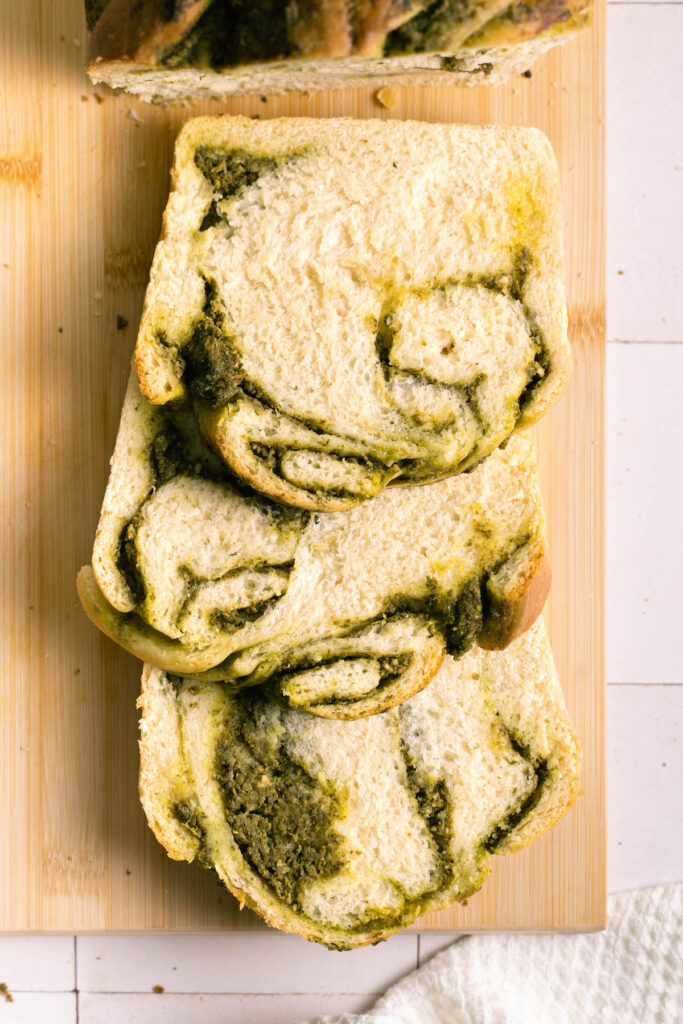
Serving & storing
Nettle pesto bread can be stored at room temperature for up to 3 days. Keep it tightly wrapped or in an airtight container.
Serving suggestions:
- Slather toasted slices with cream cheese, salted butter, or soft cheese
- Serve alongside soups, stews, salads or pasta
- Turn into the perfect open-faced breakfast sandwich
- Got leftovers? Toasted nettle bread cubes make excellent croutons!
If you try this Nettle Pesto Bread, I’d love to hear what you think! Leaving a comment and star rating below helps support my work and makes it easier for others to find and trust my recipes. Thank you!
Nettle Pesto Bread
Equipment
- 9×5 inch loaf pan
- Food processor
- Stand mixer with hook attachment
Ingredients
Nettle Pesto
- ¼ cup walnuts, toasted
- 1 cup blanched nettles, (see notes)
- ¼ cup parmesan, grated
- 1 large clove garlic, chopped
- Zest of 1 lemon
- Juice of ½ lemon
- 1 pinch each salt & pepper
- ¼ cup olive oil
Bread
- 2 ounces (4 Tbsp) unsalted butter, melted
- ¼ cup warm milk, (about 100° F)
- 1 cup warm water, (about 100° F)
- 1 ounce sourdough discard, optional
- 1 pound 4 ounces bread flour
- 2 ounces all purpose flour
- 1.75 ounces brown sugar
- 13 grams salt
- 1 package (2 ¼ tsp) active dry yeast
Filling
- 1 cup parmesan, grated
Instructions
For the pesto:
- Blend: Add ¼ cup walnuts to a food processor and pulse a few times to break them into smaller pieces.Add 1 cup blanched nettles, ¼ cup parmesan, garlic clove, lemon zest & juice, and a pinch each of salt & pepper. Blend until everything is well combined and nettles are well broken down. Stop blending and scrape down the sides of the food processor as necessary so that everything gets thoroughly mixed together.
- Finish: With mixer running, slowly drizzle in ¼ cup olive oil and continue blending until you have a nice smooth paste. Scrape pesto out of food processor into a small bowl and set aside.
For the bread:
- Mix wet ingredients: Melt 2 oz butter in a small pan over low heat. Turn heat off and add the ¼ cup milk and 1 cup water to warm up slightly (you want it to be around 100° F). Add this mixture to the bowl of a stand mixer.Add 1 oz sourdough discard, if using. Blend.
- Add dry ingredients & knead: Add 1 lb 4 oz bread flour, 2 oz all purpose flour, 1.75 oz brown sugar, 13 grams salt, and package of yeast. Using the dough hook, mix on low to medium-low speed for about 10 minutes, or until dough is smooth and shiny and doesn't stick to the bowl at all.
- First rise: Place dough in an oiled bowl, cover with plastic wrap or a kitchen towel, and let rest until doubled in size, about 1 – 1 ½ hours.
- Roll: Roll dough out on a lightly floured surface into a rough rectangle, about 12 x 16 inches. It doesn't need to be perfect.
- Add fillings: Spoon nettle pesto onto dough and use the back of a spoon to spread it evenly over dough, leaving about an inch border around all the edges.Sprinkle parmesan evenly over pesto.
- Roll into a log: Starting from one of the longer sides, roll dough up into a log, just like you would roll up a cinnamon roll. Try to keep it pretty tight! Pinch the seams together with your fingers, then flip the log over so the seam side is down.
- Shape: Use a sharp chef's knife or bench scraper to cut the dough log in half vertically, keeping the top inch or two still intact.Twist the two sides over each other, creating a simple braid. Tuck the end under.
- Second rise: Place braided bread carefully into a buttered 9×5-inch loaf pan. Cover with plastic wrap or a damp kitchen towel and let rest until doubled in size, about 1-2 hours (the bread will be about an inch above the lip of the pan at this point).
- Bake: Preheat oven to 350° F. Bake until bread is golden brown on top and fully baked through, about 35-45 minutes. You can use a digital thermometer to check the internal temperature – it should be around 180° F. Just be sure to check a few spots deep in the center of the bread.If the bread starts to get too brown on top at any point, you can cover it loosely with foil to prevent further browning.
- Cool: Let bread cool for about 15 minutes before inverting and removing from pan. Cool completely before slicing and serving.
Notes
Did you try this recipe?
Be sure to leave a comment below!


at 30 minutes the dough was raw in the middle
Hi Katrina, thanks for leaving feedback and pointing this out. I’ve updated the recipe with clearer information about cook times and how to tell when the bread is done.