Elderberries are an incredibly versatile ingredient to bring into your kitchen. Learn how to identify, safely harvest, prepare, preserve, and bake with these tasty wild berries, and discover why they’ve been one of my favorite fall ingredients for years.
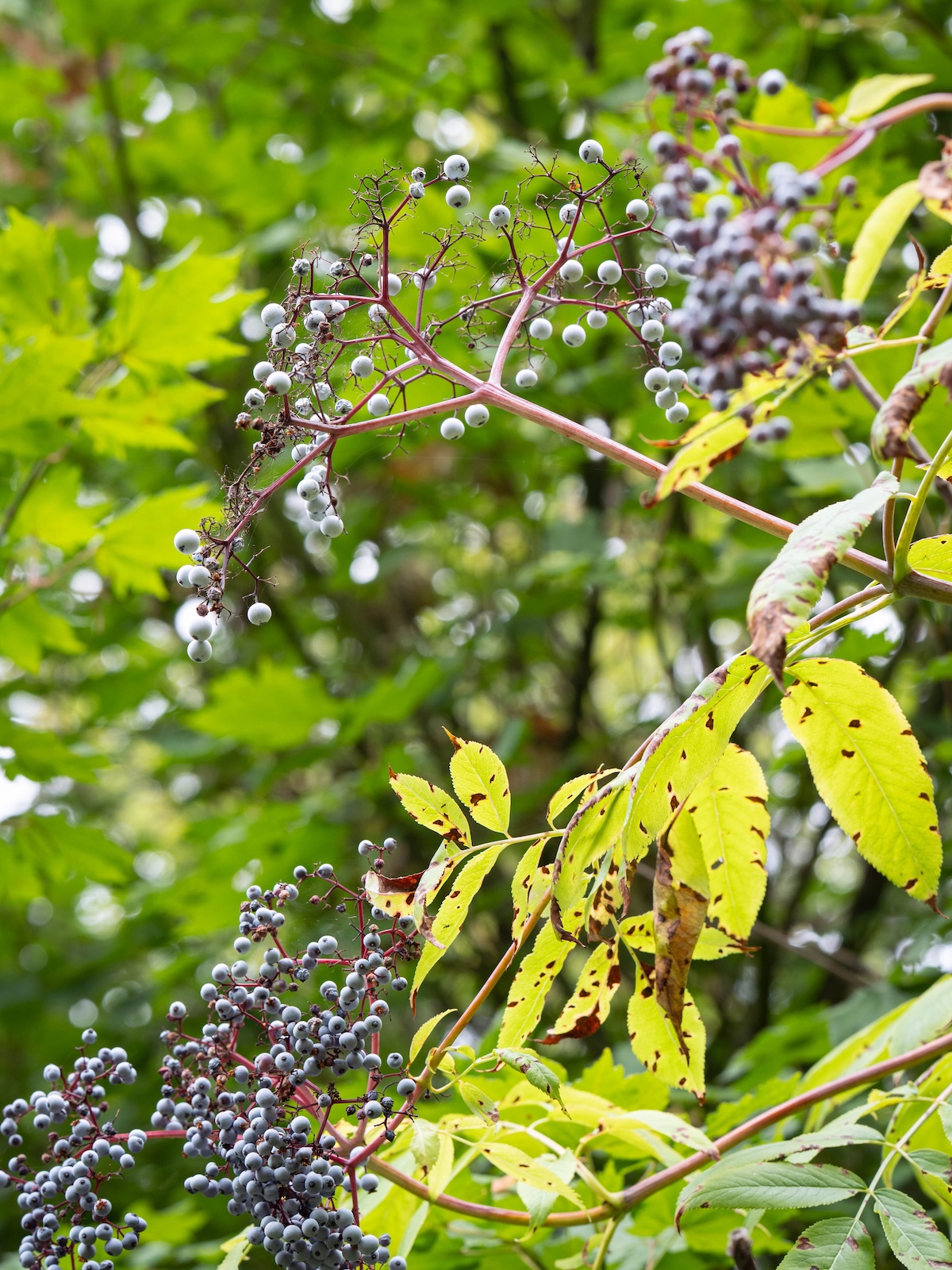
Elderberries are one of those wild ingredients that can look almost like another “weed” until you know what you’re looking at. They tend to grow in patches of sprawling clumsy-looking large shrubs, with big heavy clusters of dark, tiny berries. If you didn’t know, you might guess they were poisonous.
Lucky for us, they are in fact edible, although I highly recommend educating yourself about them before you go a-harvesting. There are a few tidbits that are helpful to know, including identifying common lookalikes and properly preparing the berries.
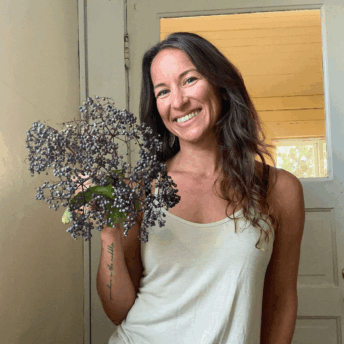
They’re one of my favorite wild ingredients to work with, and I’ve been collecting and baking with them every fall for over a decade now. The berries have a delicious flavor and fun texture (their tiny seeds have a satisfying crunch). Excellent for syrup, jam, baked goods, drinks, and even savory applications, these little berries are easy to love.
In this guide, I’ll walk you through how to identify elderberries, forage them safely, and bring them from the wild into your kitchen — from harvesting and preparation to baking and preserving.
Elderberry at a glance
- When to forage: Late summer into early fall, depending on species & location
- Look for: Fully ripe, soft berries with deep, rich color
- Safety: Don’t eat raw elderberries. They should always be cooked before consuming. Remove leaves, stems, and unripe berries before using.
- Flavor: Tart, jammy, wine-like, notes of blackberry, raisin, and plum
- Best uses: Syrups, jams, pies, cakes, muffins, sauces, glazes, drinks
- To preserve: Freeze, dehydrate, or make into syrup or jam to extend shelf life
- My favorite use: Elderberry Coffee Cake
The easiest place to start: Harvest fully ripe berries, remove the stems and leaves, wash and dry them, and freeze whatever you aren’t ready to use. You can make just about any recipe with frozen berries!
How to identify elderberry in the wild
There are four types of elderberry you need to know about, depending on where you live.
If you’re in the Western US like I am, you’re mostly going to find Blue elderberry (Sambucus cerulea). In other parts of the US and Europe, you’re more likely to come across American black elderberry (S. canadensis) or European black elderberry (S. nigra).
And then there’s Red elderberry (S. racemosa), a plant I didn’t even know existed until recently. Apparently, it’s less studied than the other varieties, and some sources say it may contain higher levels of toxins in the seeds and stems. I encourage you to do your own research if you plan on harvesting this variety.
Elder identifying features:
- Whole plant: large deciduous shrubs/small trees with opposite branches
- Leaves: pinnate, opposite pairs, serrated edges, 5-11 leaflets
- Flowers: large umbel-shaped clusters of tiny white or cream flowers in late spring to early summer
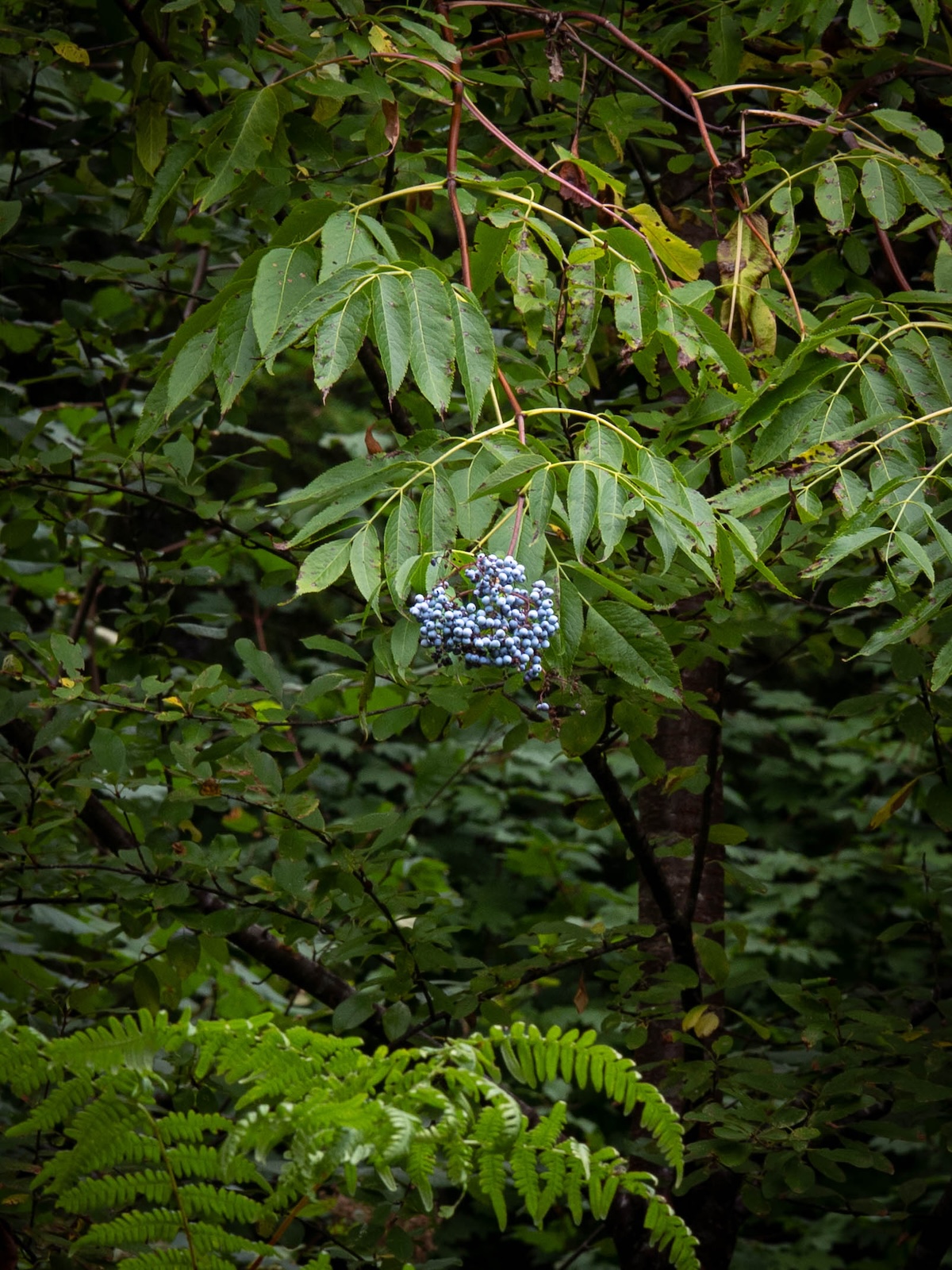
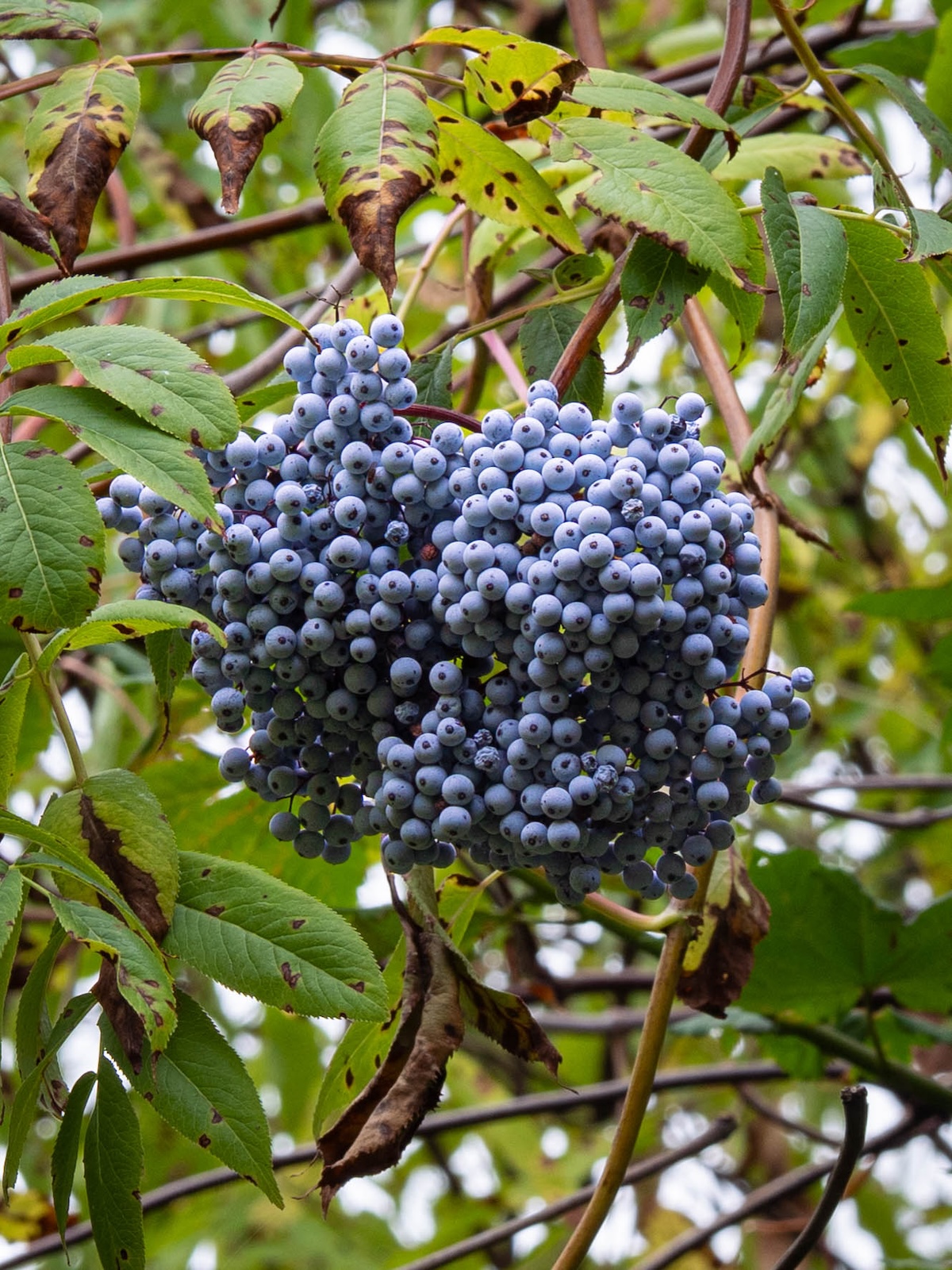
- Berries: drooping heavy clusters of small berries that are green when unripe, ripening to blue, purple-black, or red
- Blue elder: ripe berries are light blue with a powdery bloom
- Black elder: ripe berries are dark purple to black
- Seasonal timing: flowers May-July, berries in August/September
- Habitat: forest edges, river banks, roadsides, railway banks, waste ground, meadows
Elderflowers
The flowers of the elder tree are also edible (and super delicious!). Earlier in the season, they provide an excellent opportunity to find elder plants, with tons of big, bright blossoms that are easy to spot. Sometimes, you can harvest both flowers and berries at the same time!
Look for broad, flat clusters of tiny white flowers that are intensely fragrant. They’ll typically start blossoming sometime in the late spring.
If you’re lucky enough to get your hands on some elderflowers, try making Elderflower Syrup, Elderflower Extract, or Strawberry Elderflower Cake.
Elderberry lookalikes
Yes, elderberry does have a few common (non-edible) lookalikes to be aware of.
Pokeweed. The berries of pokeweed and elder do look quite similar, but they grow in a very different way. Pokeweed berries grow down a single stem (a raceme), while elderberries grow in a splay or broad cluster.
Pokeweed is also an herbaceous plant, meaning it never has bark. Elderberry is a woody perennial, with smooth gray-ish bark that has small raised wort-like bumps (lenticels).
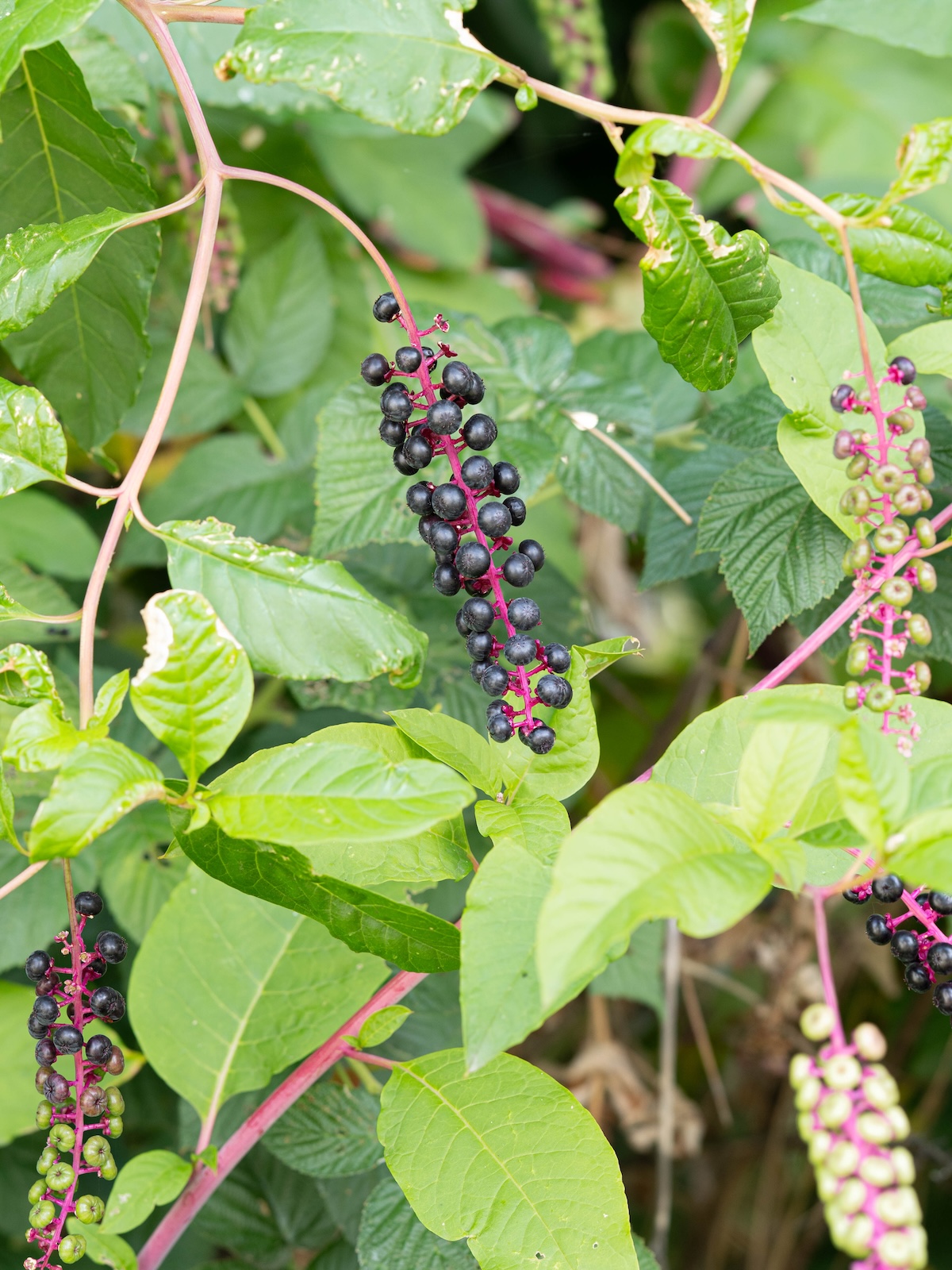
Water hemlock. This plant has similar leaves and flowers to the elder plant.
Key differences in leaves: elder has single compound leaves that are opposite with finely serrated edges, while water hemlock has triple compound leaves that are alternate with broadly serrated edges.
Key differences in flowers: Water hemlock has smaller clusters of flowers that are like little umbrellas, forming a larger umbrella together. They give off a carrot-like aroma and the blossoms turn into seeds. Elderflowers smell floral and perfume-y, with blossoms that turn into fruit. The flower clusters are densely packed, forming a flat-topped splay of tiny blooms.
Devil’s walking stick. This plant has similar-looking flowers and berries to elder, but the biggest difference is in the stems and trunk of these plants. Devil’s walking stick has sharp telltale thorns on its stems (and especially its main stalk), while elderberry does not have spines of any kind.
The flowers of the devil’s walking stick also shoot upwards in spikes, while flower clusters on elderberry bushes splay out in flat-topped umbels.
When in doubt, don’t eat it. Never identify a wild edible from berry color alone. Look at the entire plant and use multiple reliable identification sources.
Are elderberries poisonous?
No, elderberries are NOT poisonous, and they’re absolutely delicious. However, they should be prepared properly.
Raw elderberries can contain small amounts of cyanogenic glycosides, which can cause gastrointestinal issues and sickness. Luckily, cooking the berries makes them safe for consumption. Elderberries should always be cooked before eating.
Never eat these parts of the elderberry plant: leaves, stems, bark, and unripe berries.
Do elderberry seeds need to be removed?
No, elderberry seeds don’t need to be removed. Just be sure to cook elderberries before eating. If it makes you feel more comfortable, you can choose to strain out the seeds after making a syrup, jam, or jelly. (Personally, I find their tiny crunch to be lovely!)
Harvesting & preparing elderberries
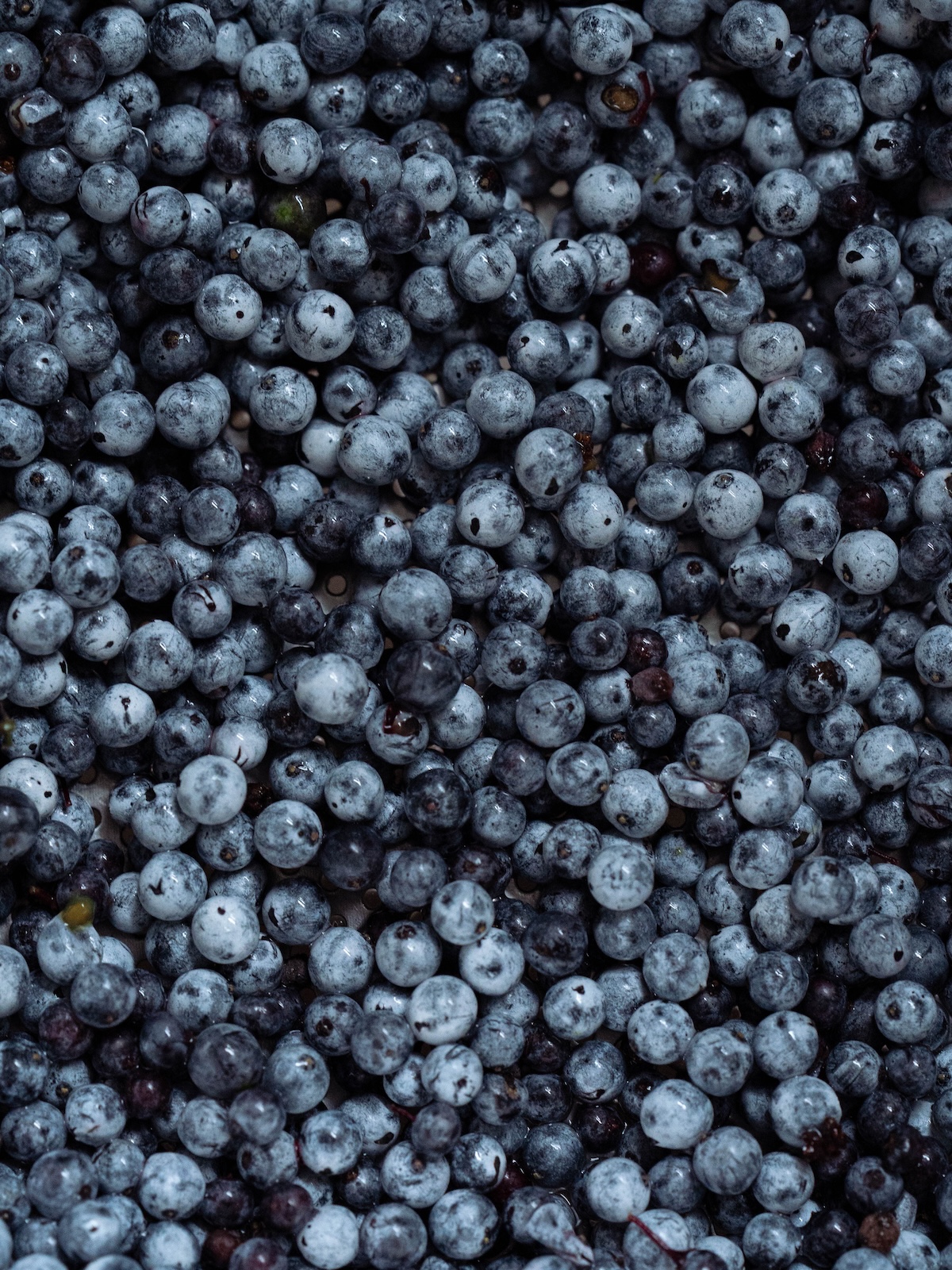
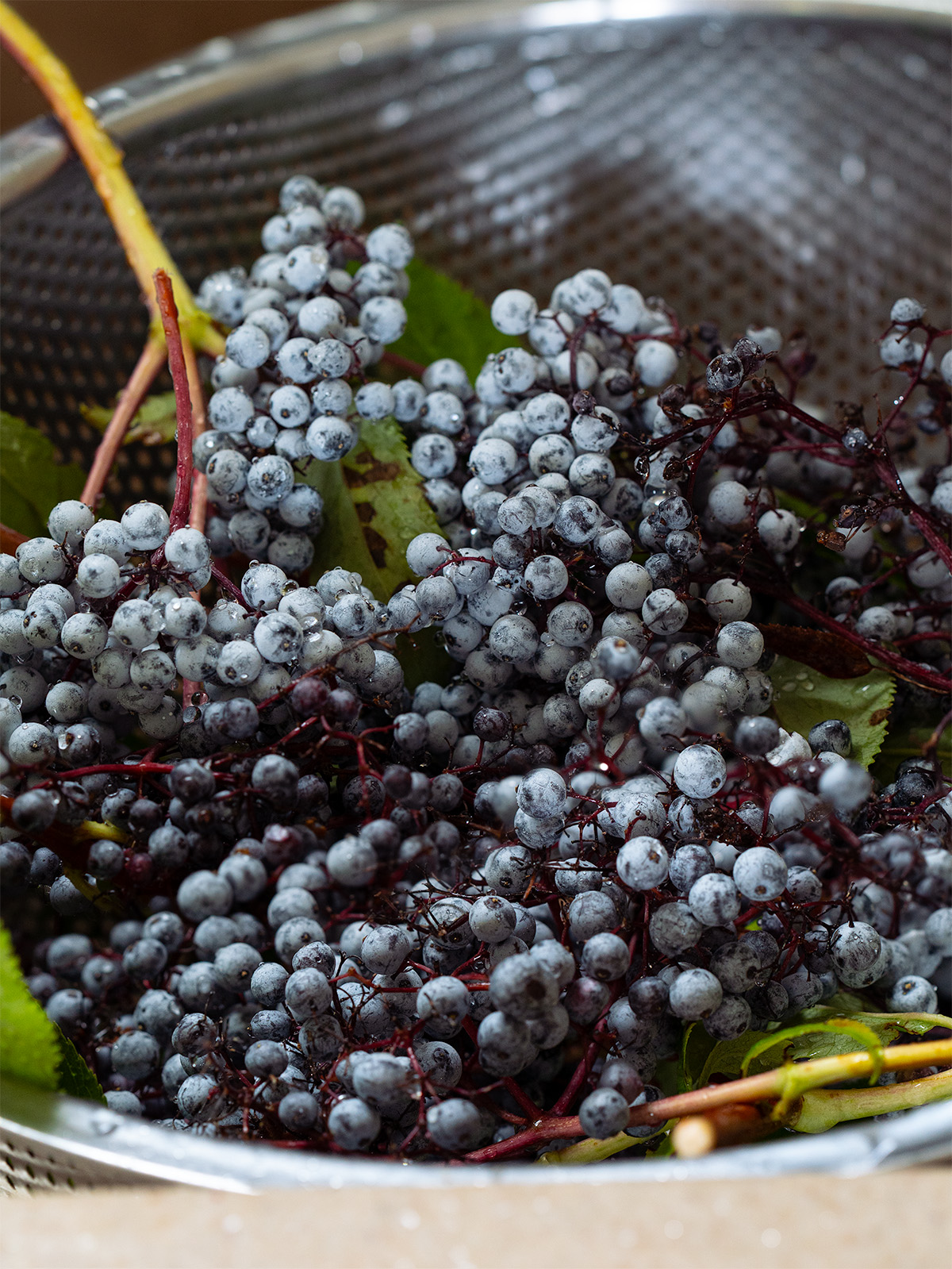
When you find a good patch of elderberries, harvest the whole clusters with a pair of scissors or pruners rather than trying to pick individual berries. Bring a basket or harvesting bag, and try not to pile the clusters too deeply to avoid crushing the delicate berries.
Removing berries from the stems
There are a few ways to de-stem elderberries, including running a fork or comb through the clusters or freezing them first and then rubbing them over a cooling rack. I’ve never been impressed with any of these techniques.
Honestly, I prefer the simplest method: using your fingers. Gently rub the ripe berries off the stems and into a bowl. The ripe berries come away easily, while many of the unripe ones stay attached, and you’ll end up with surprisingly little stem mixed in.
It does take a little time, but it’s really not much slower than the other methods, and I personally find it enjoyable. If you have a big harvest, put on your favorite music or podcast and settle in. It’s not the worst way to spend an afternoon.
Once you’re done, take a few minutes to pluck out any unripe berries and bits of stem that made it into your bowl. You don’t have to get every single bit, but do what you reasonably can.
Then, place them in a large bowl of cold water with a big splash of vinegar and gently swish them around. Drain, rinse well with fresh water, and dry thoroughly before using or preserving.
The best ways to use elderberries
One of the many things I love about elderberries is that they’re extremely versatile. They have a flavor that can go either savory or sweet. They make great preserves and sauces, and they’re amazing in all sorts of delicious beverages.
Here are some ideas to get you started:
Baking
- Pies, galettes, crisps, cobblers, turnovers
- Muffins, quick breads, scones
- Cakes
- Cookies, fruit bars
- Cheesecakes and creamy desserts
Condiments & preserves
- Jam, jelly
- Curd
- Compote, chutney
- Syrup, sauce
Drinks
- Tea (excellent with dried berries)
- Shrub
- Cocktail syrup
- Wine (check out Hank Shaw’s elderberry wine)
- Kombucha
- Fermented soda
Savory
- Sauces & glazes for meats and wild game (such as this Pontack sauce)
- Elderberry soup, a traditional dish from Germany & Denmark
- Vinegar
Elderberry flavor pairings
If you’re wanting to come up with your own elderberry recipes, keep these flavor pairings in mind. These lovely berries are delightful with combined with these flavors:
Late summer & fall fruits: Late summer stone fruits like peach, plum, and nectarine. Early fall fruits like apple, pear, and quince.
Citrus: Lemon, lime, orange, kumquat.
Other dark berries: Blueberries, blackberries, huckleberries.
Baking spices: Cinnamon, ginger, cardamom, star anise, clove.
Herbs & botanicals: Rosemary, vanilla bean, elderflower, thyme, mint, lavender.
Nuts: Walnut, pistachio, pecan, hazelnut, almond.
Other rich flavors: Dark chocolate, white chocolate, brown butter, black sesame.
A few favorite sweet elderberry recipes
- Elderberry Simple Syrup
- Elderberry Jam
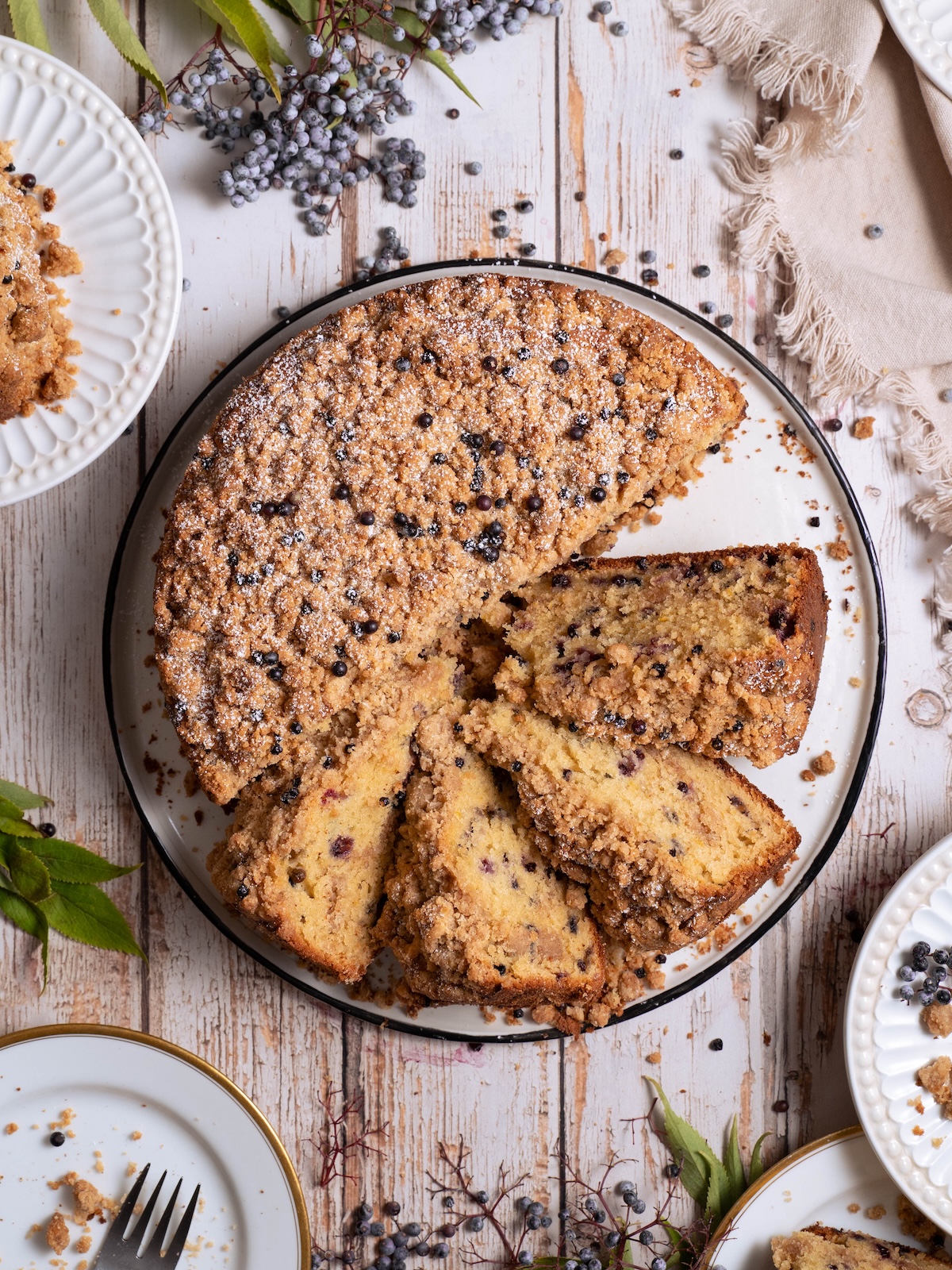
- Elderberry Coffee Cake
- Elderberry Pie
- Elderberry Tiramisu
- Elderberry Twist Buns
- Elderberry Rosemary Sour
- Elderberry & Pear Frangipane Tart
- Mini Elderberry Cheesecakes with Elderberry Sauce


Preserving
There are essentially three ways to preserve elderberries: freezing, dehydrating, or turning them into something preserved by sugar, acidity, or fermentation.
Before using any of these methods, go through the basic preparation steps first: Remove berries from their stems and discard any leaves, stem bits, and unripe berries. Then, wash berries and leave to dry on paper towels or gently pat dry.
Freezing: The easiest and most versatile way to extend the shelf life of your berries. Pour prepped berries onto a rimmed sheet pan lined with parchment paper, arranging in a single layer. Freeze until solid, at least 4 hours. Move to a freezer bag and store for up to 6 months.
Drying: The best way to dry elderberries is to use a food dehydrator. Spread prepared berries in a thin layer on dehydrator trays and dry at 140°F for 6-12 hours, or until completely dry and crispy.
If you’re in the market for one, this is my favorite food dehydrator. (This is an affiliate link. If you purchase, I’ll make a small commission, at no extra cost to you!)
You can also dry elderberries in the oven with the temperature set between 120-140°F. You may need to crack the oven open every once in a while to allow moisture to escape. Give the berries a little stir from time to time and keep an eye on them so they don’t burn or cook.
Turning them into a preserved product: A great way to extend the shelf life of your berries is to turn them into something that keeps longer. This might be something with high levels of sugar (jam, syrup), high levels of acidity (vinegar, juice), or something that involves fermentation (wine, soda).
Love foraging?
To learn more about baking with wild ingredients, check out my wild food recipes and foraging guides.
If you’re a big elderberry fan like me, I’d love to hear what you make with them. Leave a comment below and share your favorite elderberry preparations!