Like a blueberry muffin crossed with a sourdough loaf, this bread is packed with blueberry flavor, ribbons of purple, and bright lemon zest. After a lot of experimentation, I found the easiest, tastiest, and most foolproof way to make Blueberry Sourdough Bread.
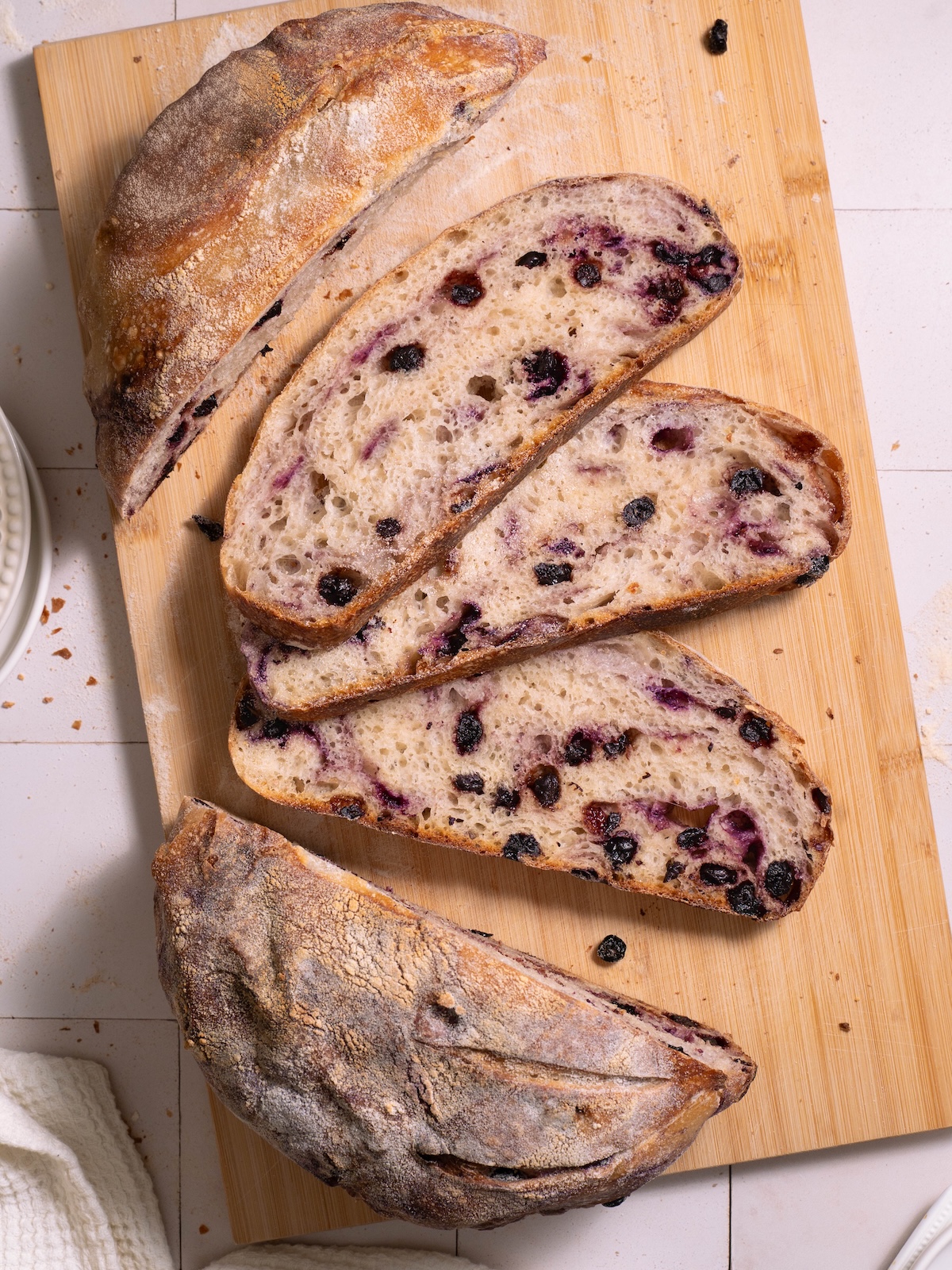
A delicious summery spin on classic sourdough! This gorgeous loaf is bursting with real blueberry flavor and marbled with bright streaks of purple.
Blueberry sourdough bread sounds simple enough, but this recipe took far more testing than I expected. I wanted to use fresh blueberries for this, but batch after batch taught me it was just too difficult to get consistent results. After extensive testing, I developed a method that delivers better flavor, better texture, and more reliable results than simply adding fresh berries to a standard sourdough loaf.
In this post, I’ll walk you through the entire process step-by-step and share the techniques that made all the difference during recipe testing.
Recipe highlights
- Texture: Crispy crust, soft chewy interior, juicy pockets of dried blueberries
- Flavor: Lemon blueberry muffins and artisan sourdough bread had a baby
- Ease: Just one extra step beyond a classic sourdough loaf (laminating in the blueberry filling). But don’t worry, you’ve got this!
- Reliability: Thoroughly tested for consistent, repeatable results
Recipe overview
⏱️ Prep: ~35 mins active • Bulk ferment: 4-6 hrs + fridge overnight • Bake: 40-50 mins
🍴 Yield: 1 sourdough loaf or boule
💪 Skill level: Intermediate
😋 Flavor notes: Sourdough tang, sweet blueberries, bright lemon zest. Pairs well with: Salted butter, cream cheese, honey, maple syrup, fresh berries, French toast.
👉 Need to master basic sourdough first? Start with my beginner-friendly recipe for the Easiest Sourdough Bread.
The secret to better blueberry sourdough
When I first started developing this recipe, I assumed fresh blueberries would be the obvious choice. Unfortunately, they created some serious issues. The berries released excess moisture into the dough and exploded into molten pockets of lava during baking. This created gummy areas in the crumb, large air pockets, inconsistent oven spring, and sad collapsed loaves.
Eventually, I swapped in dried blueberries and found that this produced dramatically better results. Freeze-dried blueberry powder infuses the dough with concentrated blueberry flavor and gorgeous ribbons of color, while the dried berries provide moist pops of fruit without compromising the structure of the loaf.
Honestly, there’s even more blueberry flavor this way! You’ll end up with a lemon blueberry sourdough bread that’s flavorful, beautiful, tall, and proud.
That said, if you have an abundance of fresh blueberries and want to give them a try, don’t let me stop you. This is simply the method that gave me the most consistent, flavorful, and repeatable results during recipe testing.
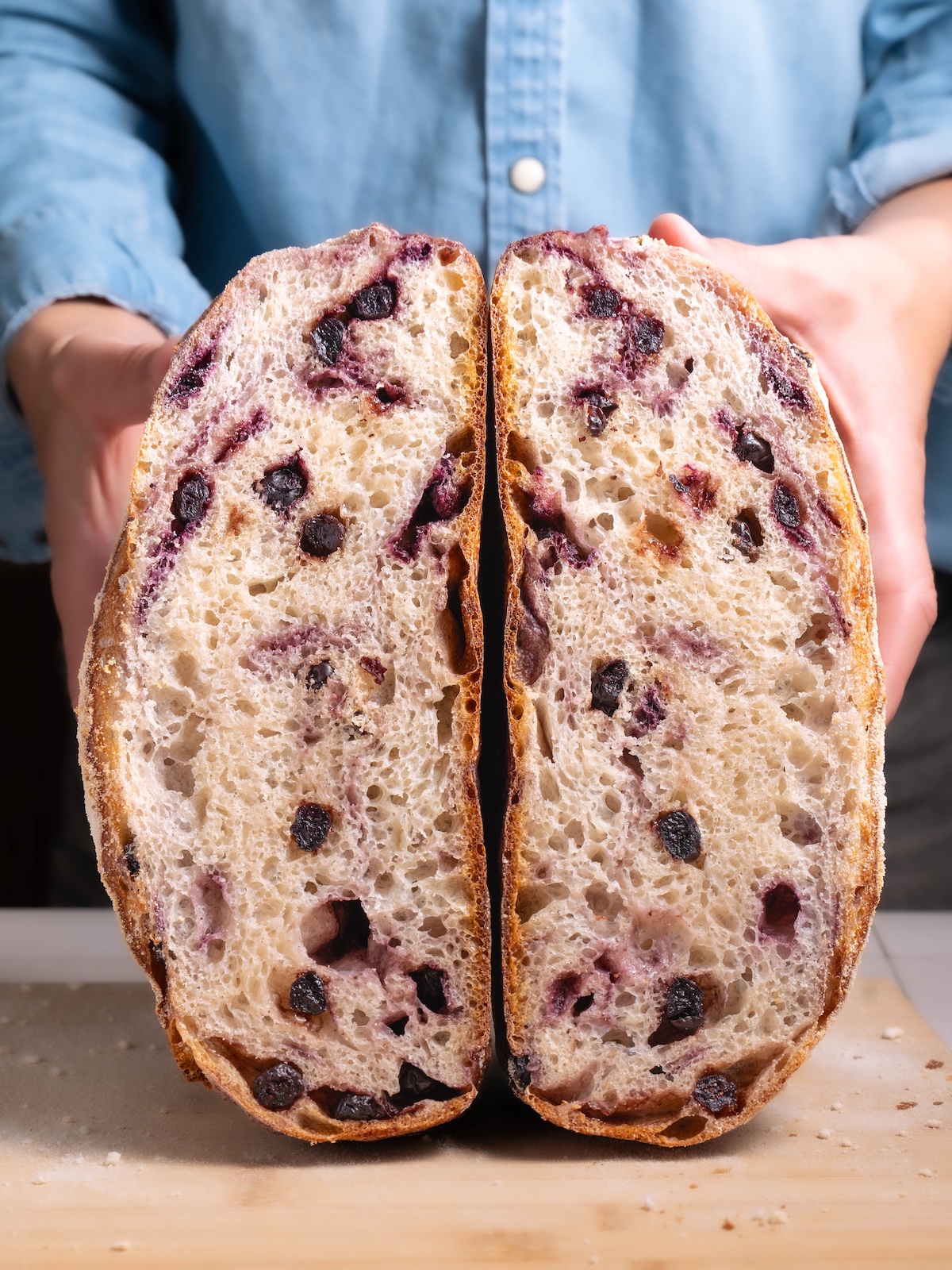
How to make blueberry sourdough bread
For full recipe instructions, scroll down to the recipe card at the bottom of this post. Here’s a quick step-by-step overview on how to make this recipe:
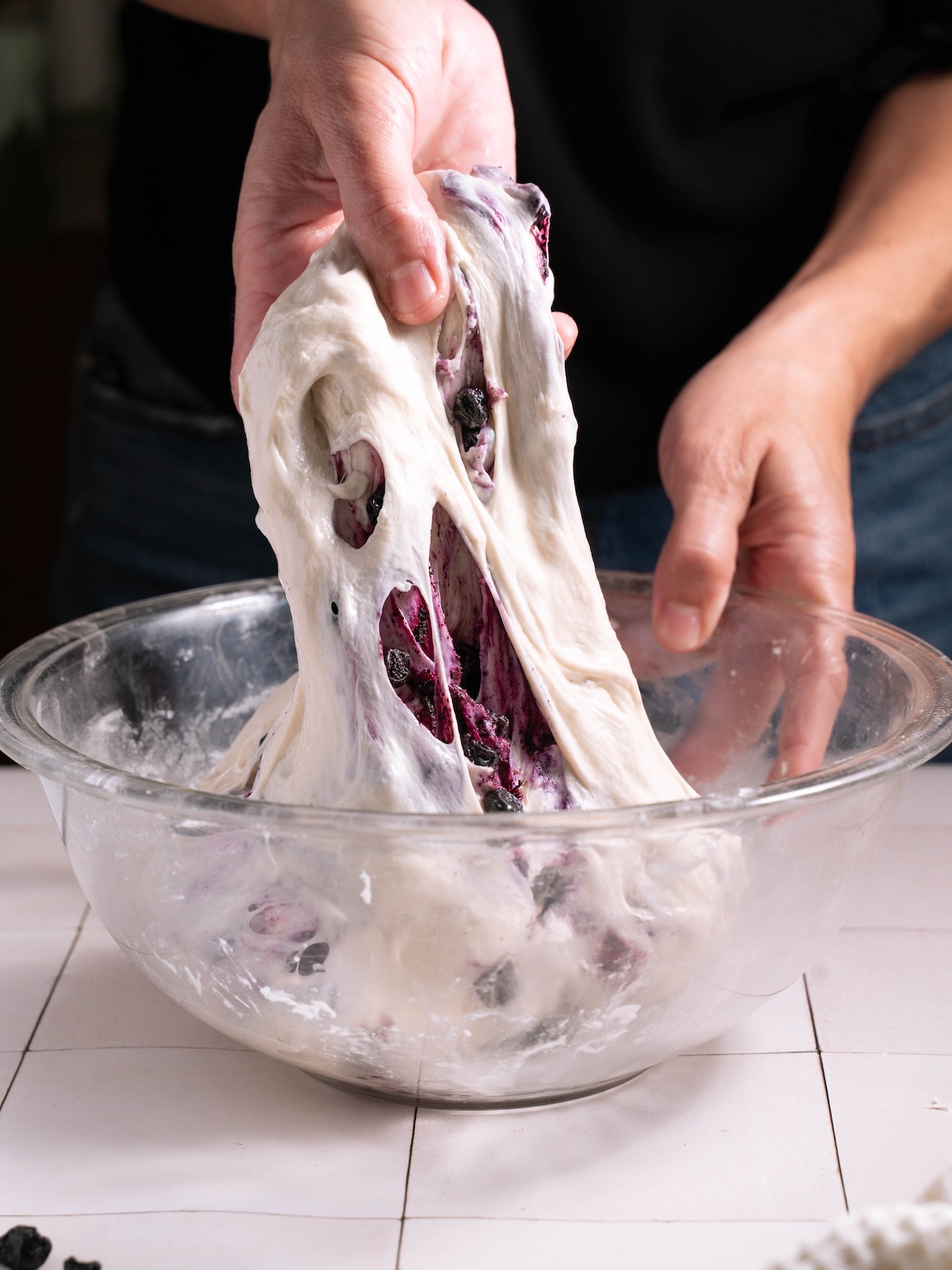
- Mix the dough: Blend together water, salt, active sourdough starter, and bread flour until it forms a cohesive, shaggy dough. Cover and let rest for 30-45 minutes.
- First stretch-and-fold: Stretch and fold the dough to build structure. Cover back up and rest at least 30 minutes.
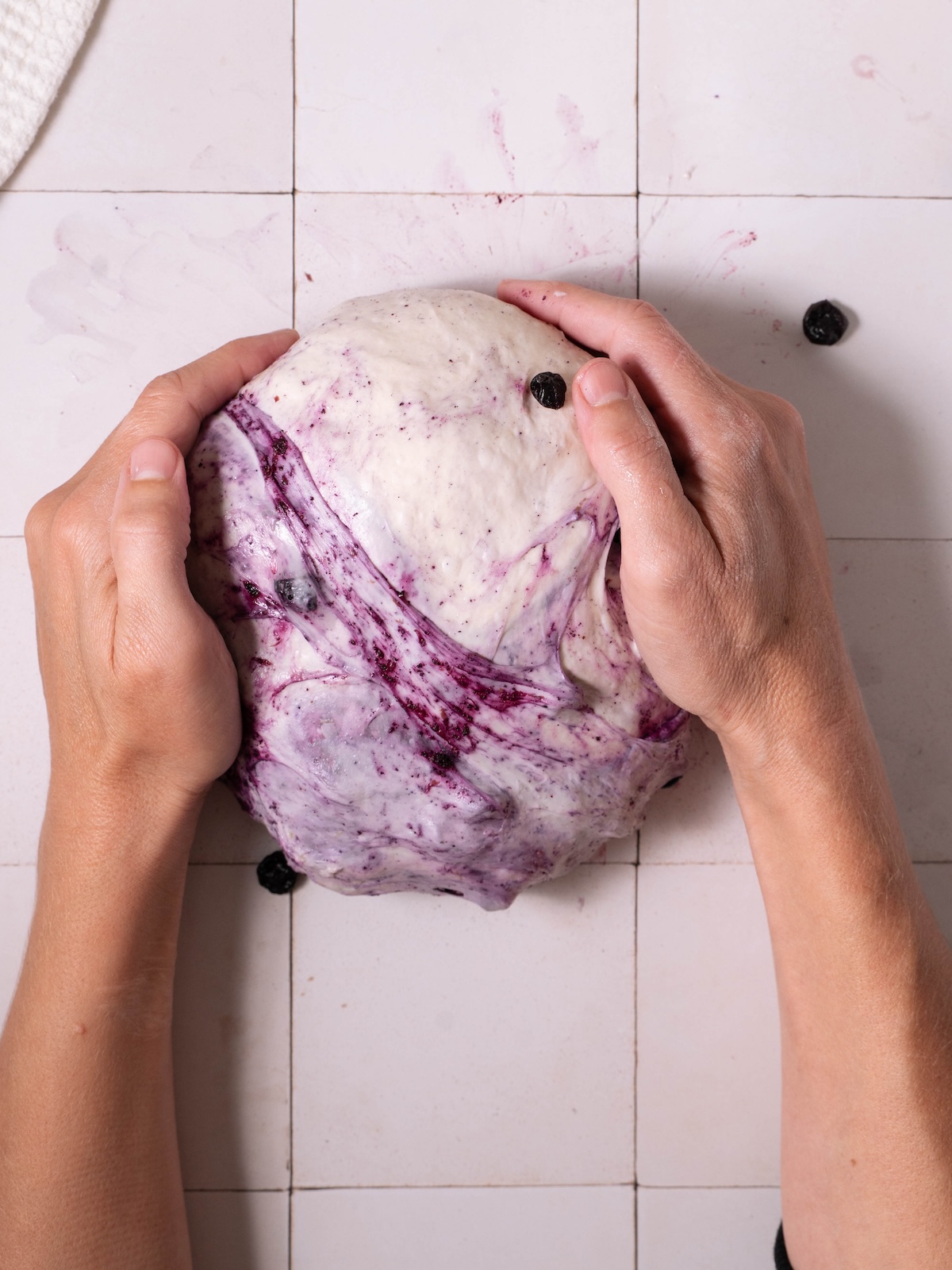
- Laminate fillings: Press dough into a rough rectangle on a slightly damp work surface. Cover evenly with blueberry powder, lemon zest, and dried blueberries. Press down gently to adhere. Fold one third of the dough towards the middle, then fold the other side on top like a letter. Roll it up into a ball. Place back in the bowl. Cover and rest for at least 30 minutes.
- Continue with stretch-and-folds: Perform 2-3 more rounds of stretch-and-folds every 30 minutes or so, until dough is smooth and elastic. The blueberry filling will get more distributed each time.
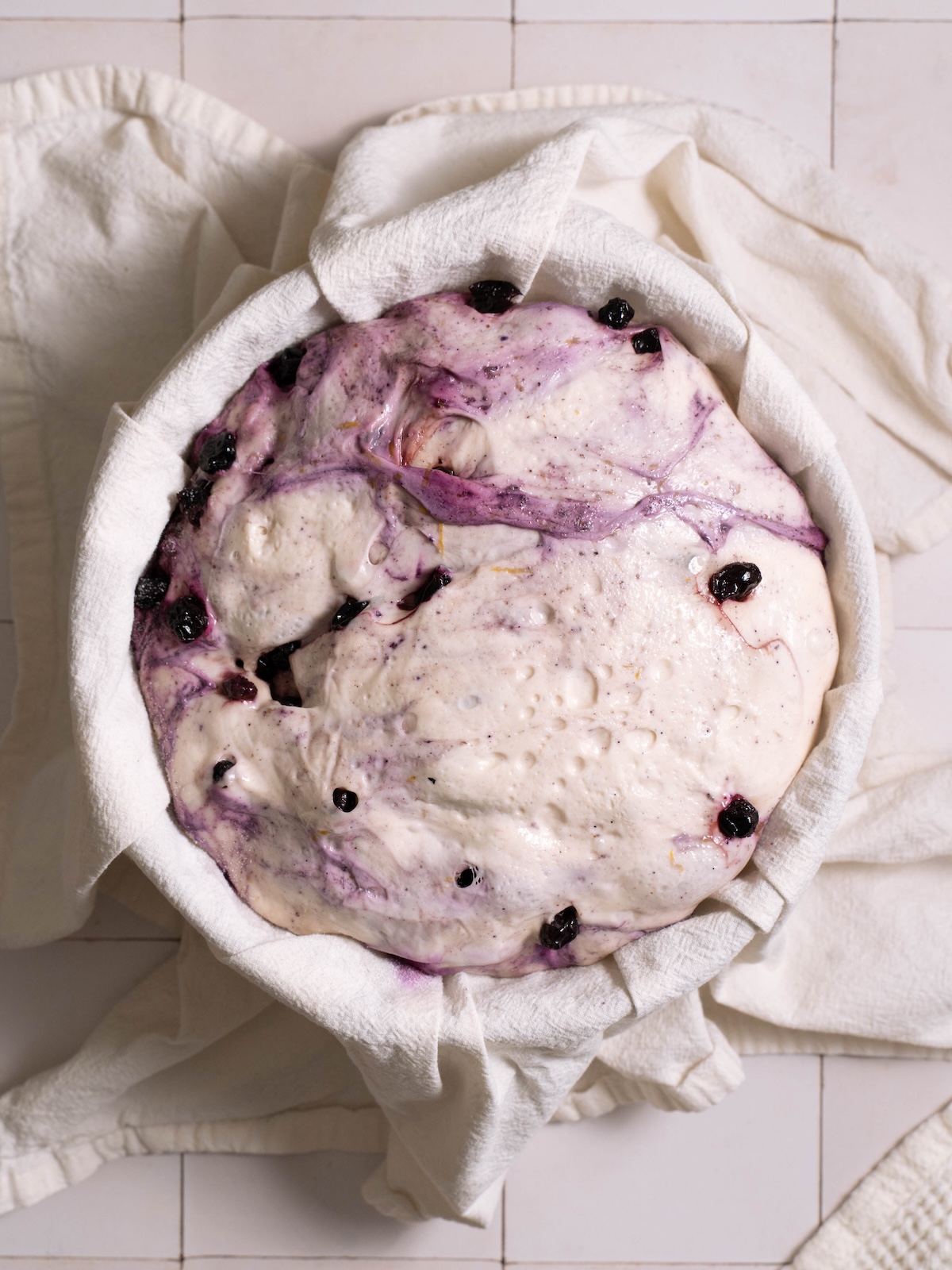
- Shape & bulk ferment: Shape dough into a ball or loaf. Place seam-side up in a lined bowl or banneton, cover, and allow to ferment at room temperature until puffy, airy, and risen by 30-50%, about 2-4 hours.
- Refrigerate overnight: Transfer to the fridge to rest overnight.
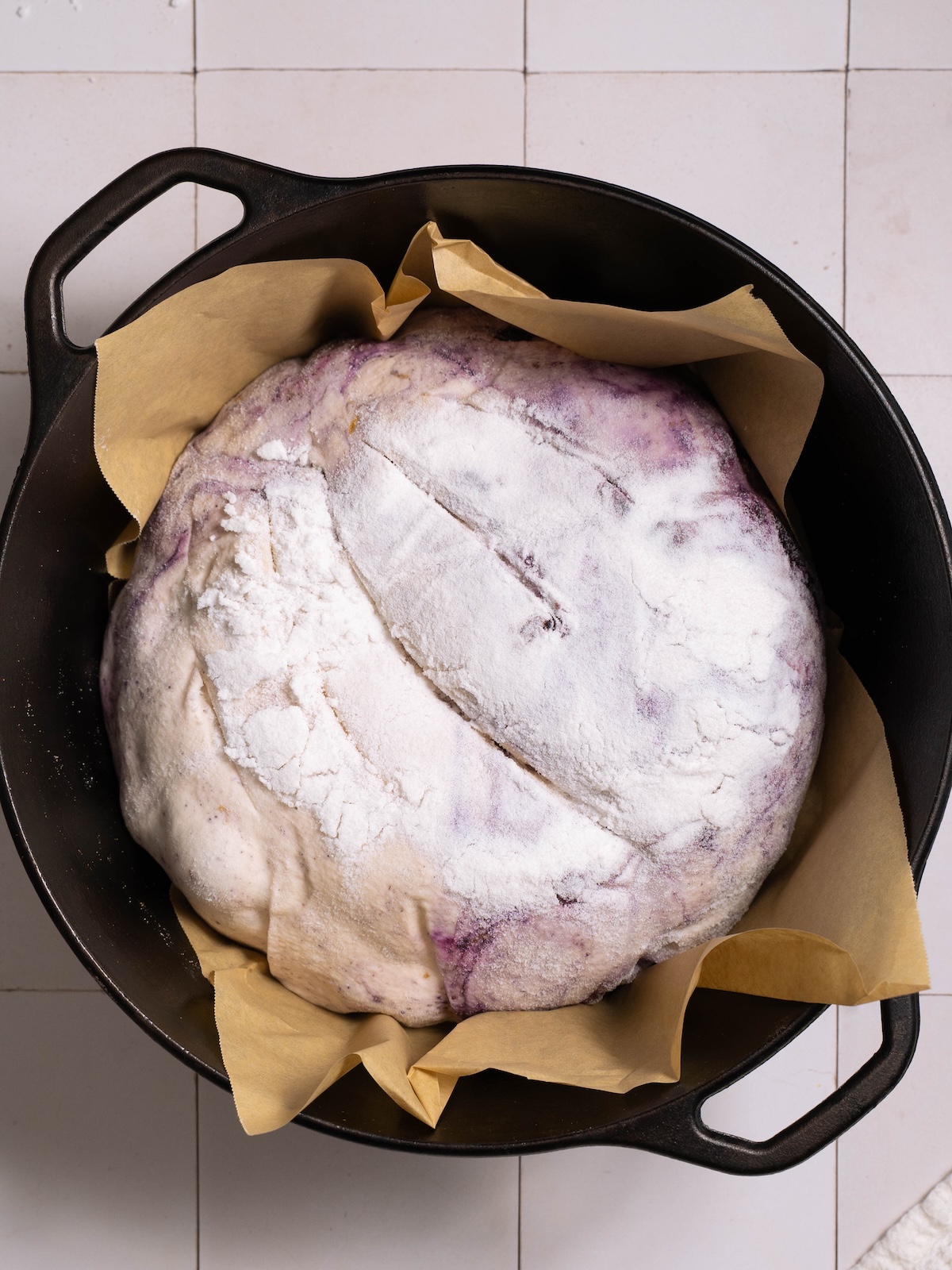
- Score & bake: Preheat oven to 450° F. Turn dough out onto a piece of parchment paper, score the top of the dough, and lift into a Dutch oven. Cover and bake for 25 minutes, then remove the lid and bake an additional 15-20 minutes. Cool for at least an hour before slicing.
Step-by-step photos: laminating the dough
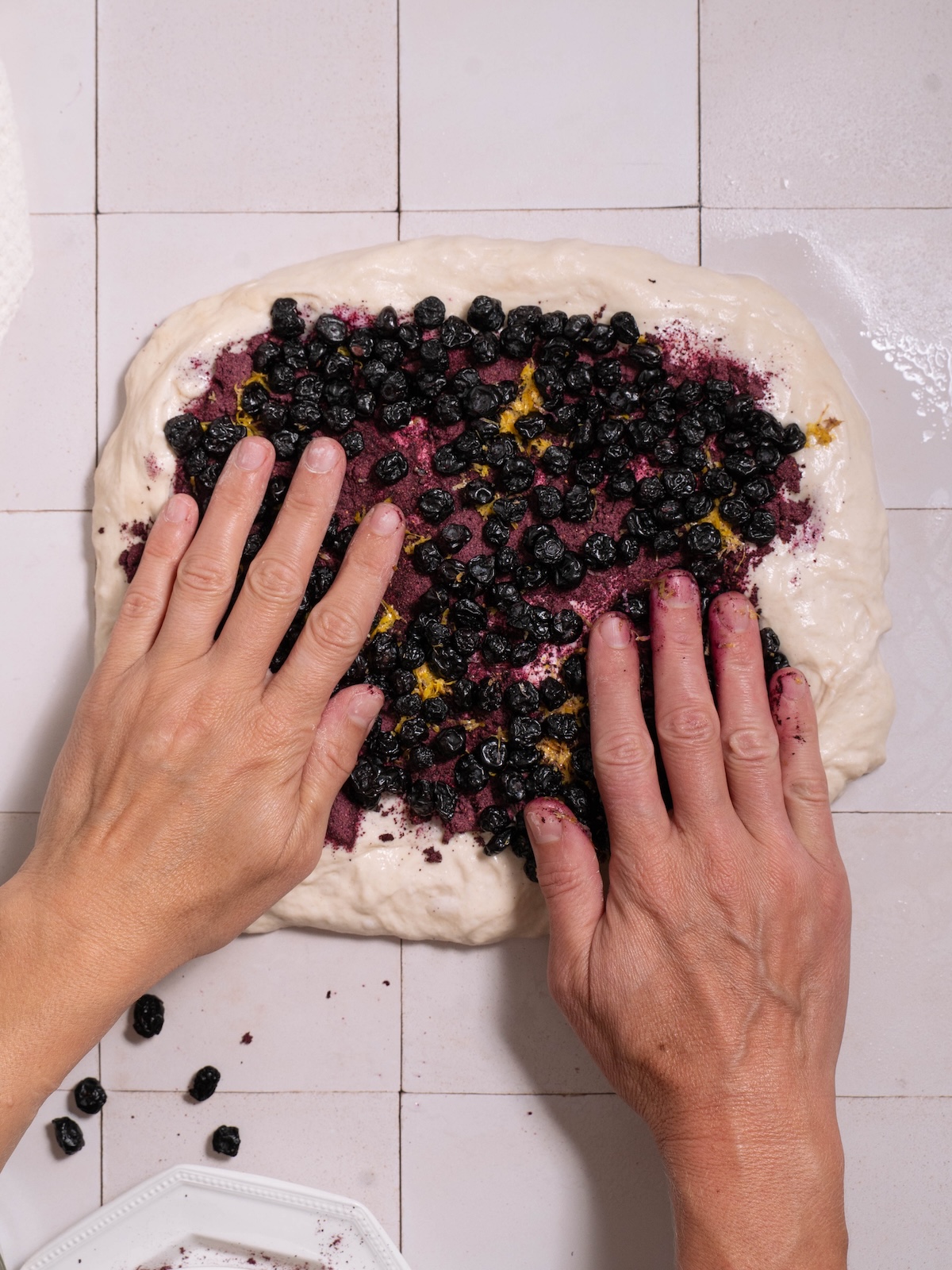
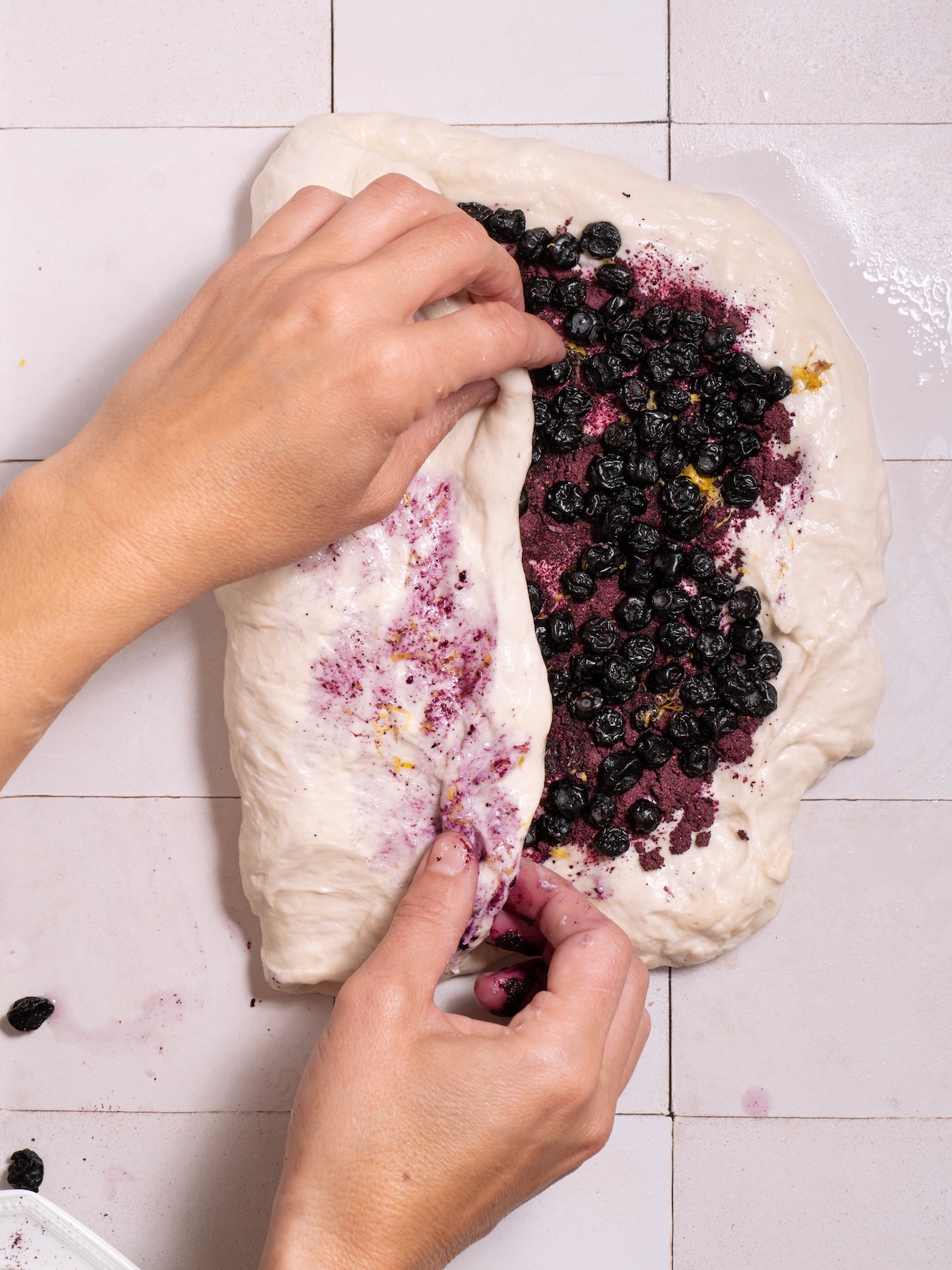
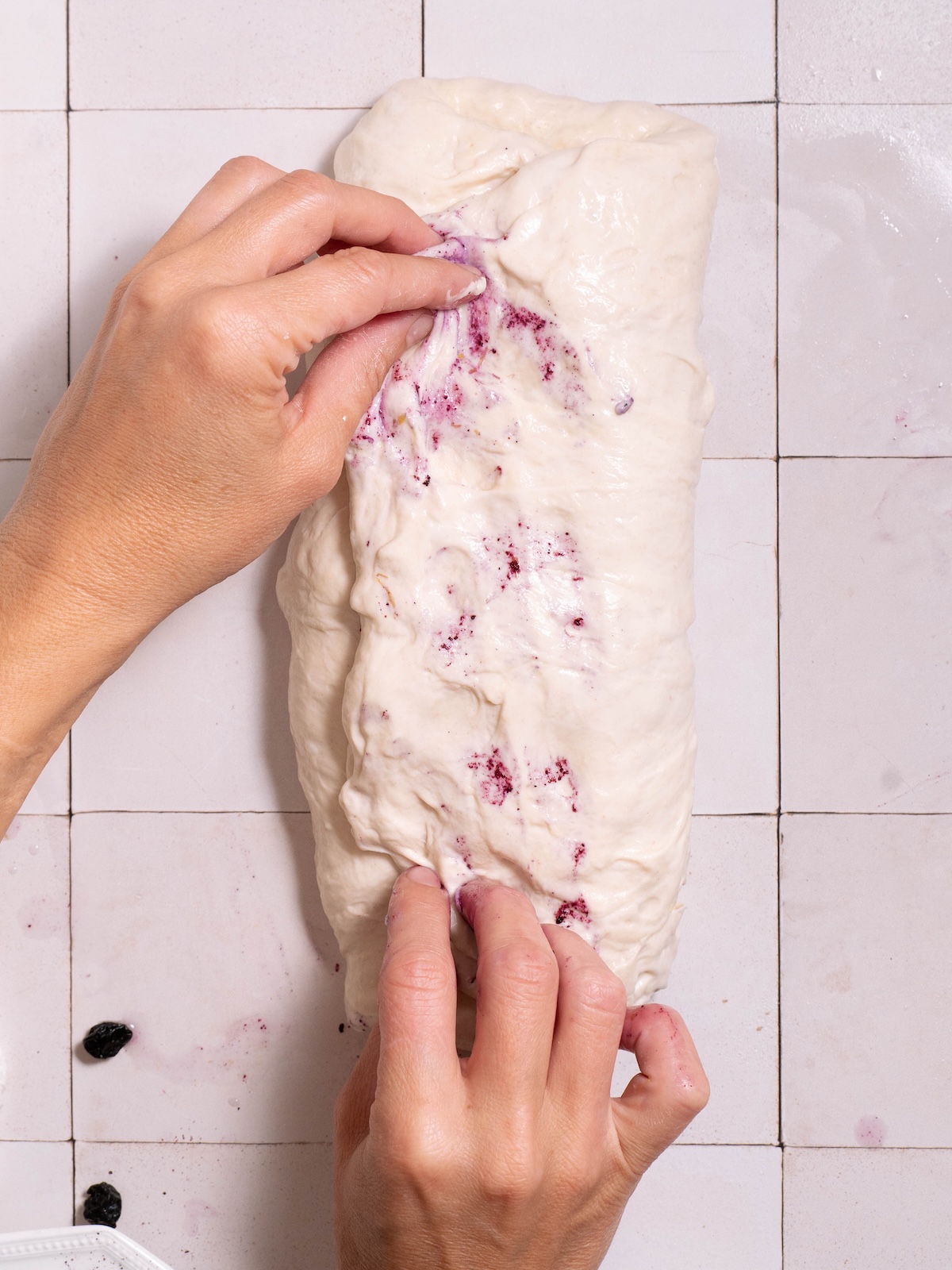
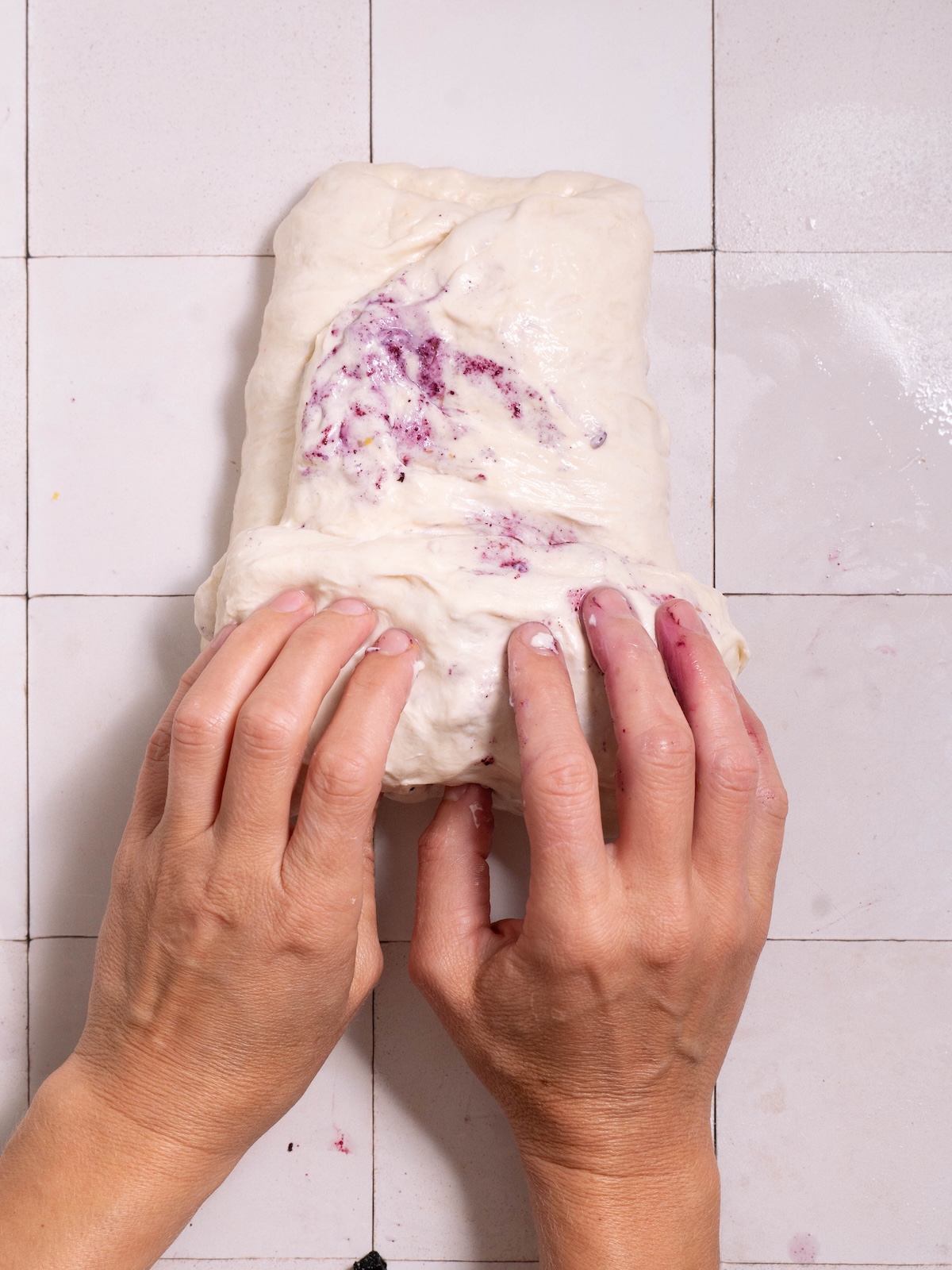
Stretching, folding, shaping & baking
Pro baking tips for perfect sourdough blueberry bread
Use an active, bubbly sourdough starter. Mix the dough when your starter is at “peak rise” (it’s at least doubled in size since you fed it, is airy and full of bubbles).
Sprinkle blueberry powder in a thin layer. This will help create thin ribbons of blueberry color and flavor throughout the loaf.
Bake with steam. A Dutch oven gives high heat + traps steam for bakery-style oven spring and that perfect crispy crust. No Dutch oven? No worries, you can also cover your loaf with a large oven-safe bowl in the first half of baking or add a pan of water to the bottom of your oven.
Serving & storing
Because of the blueberries, this loaf has a little bit more moisture than a classic sourdough boule. That means it can go bad a bit faster, so it’s best to eat this one within 2-3 days.
To store, keep it at room temperature, loosely wrapped or in a paper bag.
For longer storage, wrap slices tightly, then freeze. Leftover blueberry sourdough bread makes excellent French toast or sourdough bread pudding!
To refresh: Pop slices in a warm oven or toaster oven for a few minutes to bring back that crisp crust and soft interior. For frozen bread, thaw it at room temperature, then reheat or toast.
Serving ideas:
- Serve alongside breakfast & brunch spreads, with eggs, bacon, and fresh fruit
- Smear warm slices with soft butter or cream cheese + a drizzle of honey
- Toast and spread with blueberry jam or top with fresh berries
- Turn into French toast, sourdough bread pudding, or Monte Cristo sandwiches
FAQs
You can, but just be aware that the extra moisture can affect the structure of the loaf and lead to less predictable results. If using fresh blueberries, don’t use any more than 1 cup. Add them after the first round of stretches and folds, in the same step as stated in this recipe for the dried blueberries.
See my notes above (“The secret to better blueberry sourdough”) for my experience recipe testing this bread with both fresh and dried berries.
Yes, you can do a same-day bake if you like. Score and bake the dough after the bulk fermentation stage. When doing a same-day sourdough bake, I like to freeze the dough for about 30 minutes while the oven preheats. It makes the dough easier to score and gives a better oven spring.
Love sweet sourdough recipes? Check these out, too!
- Cinnamon Sugar Sourdough
- Sourdough Bread Pudding with Strawberry Sauce
- Sourdough Zucchini Chocolate Chip Muffins
- Brown Butter Sourdough Chocolate Chip Cookies
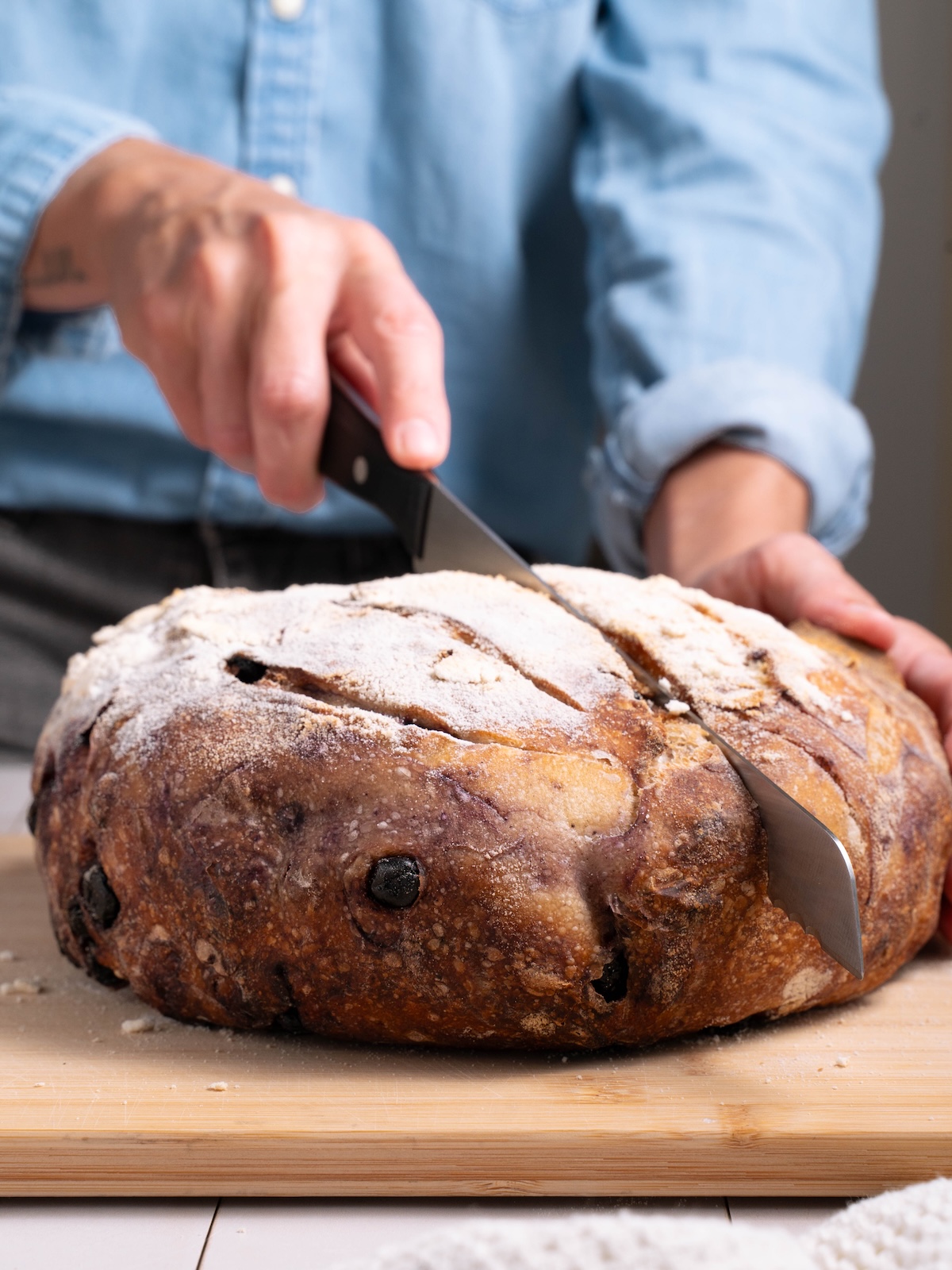
If you try this Blueberry Sourdough Bread recipe, I’d love to hear what you think! Leaving a comment and star rating below helps support my work and makes it easier for others to find and trust my recipes. Thank you!
Blueberry Sourdough Bread
Equipment
- Dutch oven with lid (optional but helpful)
Ingredients
- 330 grams water
- 150 grams bubbly, active sourdough starter
- 10 grams salt
- 500 grams bread flour
- 1 ounce freeze dried blueberries, ground to a powder
- zest of 1 lemon
- 150 grams (1 cup) dried blueberries
Instructions
- Mix the dough: Blend together 330 grams water, 150 grams active sourdough starter, 10 grams salt, and 500 grams bread flour until it forms a cohesive, shaggy dough. Cover and let rest for 30-45 minutes.
- First stretch-and-fold: With slightly damp hands, grab one side of the dough, gently stretch it upward, and fold it over itself. Turn the bowl a quarter turn and repeat on all four sides. Cover back up and rest at least 30 minutes.
- Laminate fillings: Remove the dough from the mixing bowl and press it into a rough rectangle on a slightly damp work surface (the water will prevent it from sticking). Cover evenly with the 1 oz dried blueberry powder, zest of 1 lemon, and 150 grams dried blueberries. Press down gently to adhere fillings to the dough. Starting with an edge that's parallel to you, fold one third of the dough towards the middle, then fold the other side on top like a letter. Roll the dough up into a ball and place back in the mixing bowl. Cover and rest for at least 30 minutes.
- Continue with stretch-and-folds: Perform 2-3 more rounds of stretch-and-folds every 30 minutes or so, until dough is smooth and elastic. The blueberry filling will get a bit more distributed each time.
- Shape & bulk ferment: Shape dough into a ball or loaf. Place seam-side up in a banneton or a floured, towel-lined bowl, cover, and allow to ferment at room temperature until puffy, airy, and risen by 30-50%, about 2-4 hours.
- Refrigerate overnight: Transfer to the fridge to rest overnight.
- Score & bake: Preheat oven to 450° F. Turn dough out onto a piece of parchment paper, score the top of the dough in any desired pattern, and carefully lift the dough into a Dutch oven. Cover and bake for 25 minutes, then remove the lid and bake an additional 15-20 minutes, until bread is golden and cooked through and internal temperature is 205 – 215° F. Cool for at least an hour before slicing.
Notes
Did you try this recipe?
Be sure to leave a comment below!