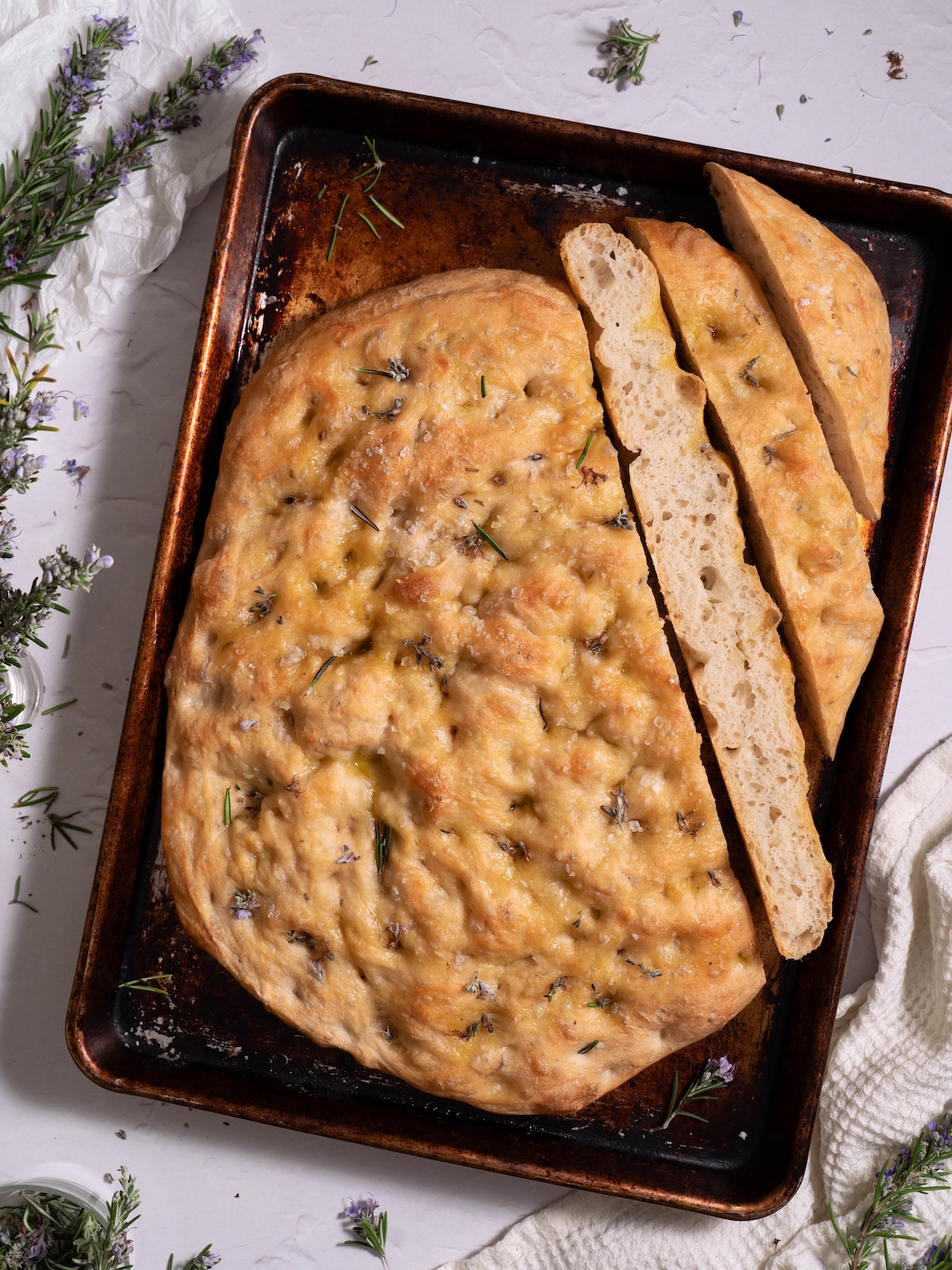
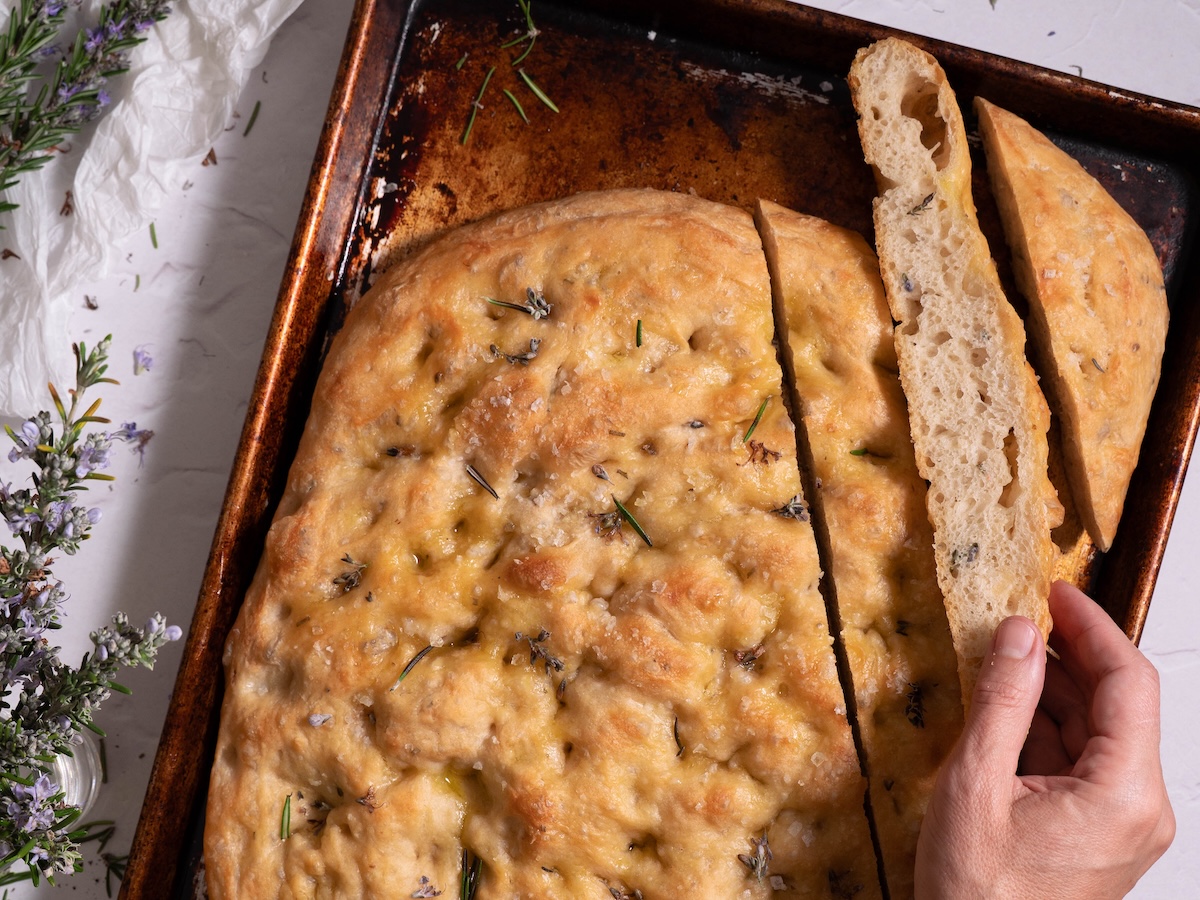
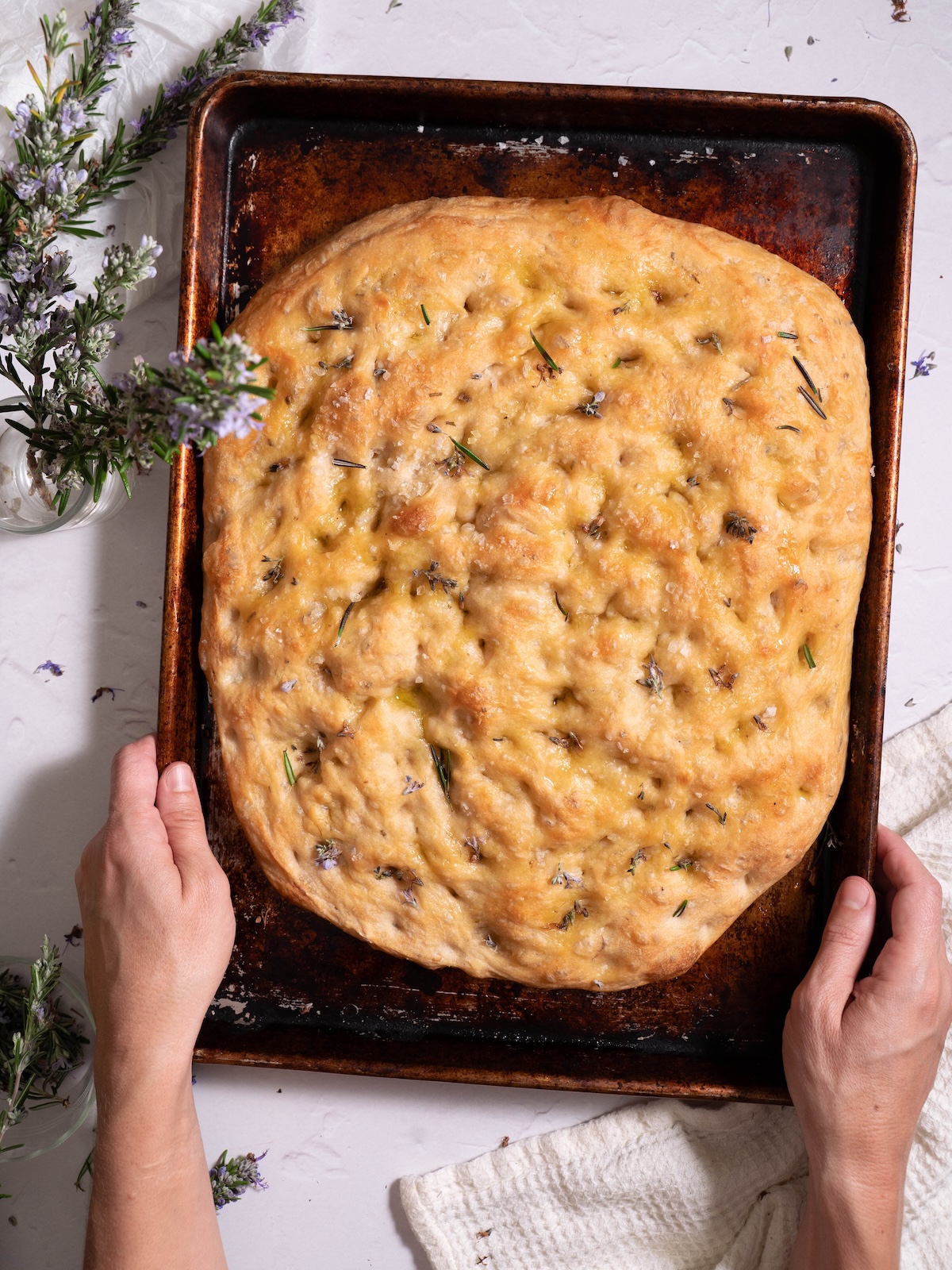
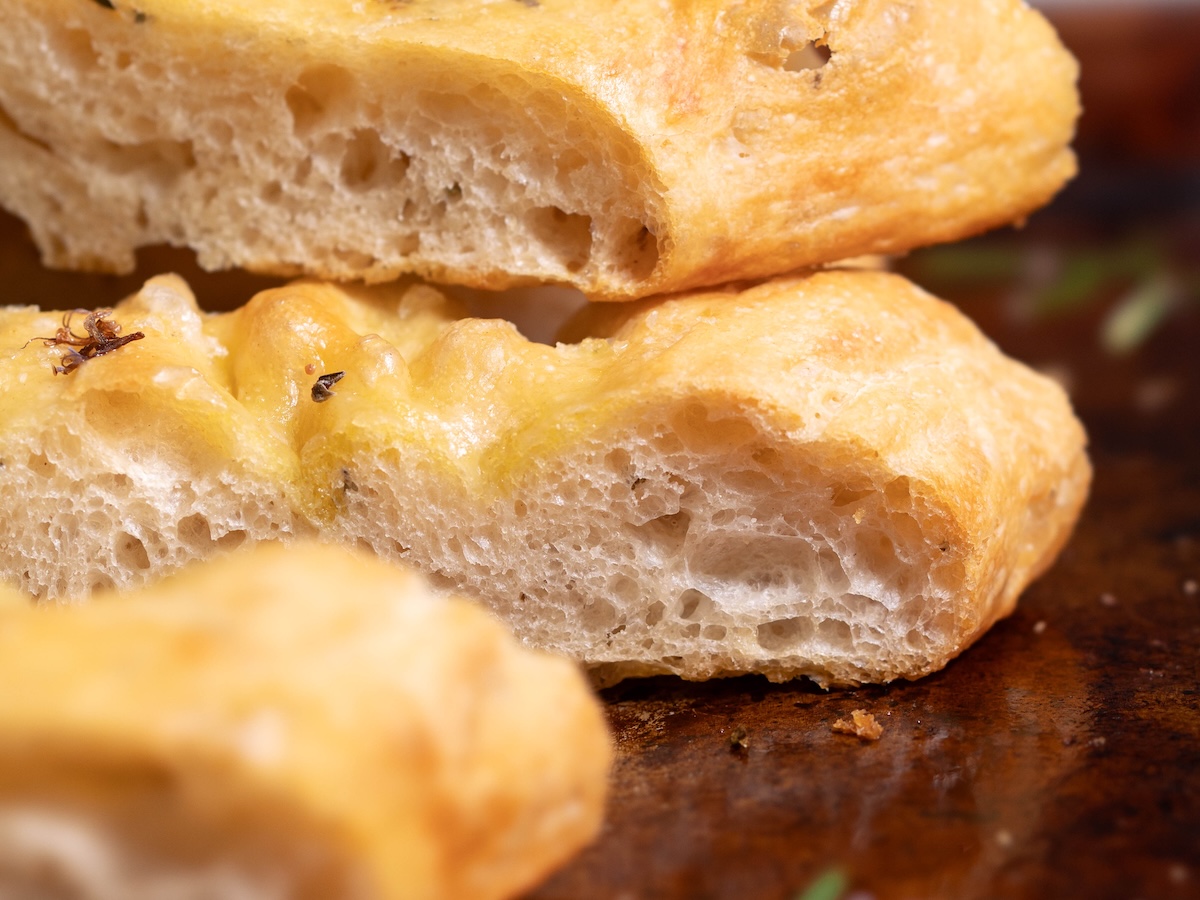
Sourdough Discard Focaccia is truly the best of both worlds, with all the tang and airy texture of sourdough, and the swiftness and reliability of a simple yeast rise. It’s soft and fluffy inside, golden and lightly crisp on the edges, and wonderfully forgiving to make, even if you’re new to baking bread.
Think of this recipe as your go-to focaccia base; one you can flavor and top however you like. In the version you’ll see here, I’ve kept things simple with rosemary flowers and flaky sea salt, but the possibilities are endless. Once you master this dough, it becomes the perfect canvas for fresh herbs, cheeses, seasonal veggies, or bold, creative flavor combinations.
Recipe highlights
- Chewy, soft, fluffy focaccia texture
- Tons of flavor from sourdough starter & olive oil
- Same-day bake thanks to instant yeast (ready in about 3 ½ hours!)
- Simple to make with no kneading required
- Forgiving recipe that’s great for beginning bread bakers
- Super versatile – use as a base recipe and flavor any way you like!
Recipe overview
⏱️ Prep: 20 mins active • Proof: ~3 hrs • Bake: 15-20 mins • Total: <4 hrs
🍴 Yield: 1 rustic loaf
💪 Skill level: Beginner
😋 Flavor notes: Up to you! Pairs well with: Olive oil, balsamic vinegar, hummus, olives, charcuterie boards, soft cheeses, sandwich toppings, pasta, soups & stews.
👉 If you’re looking for a full sourdough option, check out my sourdough focaccia recipe.
Ingredient notes & substitutions
Flour: You can make this focaccia with either bread flour or all purpose flour, depending on what you have on hand. Bread flour will give you a slightly chewier texture and more structure, with those classic airy focaccia bubbles. All purpose flour creates a softer, more tender crumb and a slightly lighter bite. Both work fine, so use whichever you prefer (or even a combination of both!).
Sourdough starter: I use an unfed sourdough starter for this (sourdough discard). You could use an active starter if you like, but we’re not relying on it for rise in this recipe. The sourdough discard provides flavor and additional structure to our focaccia, plus it’s a nice way to make sure your leftover starter doesn’t go to waste.
Yeast: Thanks to the instant yeast in this recipe, this focaccia is ready for the oven in just a few hours. You could substitute active dry yeast – just expect the rising time to take a little longer if you do.
Olive oil: Don’t be shy with the olive oil here! Use a high-quality one with good flavor and use it liberally. The olive oil contributes so much to the texture and flavor of focaccia, plus it helps prevent the bread from sticking to the baking pan.
Herbs/spices/toppings: Think of this focaccia like a foundation recipe and upgrade it with any herbs, spices, or toppings you desire. Get creative here and have fun! I have some suggestions below if you’re looking for inspiration.
How to make sourdough discard focaccia
Find the full ingredients list and detailed recipe instructions in the recipe card at the bottom of this post. Here’s a quick step-by-step overview of how to make this recipe:
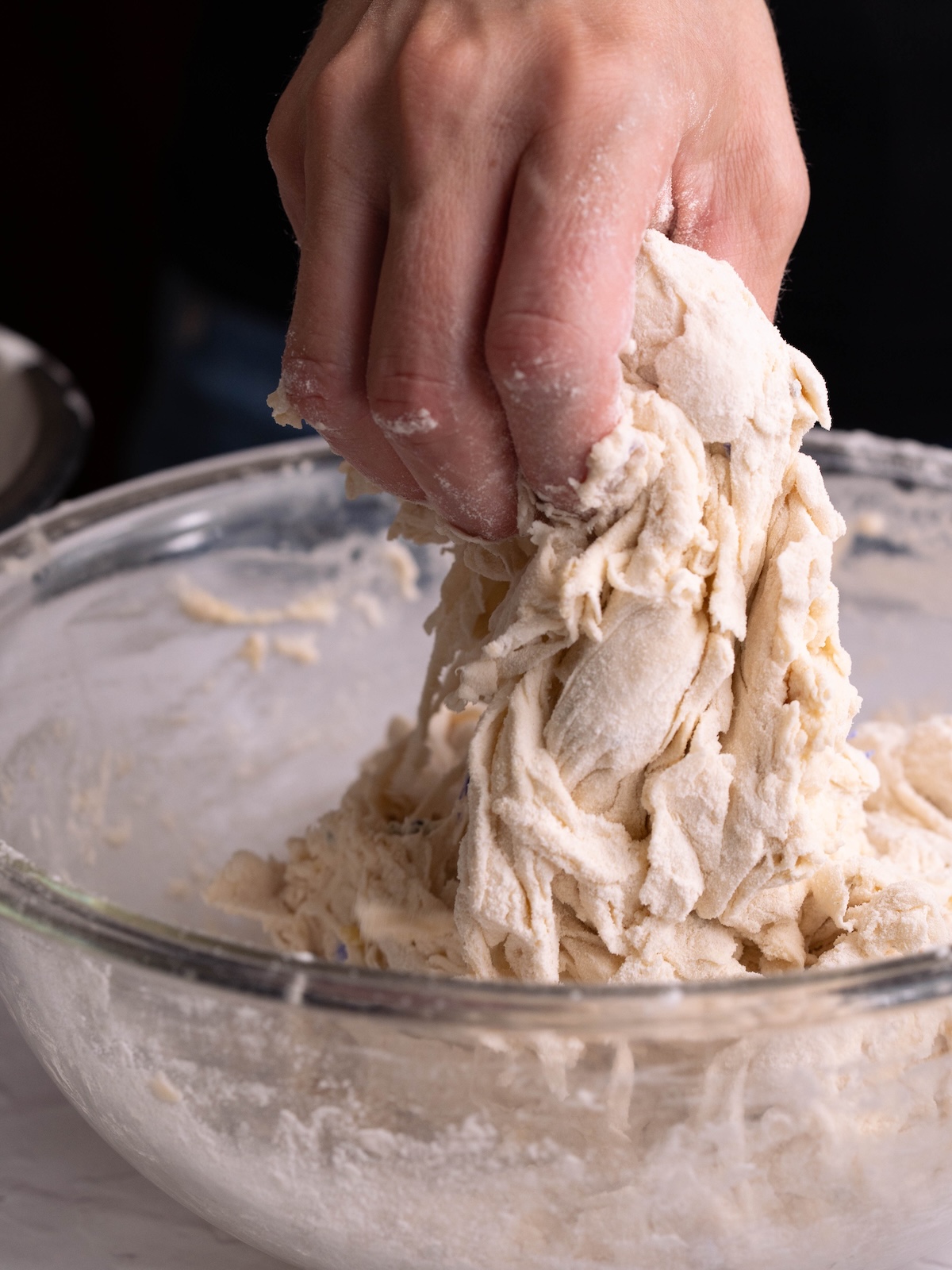
- Mix: Whisk together warm water, olive oil, salt, sourdough discard, and herbs, if using. Add flour and instant yeast; mix to combine into a shaggy dough. Cover the bowl and let the dough rest at room temperature.
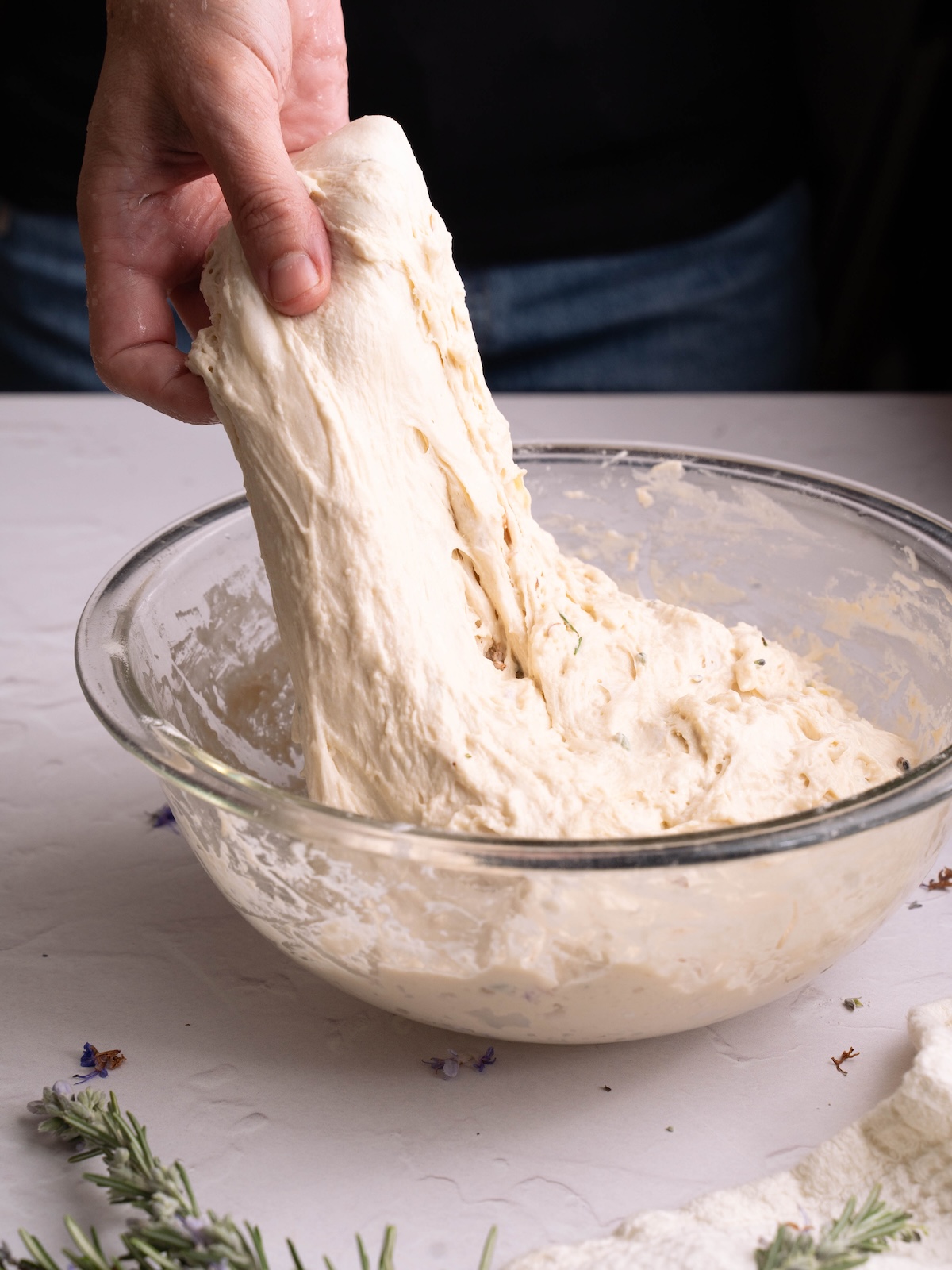
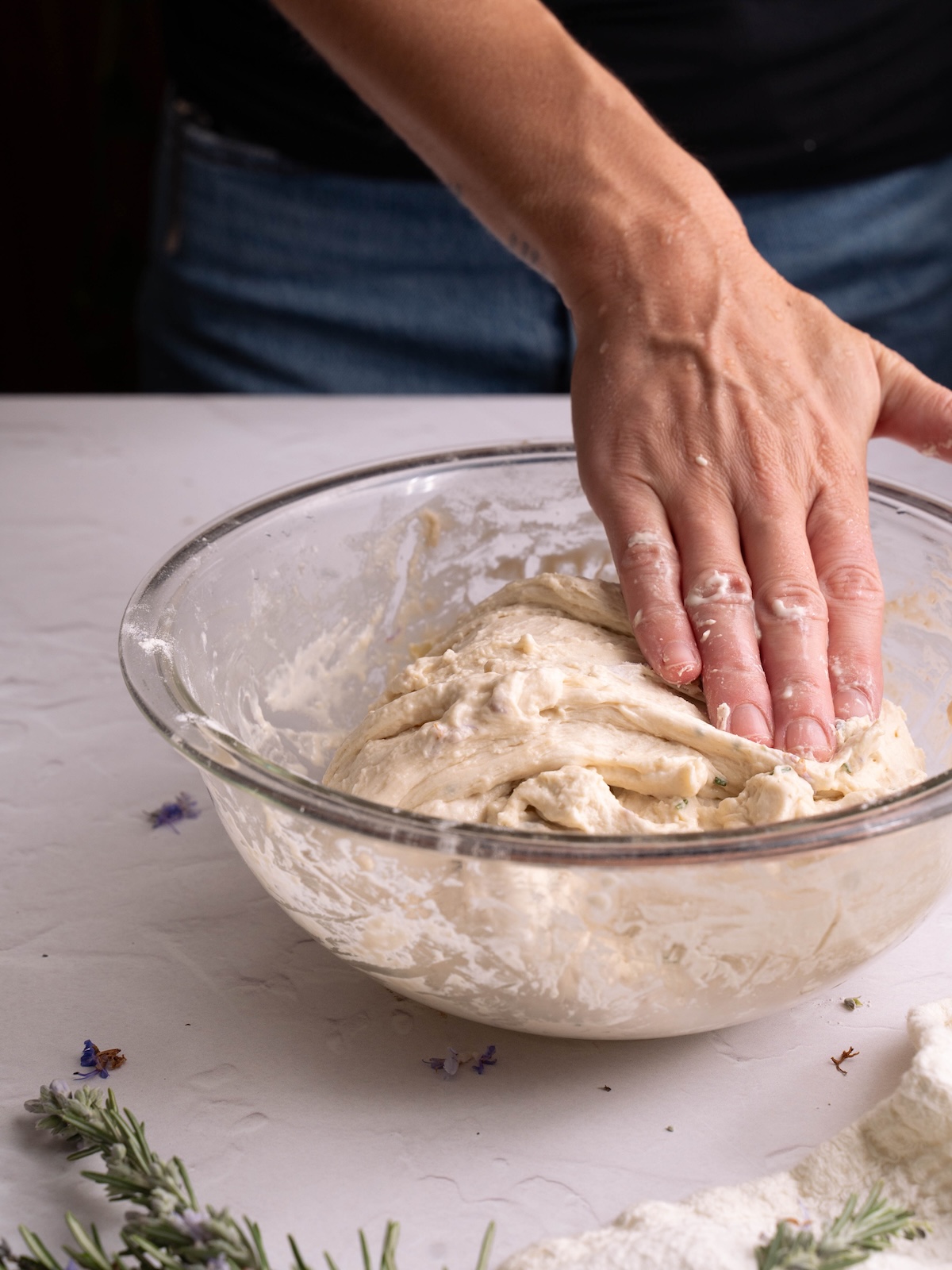
- First rest + stretch and fold (30 mins): After the dough has rested for about 30 minutes, perform a set of stretch-and-folds. With damp hands, gently grab one edge of the dough and pull it upward about as far as it can stretch without tearing, then fold it back toward the center. Turn the bowl a quarter turn and repeat this motion three more times, until you’ve worked your way all around the dough. Cover and let it rest again.
- Second rest + stretch and fold (60 mins total): After another 30 minutes, repeat the stretch-and-fold process. The dough should already feel smoother and more elastic. Cover and let it rest for a final 30 minutes (about 90 minutes total resting time).
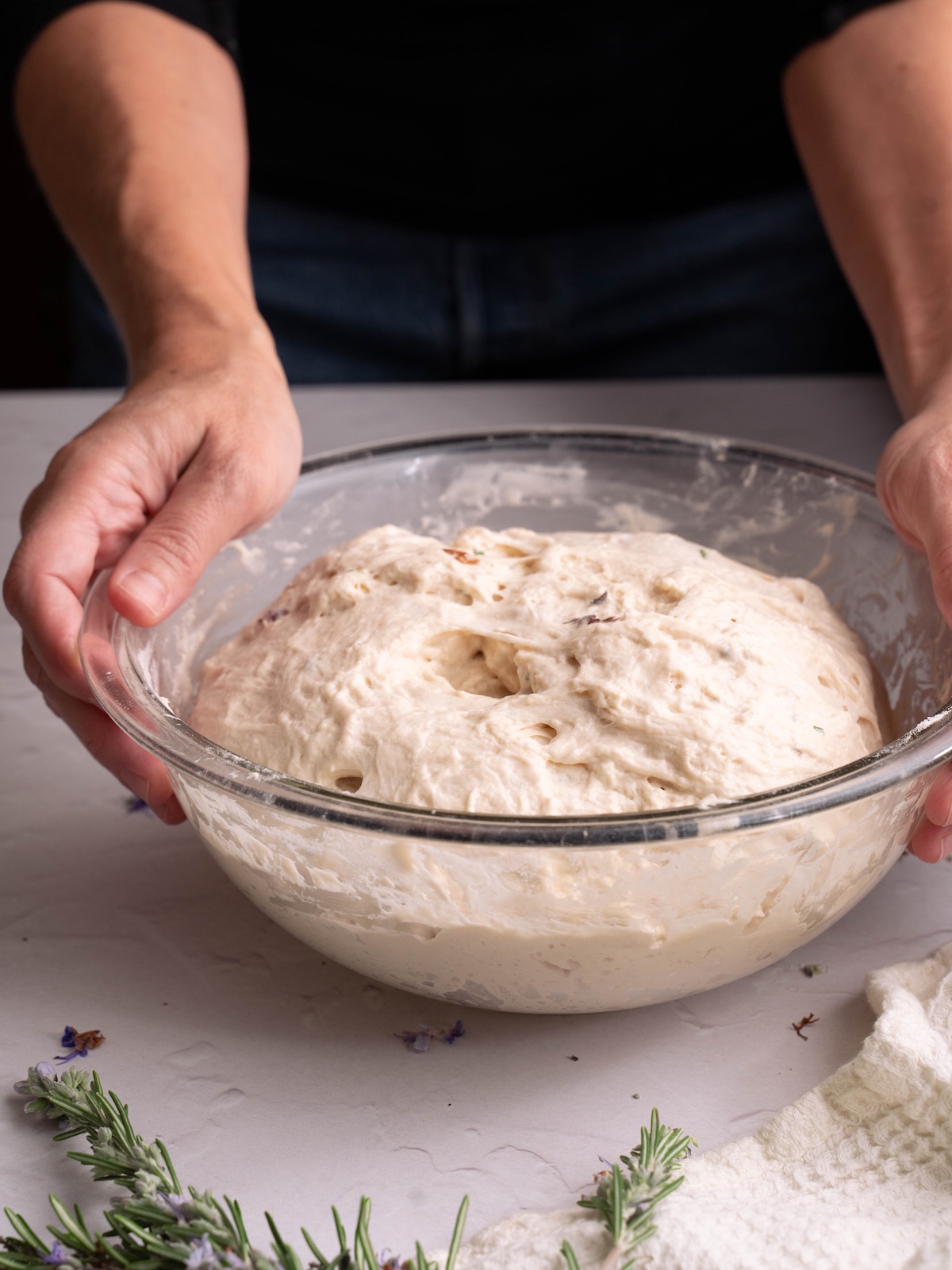
- Shape: Generously coat a 9×13-inch pan or baking sheet with olive oil. Transfer the dough to the pan and flip it once so both sides are coated in oil. Gently press and stretch the dough into a rough rectangle about ½ inch thick. It doesn’t need to reach the edges yet — it will spread more as it rests.
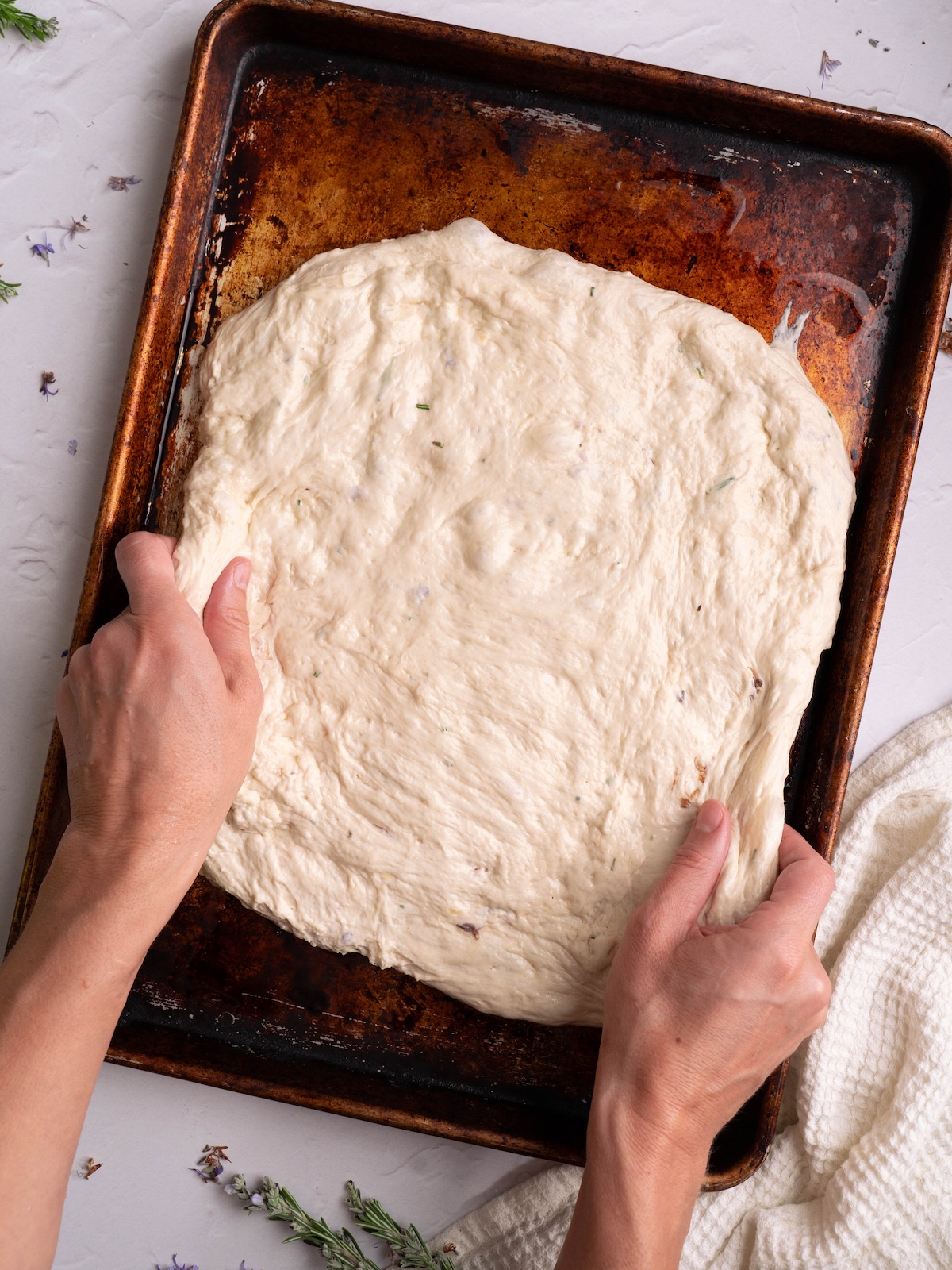
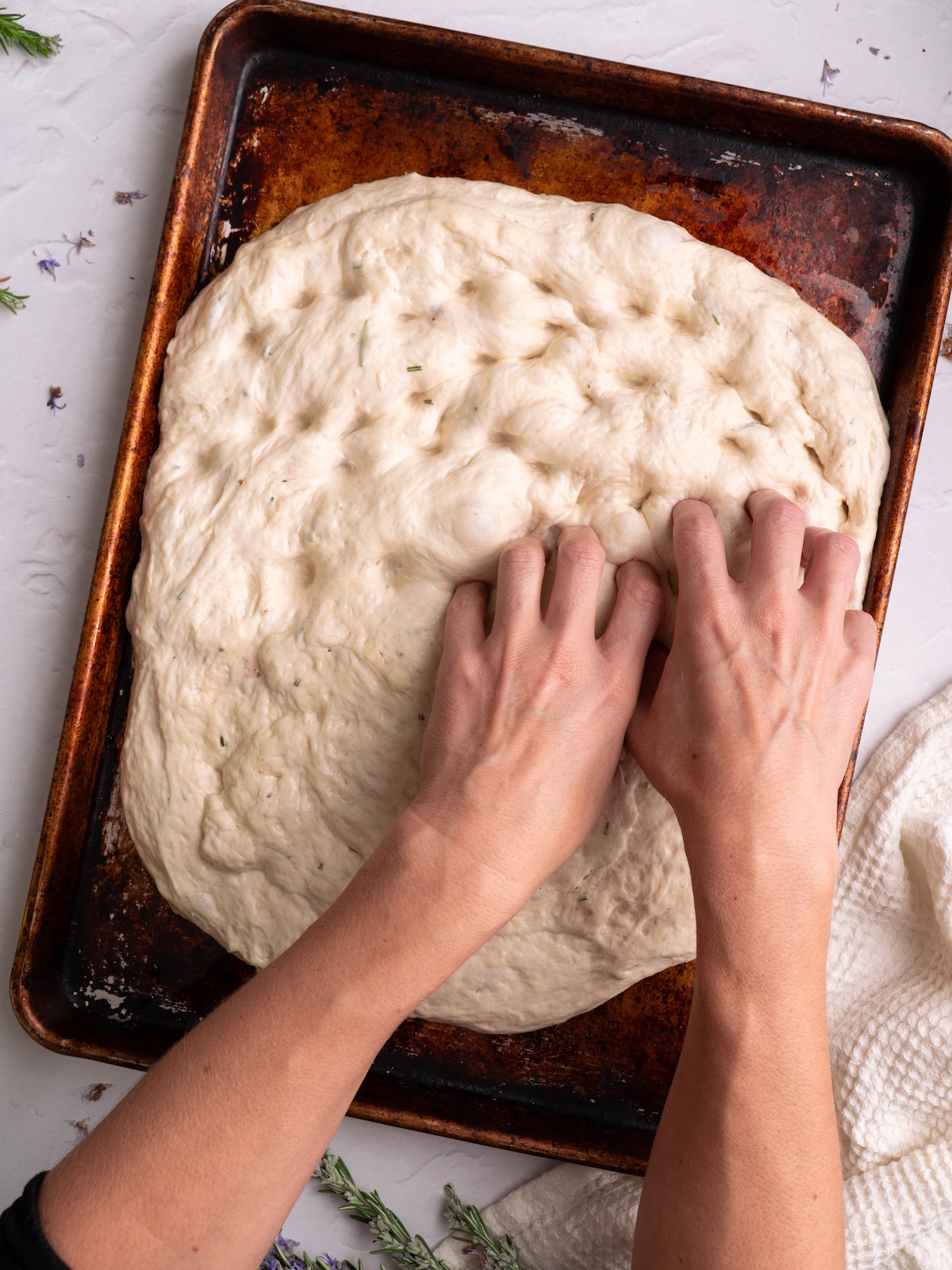
- Proof: Cover the dough with oiled plastic wrap or a second baking sheet and allow the dough to proof for 60-90 minutes, or until puffy, airy, and full of bubbles. It should expand in size pretty significantly.
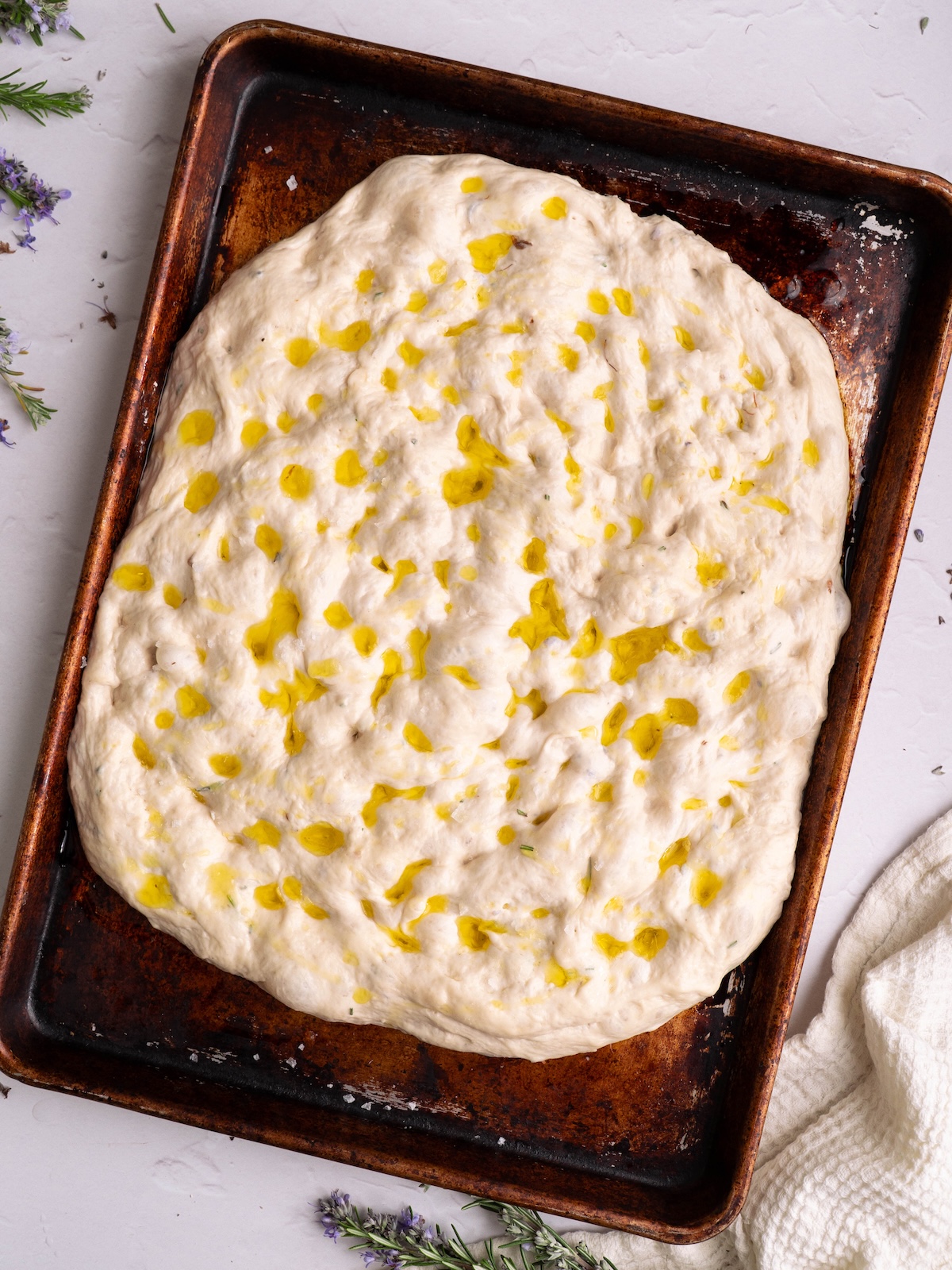
- Dimple + add any toppings: Use your fingers to dimple the dough all over. Drizzle with more olive oil, sprinkle with sea salt, and add any toppings.
- Bake: Bake focaccia in a preheated 425° F oven until golden brown all over, 15-20 minutes.
Pro baker tips
Look for visual cues that the bread is proofed. Proofing time can vary based on how fresh the yeast is, how old your sourdough discard is, and what temperature your house is at. Rather than relying completely on the clock, look for dough that expands in size, is light and airy, and full of bubbles. That means it’s ready to bake!
Dimple gently. When dimpling the dough, press your fingers all the way down to the pan, but keep your touch gentle so you don’t tear the dough.
Press in toppings. If you’re adding any toppings before baking, press them into the dough gently so that they don’t pop out as the dough rises in the oven.
Bake until golden on top and bottom. The bottom should have a golden brown crust; if it’s still pale, give it a few more minutes in the oven. You can also poke the dough with a digital thermometer. The internal temperature will be 190 – 210 ° F when baked properly.
Flavors & toppings for sourdough discard focaccia

One of the best things about this recipe is how versatile it is. Let it be your cornerstone focaccia dough — a simple, reliable base you can flavor in endless ways depending on the season, what’s in your fridge, or what you’re craving. You can keep things minimal with herbs and flaky salt, or pile on bold toppings for a more dramatic bake. Here are some ideas to get you started:
🌿 Fresh or dried herbs
For a classic, aromatic dough, mix about 2 tablespoons chopped fresh herbs or 1 tablespoon dried herbs into the dough along with the liquids. Rosemary, thyme, minced chives, sage, or herbes de Provence are all great options. Rosemary flowers are especially lovely if you have access to them (that’s what you’ll see here in the images).
🧄 Garlic parmesan
Scatter thin slivers of raw garlic over the surface before baking, or tuck in chunks of sweet roasted garlic cloves for a softer, mellow flavor. Finish with a generous shower of finely grated parmesan so it melts into golden, savory pockets.
🧅 Caramelized onions
Spread cooled caramelized onions over the dough after dimpling and just before baking. This allows their jammy sweetness to sink slightly into the focaccia as it bakes.
🍅 Caprese
Top the dough with halved cherry tomatoes and fresh mozzarella balls before baking. After baking, scatter fresh basil all over and drizzle with optional Basil Flower Oil. For more inspiration on this flavor combination, check out my Sourdough Caprese Focaccia recipe.
🫒 Olives & cheese
Press whole or halved olives gently into the dough after dimpling so they stay nestled in place while baking. A sprinkle of goat cheese or feta crumbles adds a creamy, salty contrast.
🎨 Focaccia art
Turn your sourdough discard focaccia into an edible canvas by arranging vegetables, herbs, and edible flowers into decorative patterns or full scenic designs. This is such a fun and creative way to showcase seasonal ingredients! You can check out my edible flower focaccia for inspiration.
Once you get comfortable with the dough, try some new flavor combinations. Think different cheeses, roasted vegetables, citrus zest, spicy spreads, even sweet versions. This is definitely the kind of recipe that invites experimentation!
Serving & storing
Store focaccia in an airtight container at room temperature for up to 4 days.
To re-heat it, warm slices or squares in a 350° F oven for 5–7 minutes, or under a low broiler for a few minutes. For warm soft slices, wrap loosely in foil before placing in the oven. For crispier slices, heat them on a sheet pan with a little extra olive oil.
Enjoy this bread warm or room temperature. Here are some of my favorite ways to serve it:
- Dipped into high-quality olive oil & balsamic vinegar
- Cut into chunks and served with hummus and labneh
- Dunked into soups and stews
- Sliced horizontally and made into sandwiches
- Cut into small pieces to serve with a charcuterie board
- Served alongside pasta dishes
More focaccia recipes:
Your feedback means so much to me. If you make this recipe, please leave a comment and star rating below. It helps support my blog and helps other readers feel confident trying this recipe too.
Sourdough Discard Focaccia
Equipment
- 13×9 pan or baking sheet
Ingredients
- 1 ½ cups warm water
- 2 tablespoons olive oil
- 1 tablespoon salt
- ½ cup sourdough discard
- 2 tablespoons chopped fresh herbs, optional
- 3 ¾ cups bread flour
- 1 package (2 ¼ tsp) instant yeast
- 2-3 tablespoons additional olive oil, divided
- flaky sea salt, optional
Instructions
- Mix dough: Whisk together 1 ½ cups warm water, 2 Tbsp olive oil, 1 Tbsp salt, ½ cup sourdough discard, and herbs, if using. Add 3 ¾ cups bread flour and package of instant yeast; mix to combine into a shaggy dough. Cover the bowl and let the dough rest at room temperature.
- First rest + stretch and fold (30 mins): After the dough has rested for about 30 minutes, perform a set of stretch-and-folds. With damp or oiled hands, grab one edge of the dough and gently pull it upward about as far as it can stretch without tearing, then fold it back toward the center. Turn the bowl a quarter turn and repeat this motion three more times, until you’ve worked your way all around the dough. Cover and let it rest again.
- Second rest + stretch and fold (60 mins total): After another 30 minutes, repeat the stretch-and-fold process. The dough should already feel smoother, more hydrated, and more elastic. Cover and let it rest for a final 30 minutes (for about 90 minutes total resting time).
- Shape: Generously coat a 9×13-inch pan or a baking sheet with olive oil. Transfer the dough to the pan and flip it once so both sides are coated in oil. Gently press and stretch the dough into a rough rectangle about ½ inch thick. It doesn’t need to reach the edges of the pan yet — it will spread more as it rests.
- Proof: Cover the dough with oiled plastic wrap or a second baking sheet and allow the dough to proof for 60-90 minutes, or until puffy, airy, and full of bubbles. It should expand in size pretty significantly.
- Dimple + add any toppings: Use your fingers to dimple the dough all over, pressing all the way down to the pan but being careful not to tear the dough. Drizzle the dough with a bit more olive oil, sprinkle with sea salt if desired, and add any toppings, pressing them gently into the dough.
- Bake: Bake focaccia in a preheated 425° F oven until golden brown all over, 15-20 minutes. The internal temperature of the bread should be 200° – 210 ° F. Allow bread to cool before slicing and serving.
Notes
Did you try this recipe?
Be sure to leave a comment below!Recipe loosely adapted from Bake From Scratch.