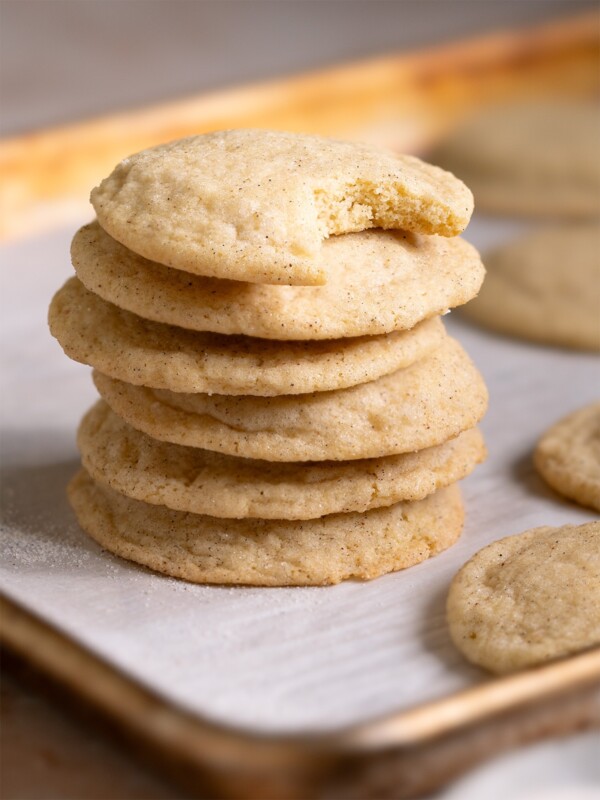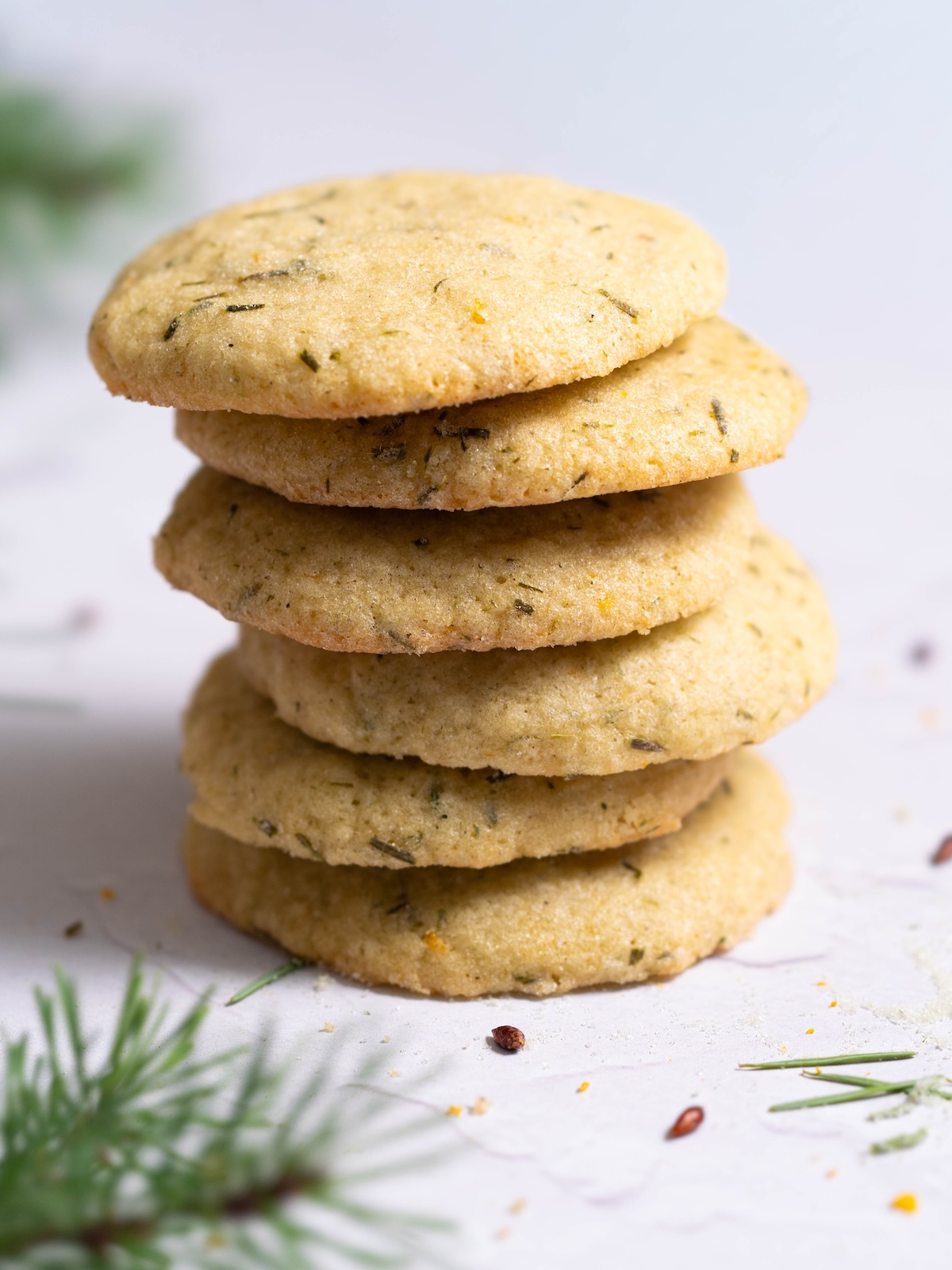
These Douglas Fir Cookies are soft, chewy sugar cookies infused with one of winter’s most magical flavors. Fresh Douglas fir needles lend a bright, citrusy, evergreen scent, which I layered with orange zest and just a hint of cardamom to add to the festive vibe.
As you make these cookies, your kitchen fills with the most incredible Christmas tree aroma. From the moment you process the Douglas fir needles with the sugar, piney, citrusy scents waft through the air, making them just as delightful to make as they are to eat.
Because conifer needles are one of the few wild foods available to foragers in the winter, these cookies feel especially celebratory. They’re festive without being fussy, perfectly seasonal, and a beautiful way to bring the forest into your kitchen during the colder months.
Recipe highlights
- Made with fresh conifer needles, a unique wintery wild ingredient
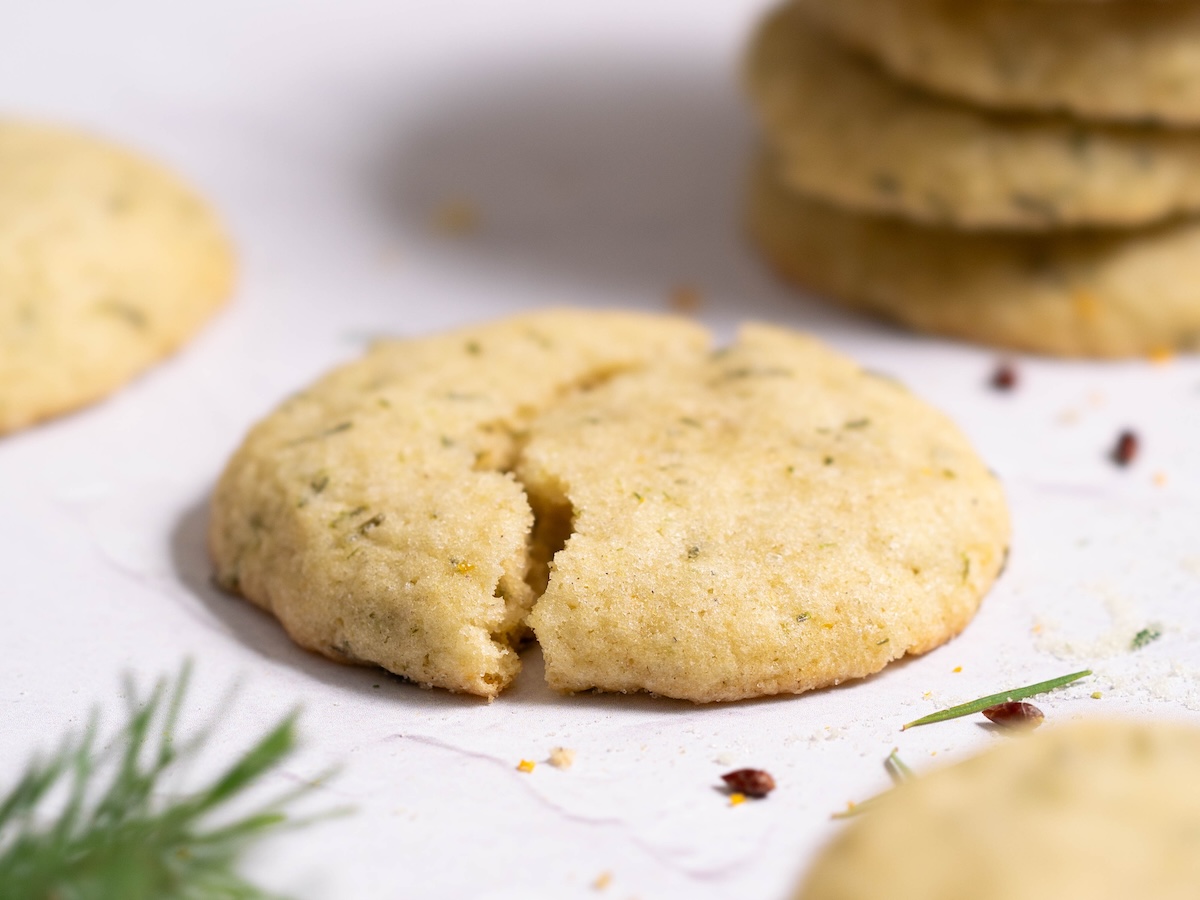
- Soft and chewy sugar cookie texture with crisp edges
- Bright, citrusy evergreen flavor balanced with orange zest & cardamom
- An easy introduction to using Douglas fir and other evergreen needles
- Super festive and perfect for holiday baking, gifting, or winter parties
Recipe overview
⏱️ Prep: ~10 min • Bake: 9-11 min • Total: ~20 min
🍴 Yield: About 16 cookies (can be doubled!)
💪 Skill level: Baking – beginner. Foraging – intermediate.
😋 Flavor profile: Bright, citrusy, lightly resinous, and aromatic. Pairs well with: Citrusy drinks, hot or iced tea, marmalade, holiday parties, a sip of Nocino or a Pine Needle Old Fashioned.
What do Douglas fir cookies taste like?
The needles of Douglas fir can taste a little different from tree to tree, but have a definite grapefruit flavor. They’re bright, lemony, and have just a hint of resiny bitterness. Infused in sugar and made into cookies, they give off a pine tree aroma and taste citrusy and bright.
☀️ These cookies are based on my recipe for Lemon & Fennel Pollen Cookies. Try that recipe for a summery version!
Foraging notes: finding and identifying Douglas fir
Douglas fir (Pseudotsuga menziesii) is one of the most beloved trees for foragers (and bakers!) thanks to its fragrant, citrus-forward needles. Their new growth can be used in the spring when their fir tips are fresh and tender, while their mature needles can be collected for culinary uses in the winter.
Key identification features:
- Soft, flat needles (about 1 inch long) that come to a rounded point at the end and grow in a spiral around the branch
- Small, pointy reddish brown buds that look like little dragon toes
- Needles that smell strongly of citrus, lemon, or grapefruit when crushed
- Two white stripes of stomata on the underside of the needles
- Distinctive cones with little “mouse tails” or bracts sticking out
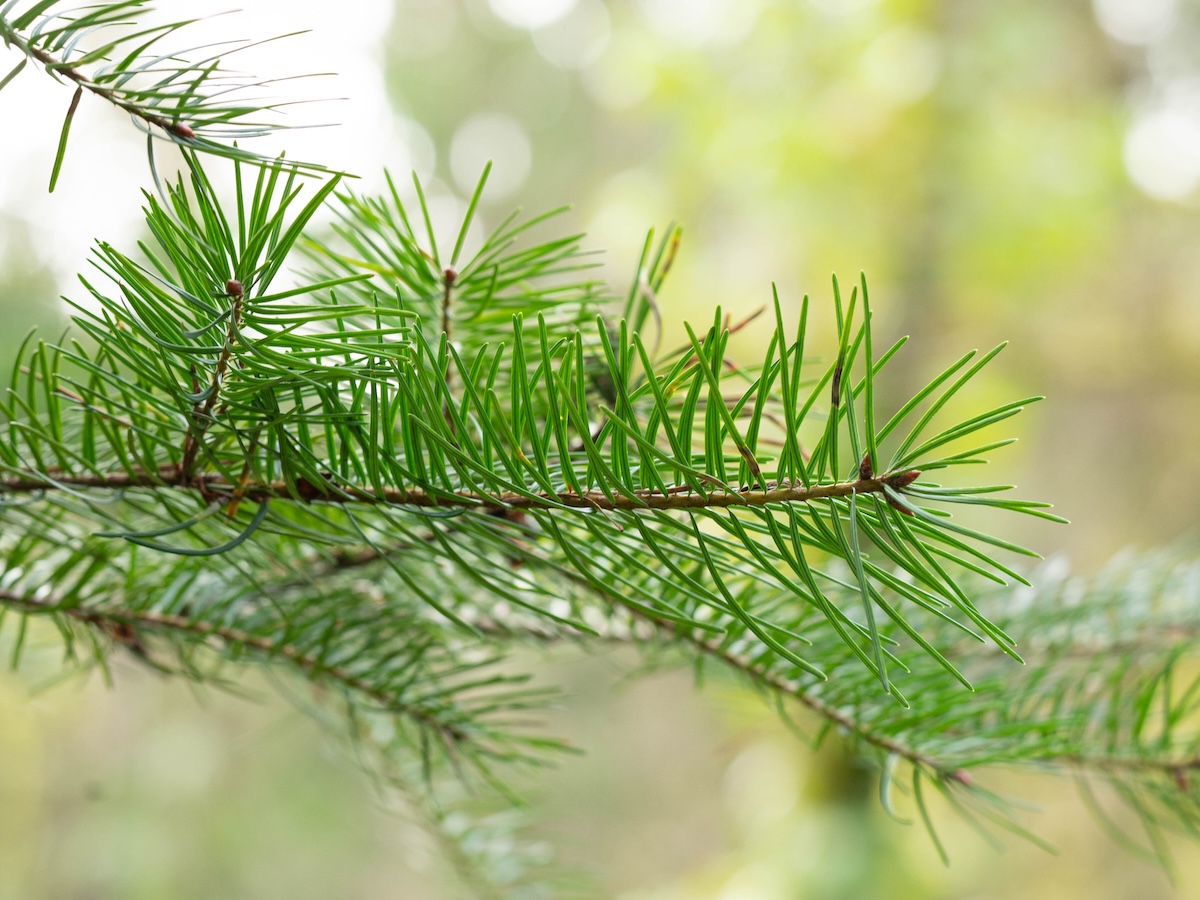
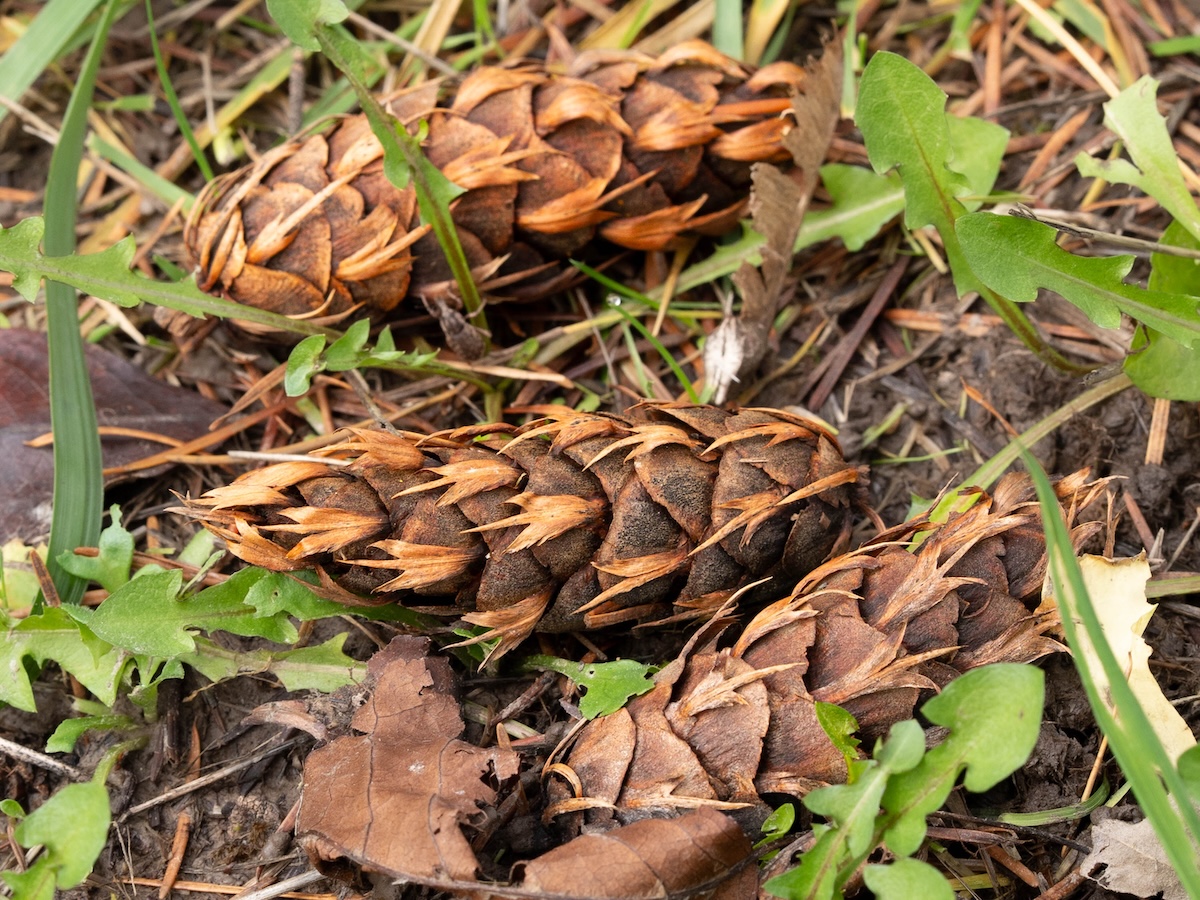
Harvest fresh needles from the tips of branches when possible. Simply clip off the ends of a few branches. All you need for this recipe is ¼ cup of needles!
⚠️ Note: While it may be tempting, avoid using needles from your Christmas tree. These trees are usually sprayed with pesticides and shouldn’t be used for cooking.
Other edible conifers you can use
You can make these cookies with any type of edible conifer needles. If Douglas fir isn’t available where you live, several other evergreen trees produce edible needles that can be used to make these pine needle cookies. All of these species are considered edible (and delicious):
- Fir
- Spruce
- Pine
- Redwood
- Hemlock (Tsuga species, not related to poison hemlock plant)
Each brings its own scent and flavor, with some leaning more resinous, and others more citrusy or herbal. I like to nibble on a needle before harvesting, as the flavor can even vary tree to tree!
☠️ important warning: avoid yew
Yew trees (Taxus species) are toxic and not edible. Do not forage or consume needles unless you are 100% confident in your identification.
Foraging for wild edibles must always be done with great care. The information on this blog is provided for educational and inspirational purposes only. It is your responsibility to properly identify any wild plants before consuming them. Some wild plants are toxic or may closely resemble edible species. If you are uncertain about any plant, do not eat it. Always consult a trusted field guide, local expert, or professional forager before consuming wild foods.
How to make Douglas fir cookies
Making these cookies fills your kitchen with a bright, piney Christmas tree aroma that instantly feels festive and cozy. The result is soft, chewy sugar cookies with a gentle evergreen aroma and bright citrus finish.
Find the full ingredients list and detailed recipe instructions in the recipe card at the bottom of this post. Here’s a quick step-by-step overview of how to make this recipe:
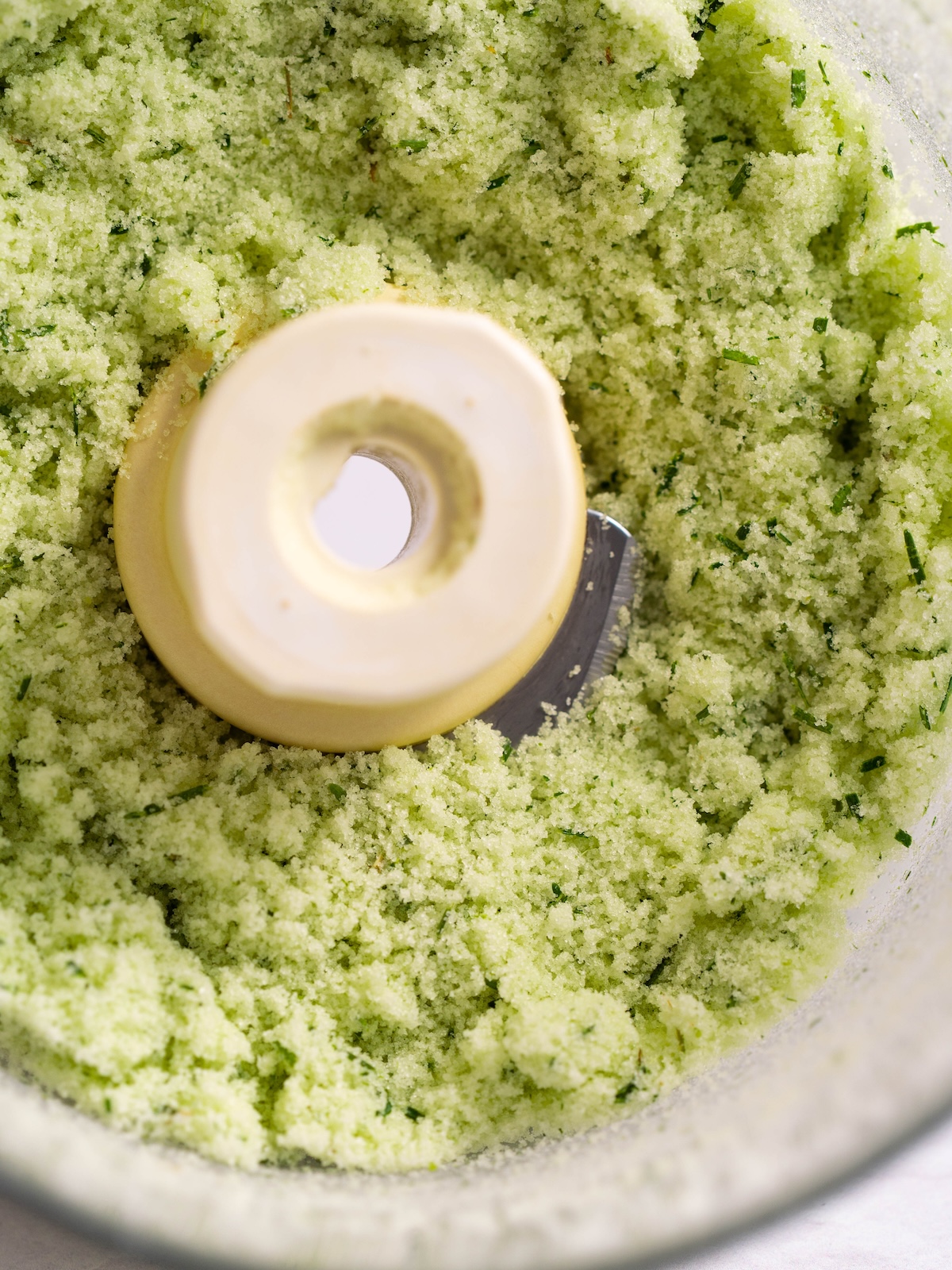
- Infuse the sugar: Start by processing fresh Douglas fir needles with granulated sugar in a food processor. This releases their oils, infuses the sugar with flavor, and turns it pale green and incredibly fragrant. Set aside ¼ cup of this sugar for rolling, then add the orange zest to the food processor and pulse a few more times.
- Make the dough: Cream the infused sugar with soft butter, then mix in egg, fresh orange juice, and dry ingredients until just combined. The dough should be soft but scoopable.
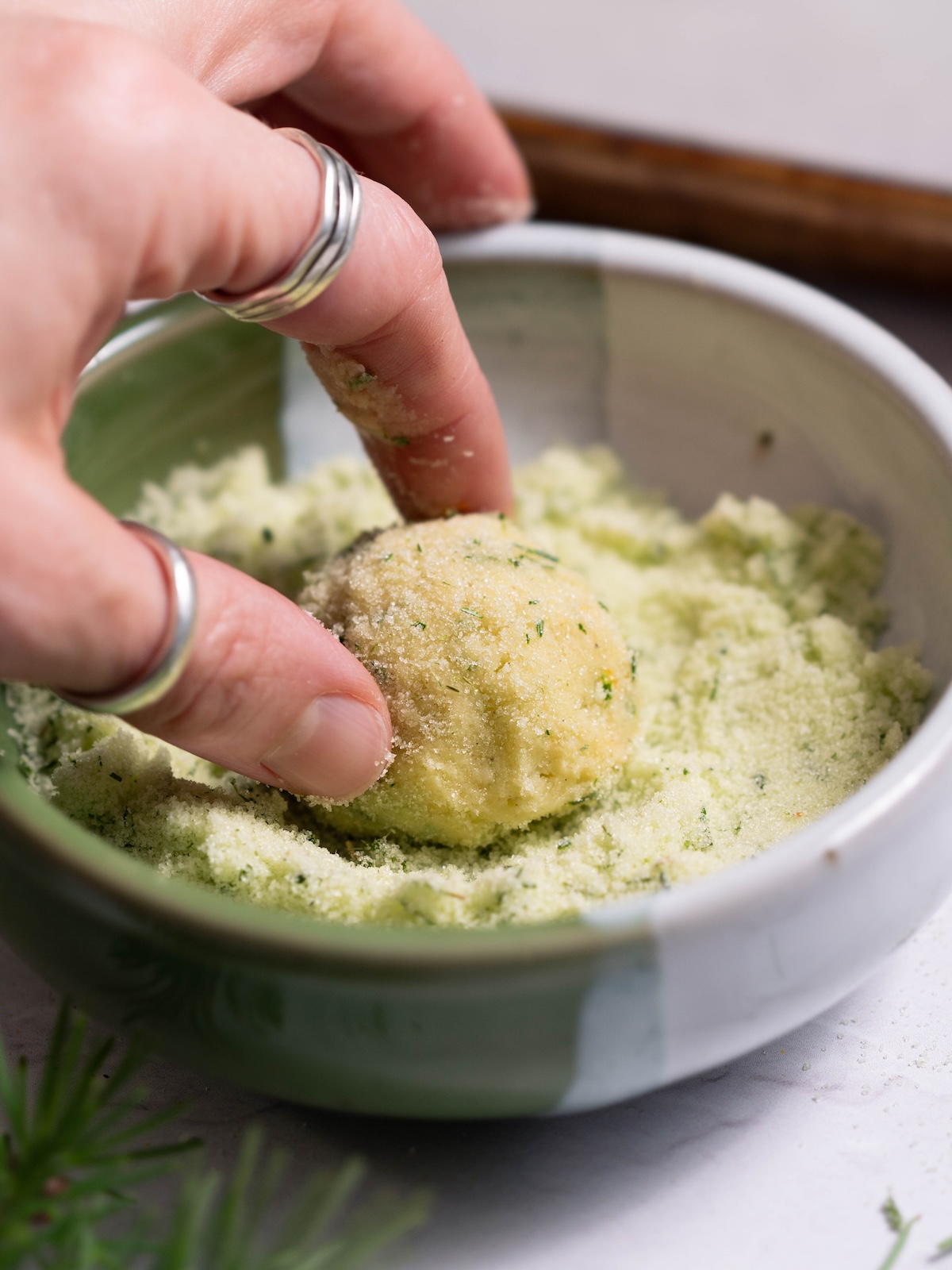
- Roll in sugar: Scoop cookie dough into balls and roll them in the extra fir needle sugar.
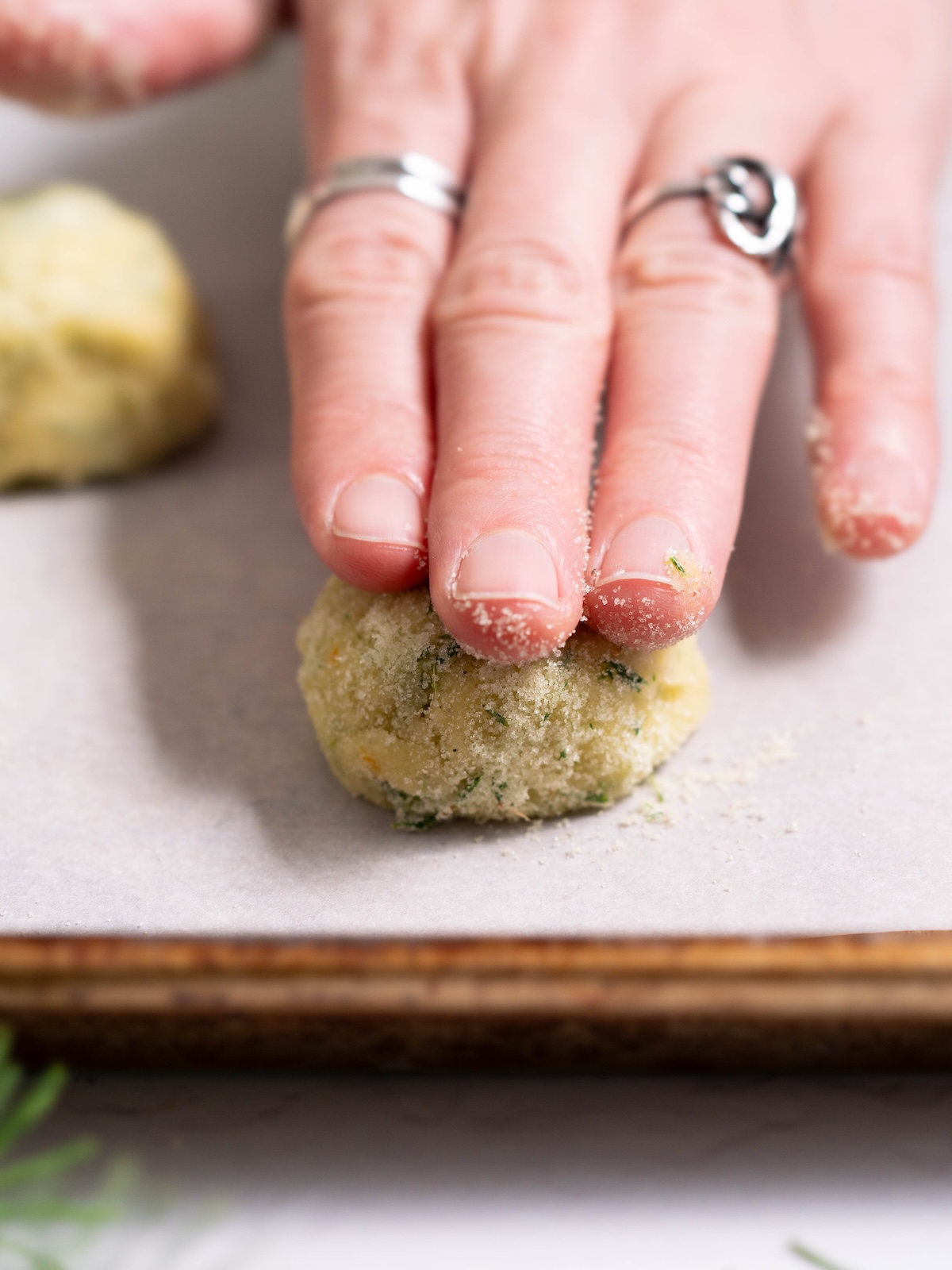
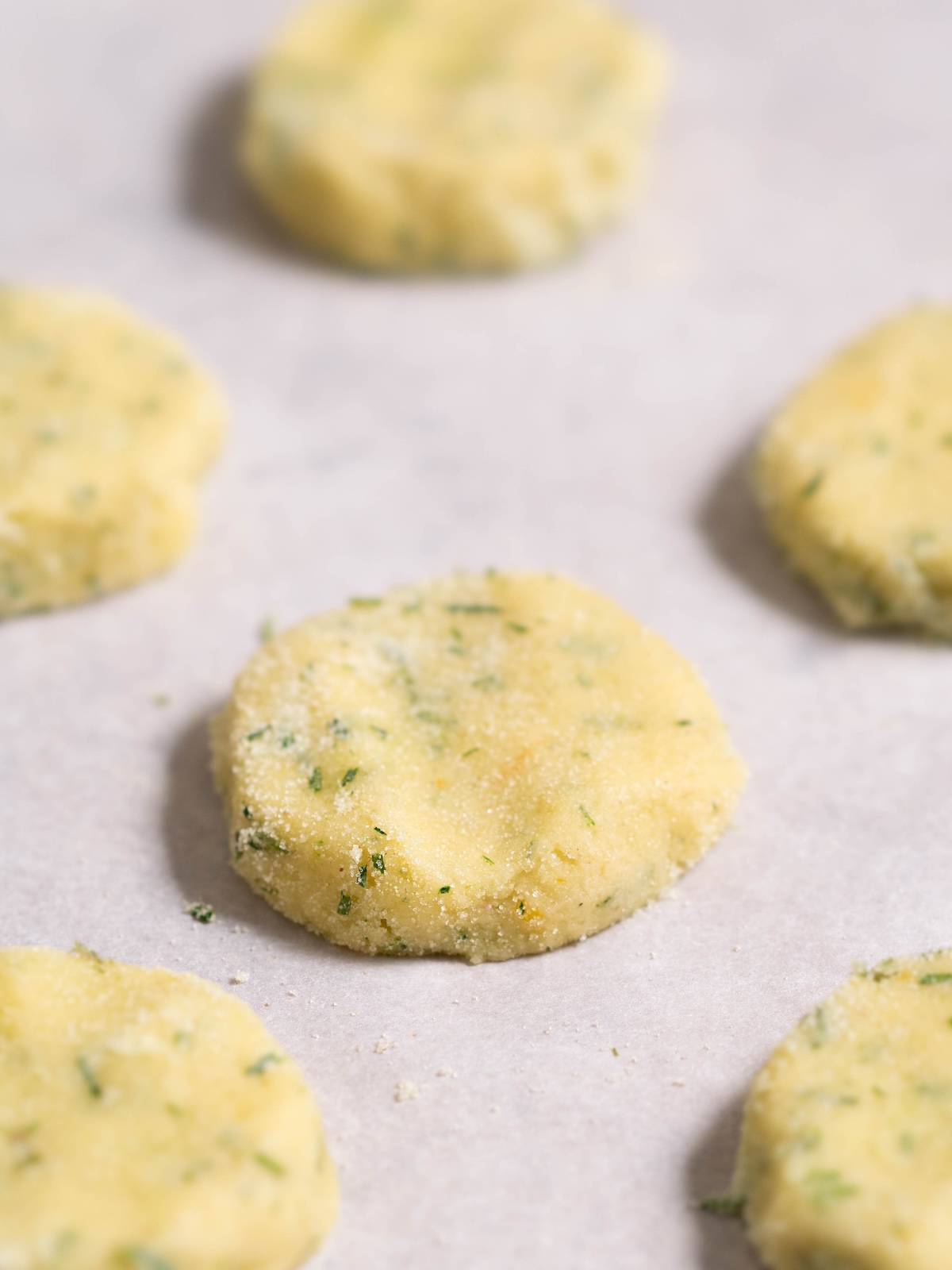
- Bake: Place cookies about 2 inches apart on lined baking sheets, flatten lightly, and bake until lightly golden brown and set at the edges. Let them cool slightly on the pan before transferring.
Variations & substitutions
Add white chocolate: A drizzle of white chocolate on top makes these cookies look even more festive. You could even dip half of the cookie in white chocolate!
Citrus variations: Try lemon or grapefruit instead of orange.
Use a different species of edible conifer: Any edible evergreen needles work here. For ideas, see the “other edible conifers” section above.
Glazed version: A light citrus glaze can turn these into a more dessert-forward cookie. Try this Meyer lemon glaze!
FAQs
The best way to describe the taste is aromatic, citrusy, and bright. Douglas fir in particular is known for its lemony, grapefruit-like flavor. And the cookies definitely smell like a Christmas tree!
Yes, as long as you properly identify your trees and harvest them responsibly. Always follow safe foraging practices. I don’t recommend cutting branches from your Christmas tree, as most commercial tree lots spray trees with pesticides.
Douglas fir, spruce, fir, pine, hemlock, and redwoods all have edible new growth and mature needles. Do NOT harvest yew, as the plant is considered poisonous.
Storage
Store baked cookies in an airtight container at room temperature for up to 4 days.
Make ahead option: Dough can be refrigerated for up to 2 days or frozen for longer storage. To freeze cookie dough, first scoop them into balls and roll them in the fir needle-infused sugar. Place them on a baking sheet and freeze until solid, then transfer to a freezer bag.
Bake frozen cookies straight from frozen, adding a minute or two to the baking time.
More edible conifer recipes:
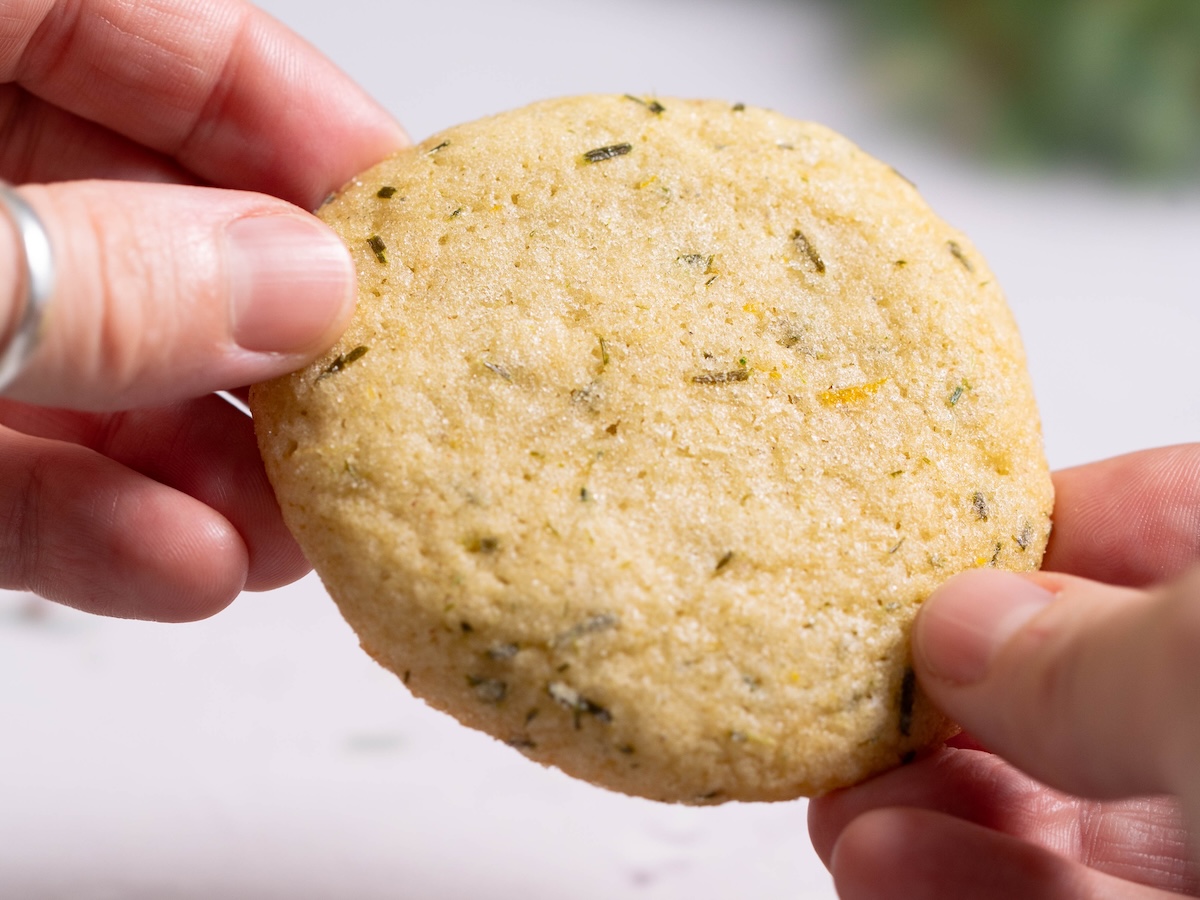
Did you make these Douglas Fir Cookies? Please leave a star rating and review below the recipe card. It helps other readers and means so much to me!
Douglas Fir Cookies
Equipment
- Food processor
Ingredients
- 4 ounces (½ cup) unsalted butter, room temperature
- ¾ cup sugar
- ¼ cup Douglas fir needles, or other edible conifer needles
- 2 teaspoons orange zest
- 1 egg
- 1 tablespoon fresh orange juice
- 1 ¼ cups all purpose flour
- ½ teaspoon baking soda
- ½ teaspoon salt
- ½ teaspoon ground cardamom
Instructions
- Prep. Preheat oven to 350° F and line 2 baking sheets with parchment paper.
- Make fir needle sugar. Place ¾ cup sugar and ¼ cup fir needles in a food processor and process until sugar turns green and aromatic and needles are mostly broken down, 2-3 minutes.
- Scoop out ¼ cup of this fir needle infused sugar and set aside in a small bowl. You'll use this to roll the cookies in before baking.
- Add 2 tsp orange zest to food processor and pulse a a few times to mix with remaining sugar.
- Make cookie dough. In the bowl of a stand mixer fitted with the paddle attachment (or using electric beaters), cream 4 oz butter until soft, 30 seconds. Add fir needle/orange sugar; beat until well mixed and fluffy, about 1 minute.
- Add 1 egg and 1 tbsp orange juice; mix well. Add 1 ¼ cup flour, ½ tsp baking soda, ½ tsp salt, and ½ tsp cardamom. Mix on low until just combined.
- Roll in sugar. Scoop cookie dough into balls using a small (approx. 1 tbsp) scoop. Roll each cookie dough ball in the ¼ cup infused sugar that you set aside, tossing to coat all sides. Place about 2 inches apart on prepared baking sheets and flatten dough lightly with your hand or the bottom of a measuring cup.
- Bake. Bake cookies until golden and set on the edges, about 9-11 minutes. Allow to cool a few minutes before removing from baking sheet.
Did you try this recipe?
Be sure to leave a comment below!