
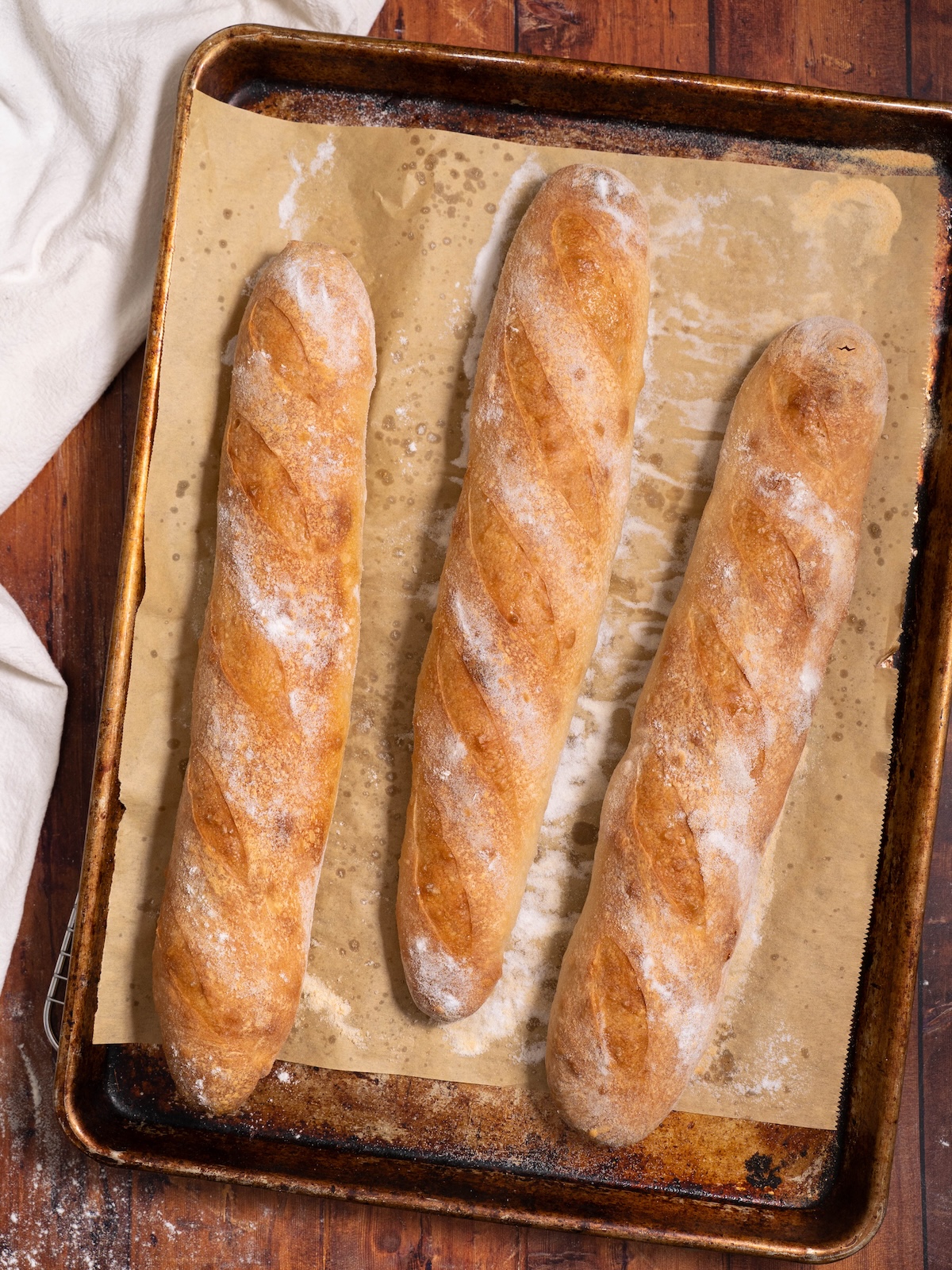
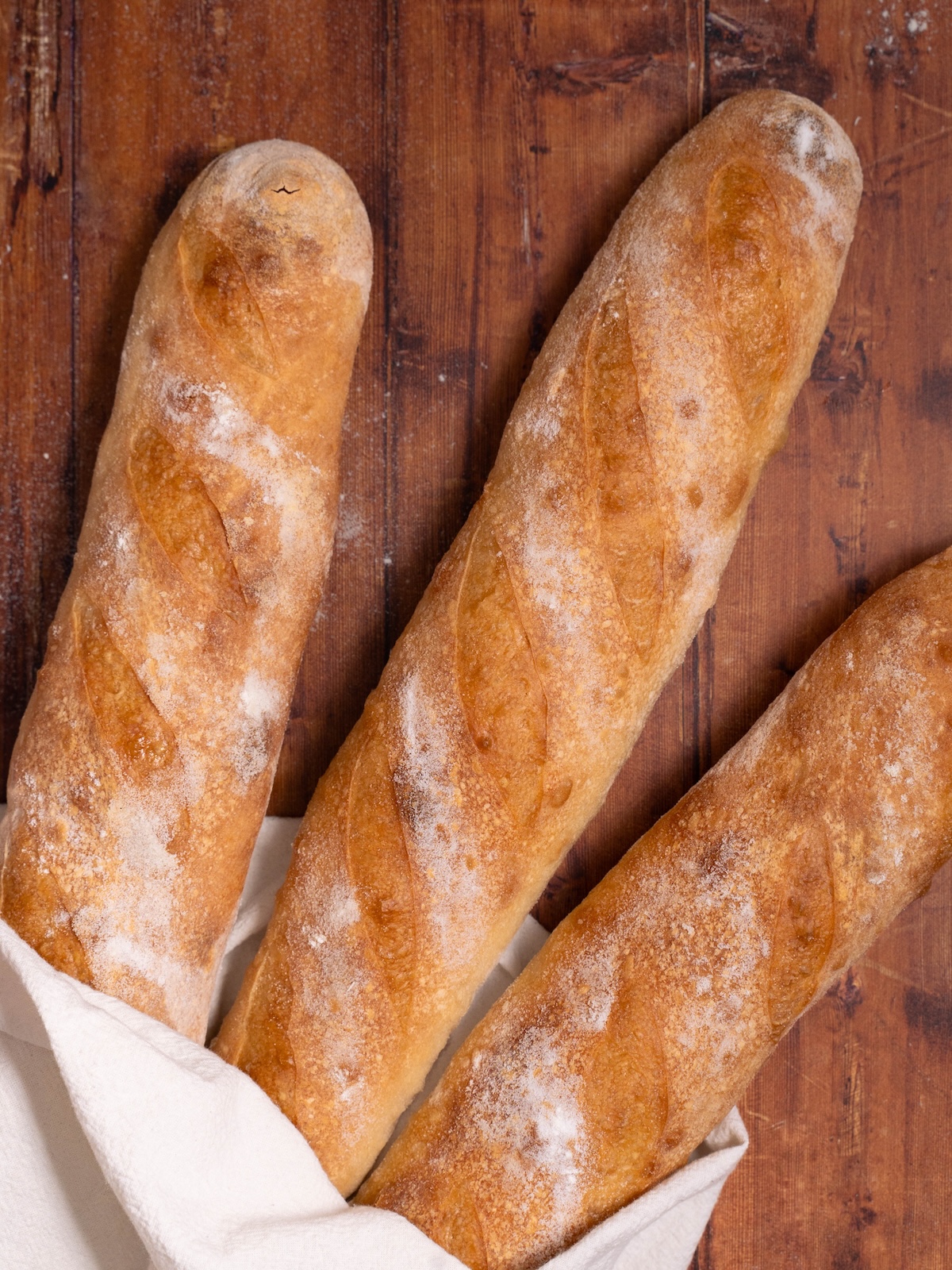
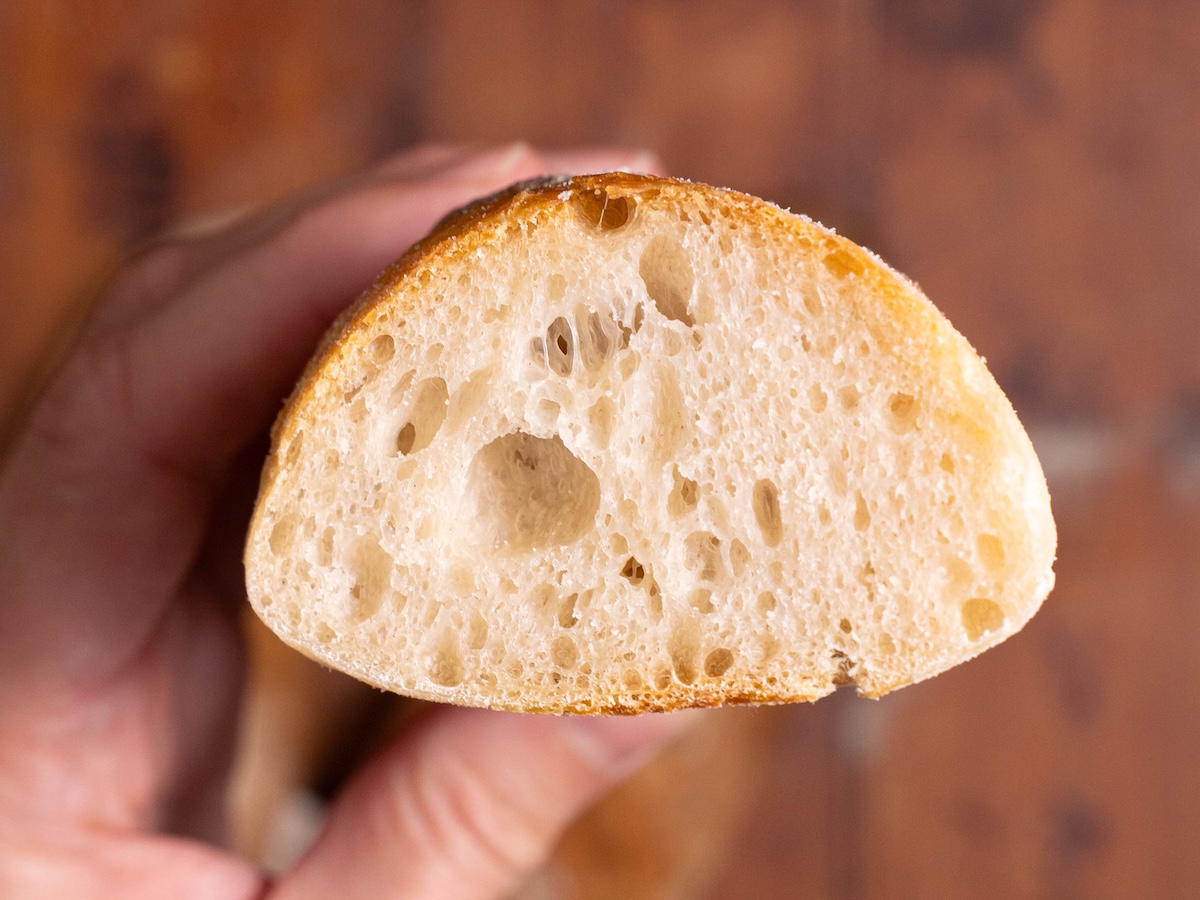
Sourdough baguettes… they’re a bit intimidating, right? They require a little more finesse, and a dough that’s strong enough to hold shape on its own. But their contrast is exactly why we love them so much: a crispy, crackly exterior with a soft, airy interior, perfect for slicing, dipping, or building the ultimate French-inspired sandwich.
This sourdough baguette recipe is one that’s so simple at its core, and yet a little bit nerve-wracking every time I make it, even after spending many years baking professionally. However, I can assure you that baguettes don’t need to be overly complicated to be truly excellent, they just require a bit of attention to structure and technique.
I promise you can do this! We’ll walk through the process step-by-step together so you can confidently make beautiful, bakery-style sourdough baguettes at home.
Recipe highlights
- Crunchy on the outside, fluffy on the inside – the perfect dreamy baguette texture
- Chewy, tangy, and full of flavor
- Just 4 ingredients needed (flour, water, salt, sourdough starter)
- Perfect for crostini, charcuterie boards, and sandwiches
Recipe overview
⏱️ Prep: ~35 mins active • Bulk ferment: 3-4 hrs + fridge overnight • Bake: 25-30 mins
🍴 Yield: 3 demi baguettes
💪 Skill level: Intermediate
😋 Flavor notes: Classic French sourdough bread. Pairs well with: Olive oil, balsamic vinegar, olives, charcuterie boards, soft cheeses, sandwich toppings, butter, fresh tomatoes & basil.
👉 Need to master an easier sourdough recipe first? Start with my beginner-friendly recipe for the Easiest Sourdough Bread.
How to make sourdough baguettes
Making the dough itself is simple and straightforward. The real trick comes in shaping and building enough structure so the baguettes hold their form and bake up with that signature crunchy crust and airy crumb.
For full recipe instructions, scroll down to the recipe card at the bottom of this post. Here’s a quick step-by-step overview on how to make this recipe:
- Mix the dough: Blend together water, salt, active sourdough starter, and bread flour until it forms a cohesive, shaggy dough. Cover and let rest for 30 minutes.
- Build structure: Knead the dough briefly with a stand mixer or your hands, then perform stretch-and-folds every 30 minutes (at least 4 times). You’re looking for a dough that feels smooth, strong, and elastic.
- Bulk ferment: Allow dough to rest at room temperature for about an hour.
- Refrigerate overnight: Cover and transfer to the fridge to rest overnight. This develops flavor and makes the dough easier to handle.
- Shape: Divide the dough into 3 equal pieces. Roll into balls and let rest for 30 minutes. Gently stretch each piece into an oval, fold a few times, then roll into a cylinder, slightly tapering the ends (see shaping photos below).
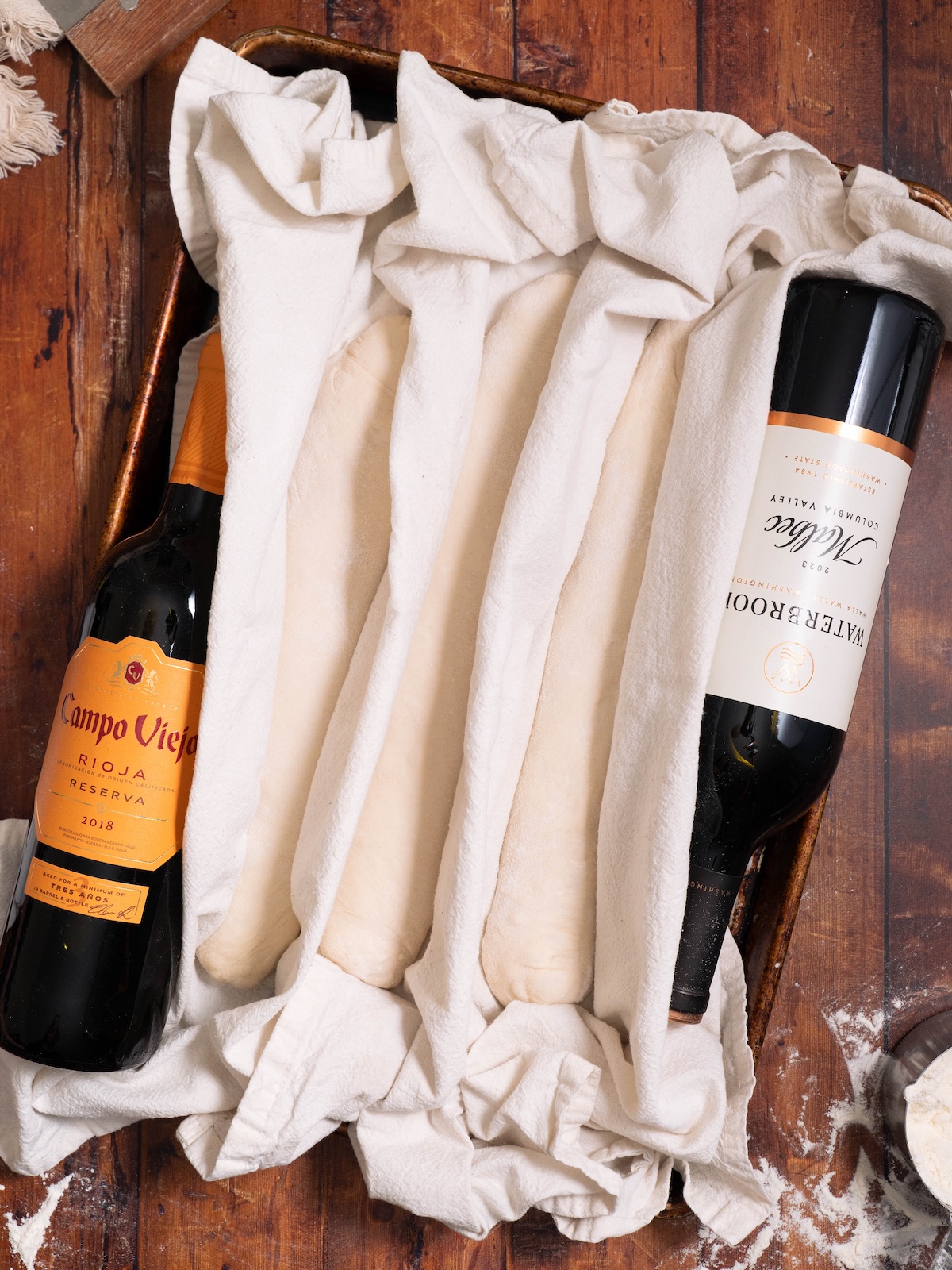
- Proof: Place shaped baguettes between flour-lined towels and proof for 1-2 hours.
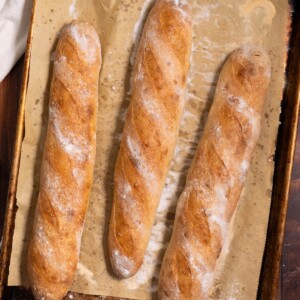
- Bake: Transfer to a lined or floured baking sheet, score, and bake at 425°F until deeply golden.
Shaping sourdough baguettes
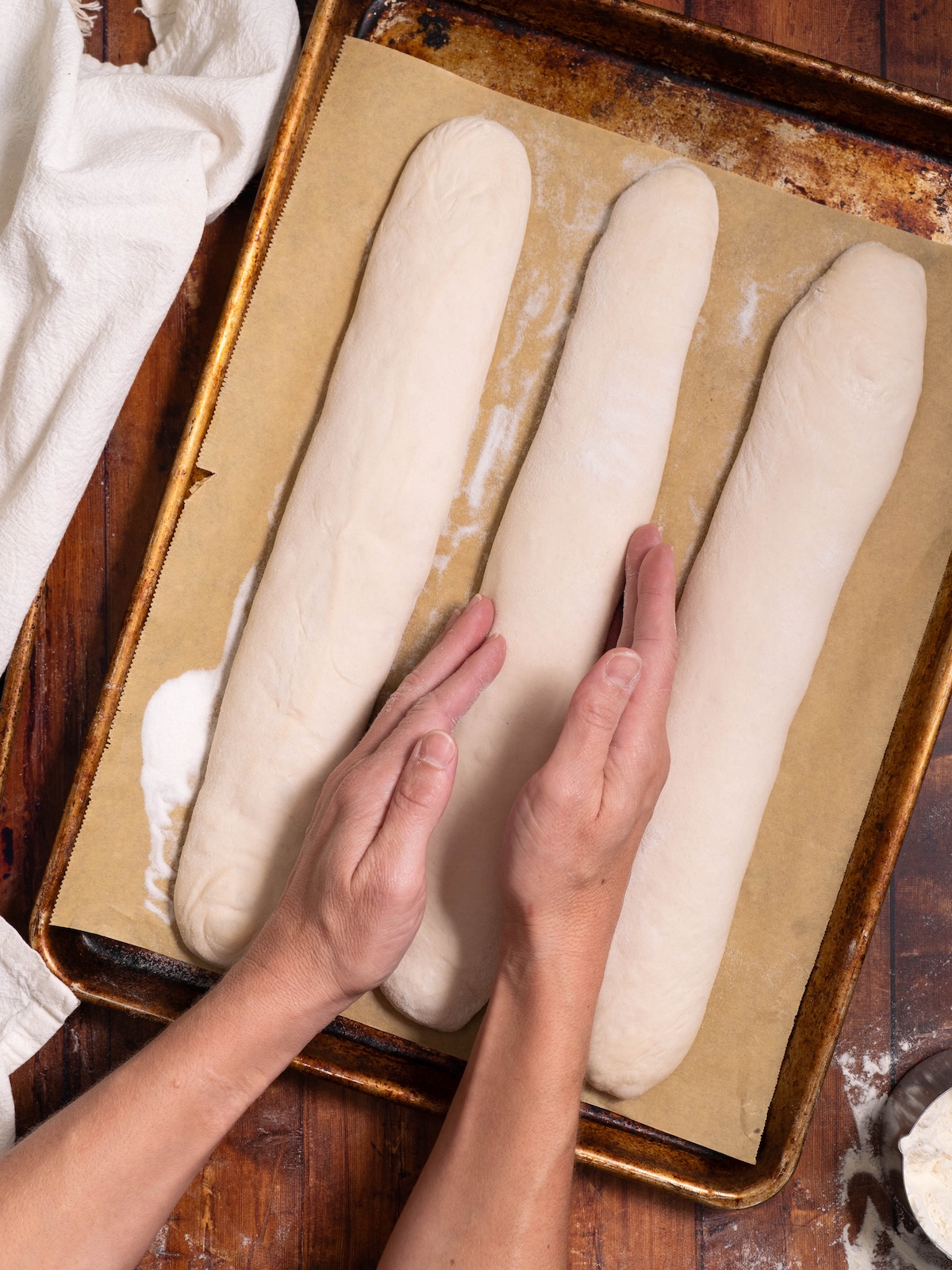
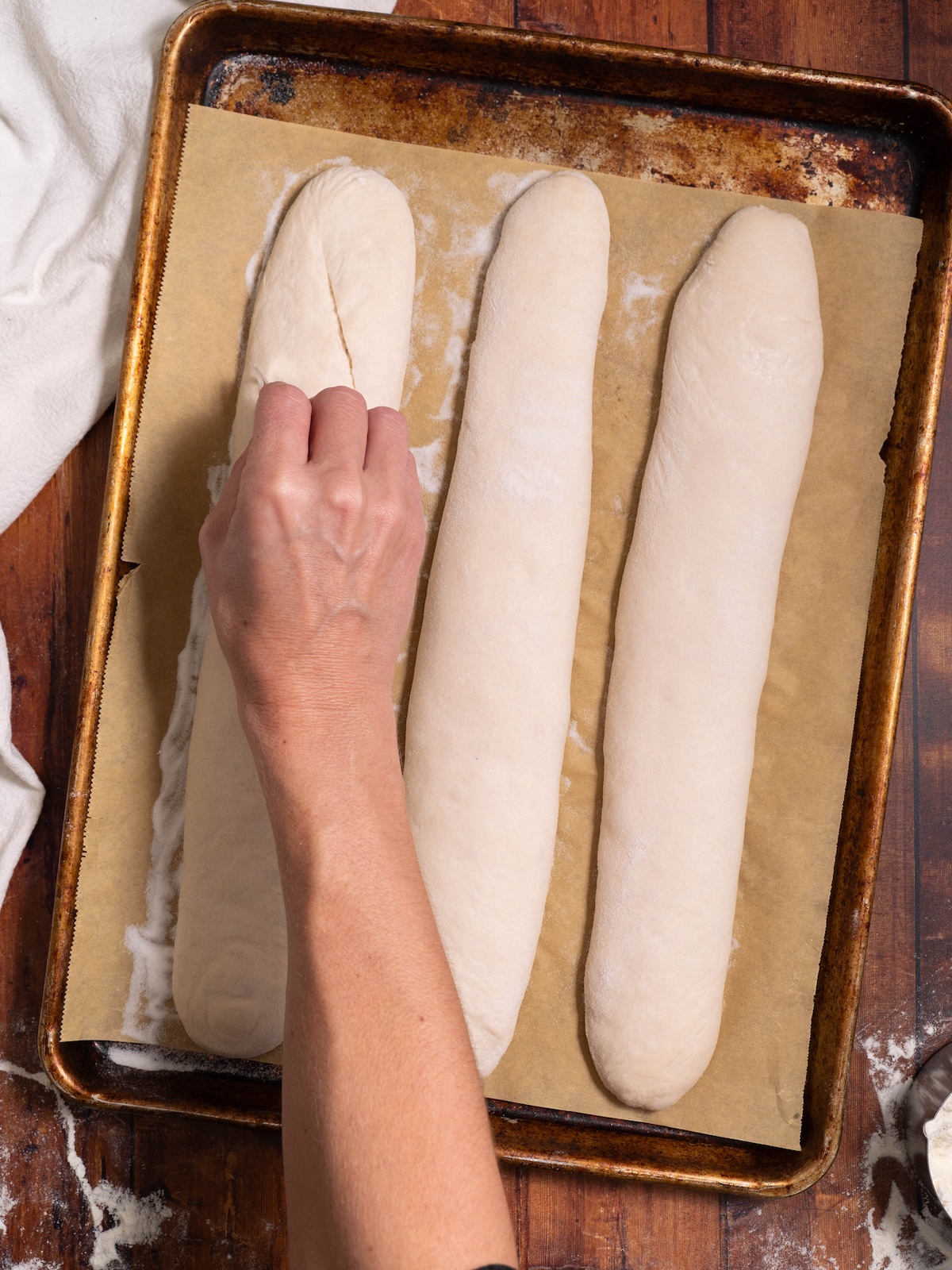
Let’s learn how to shape baguettes! Follow these step-by-step photos:
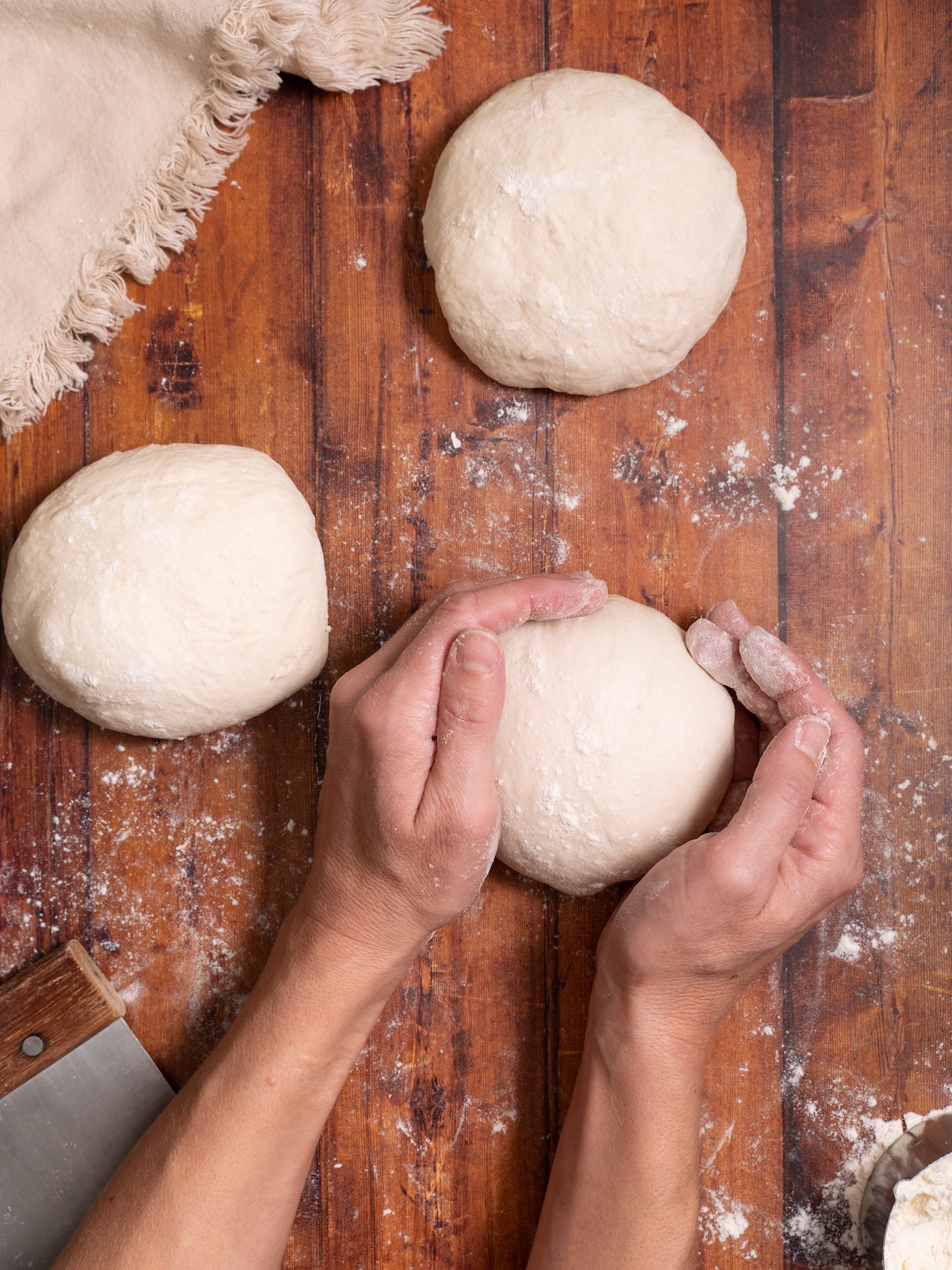
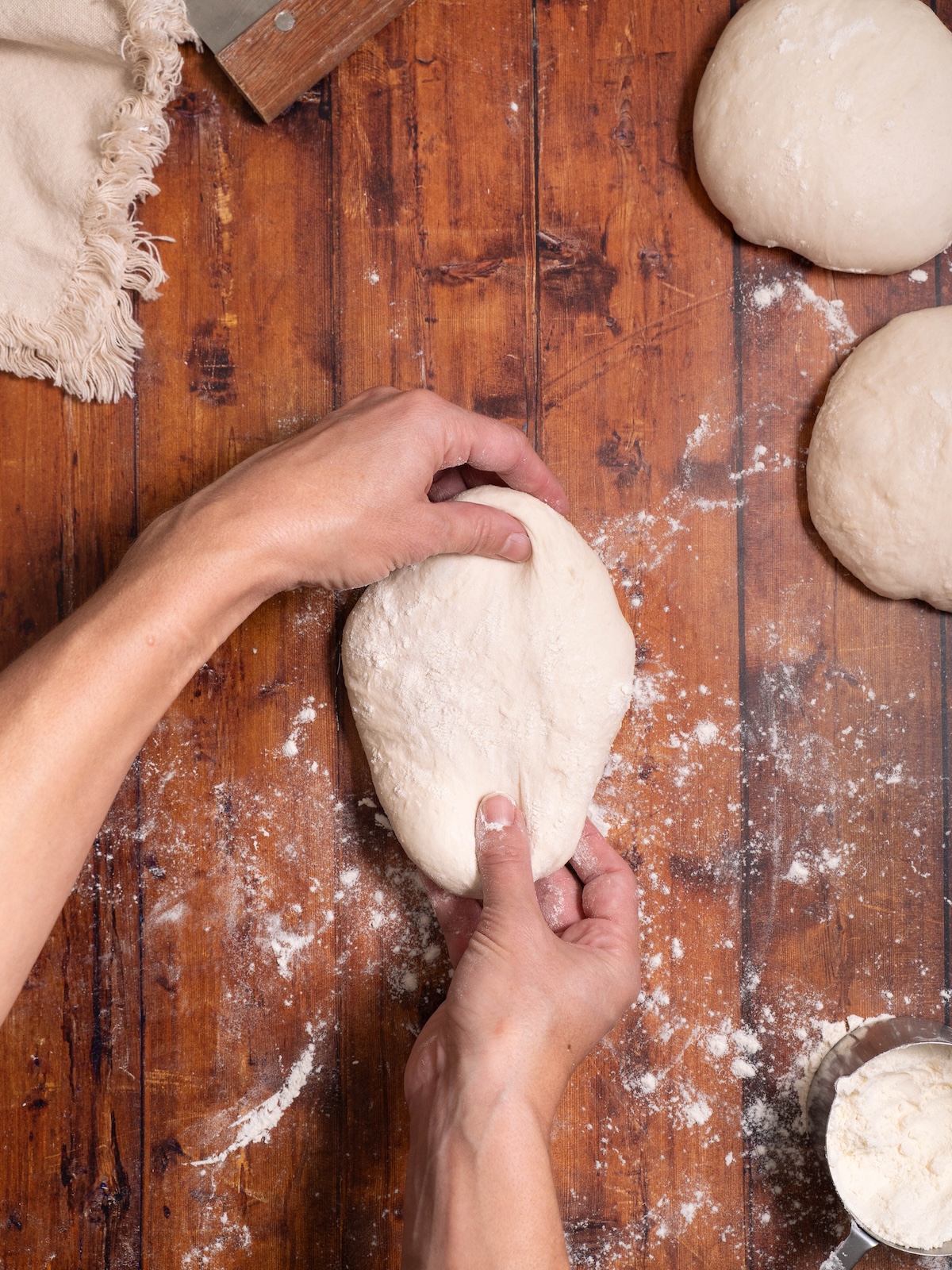
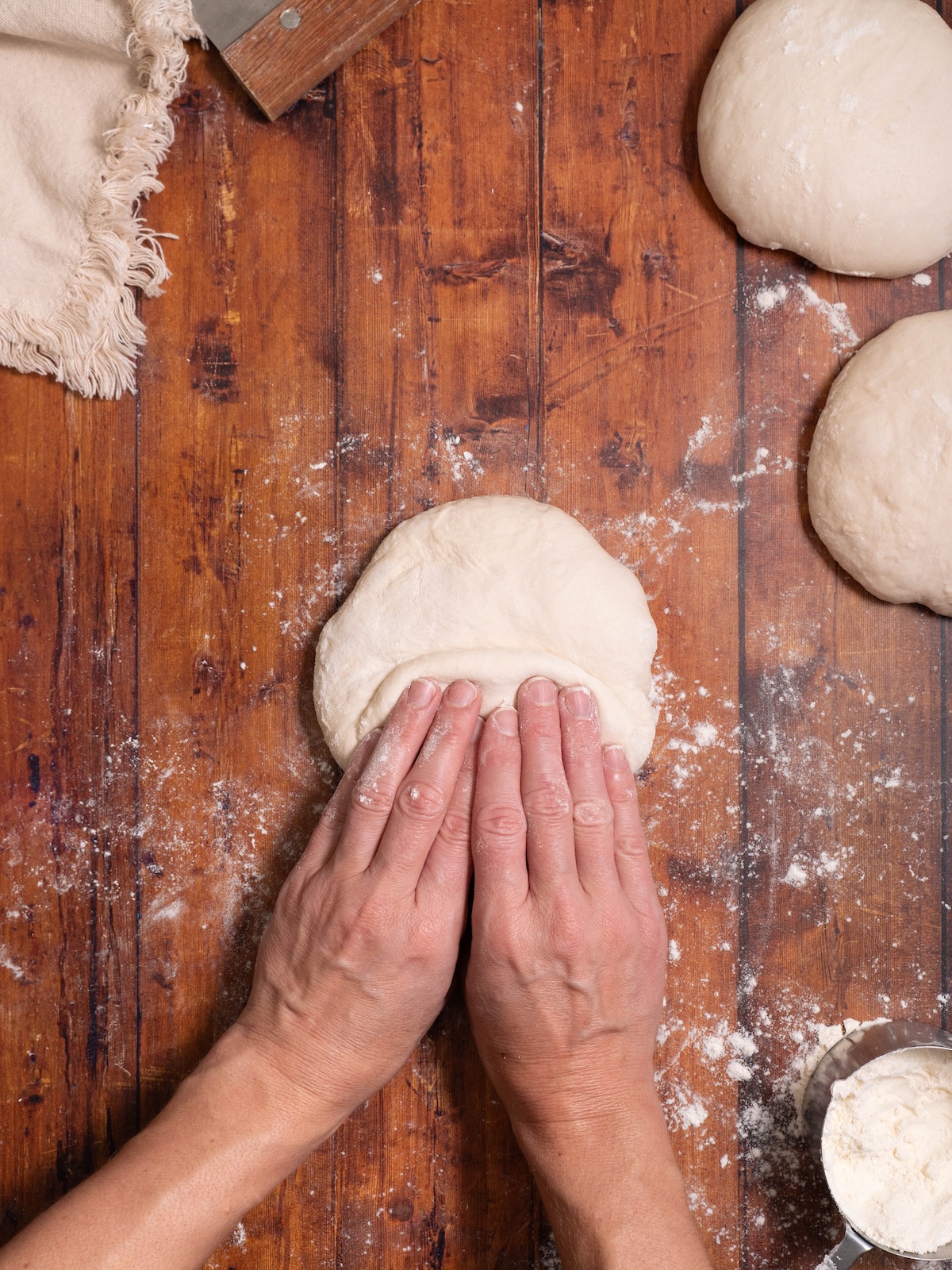
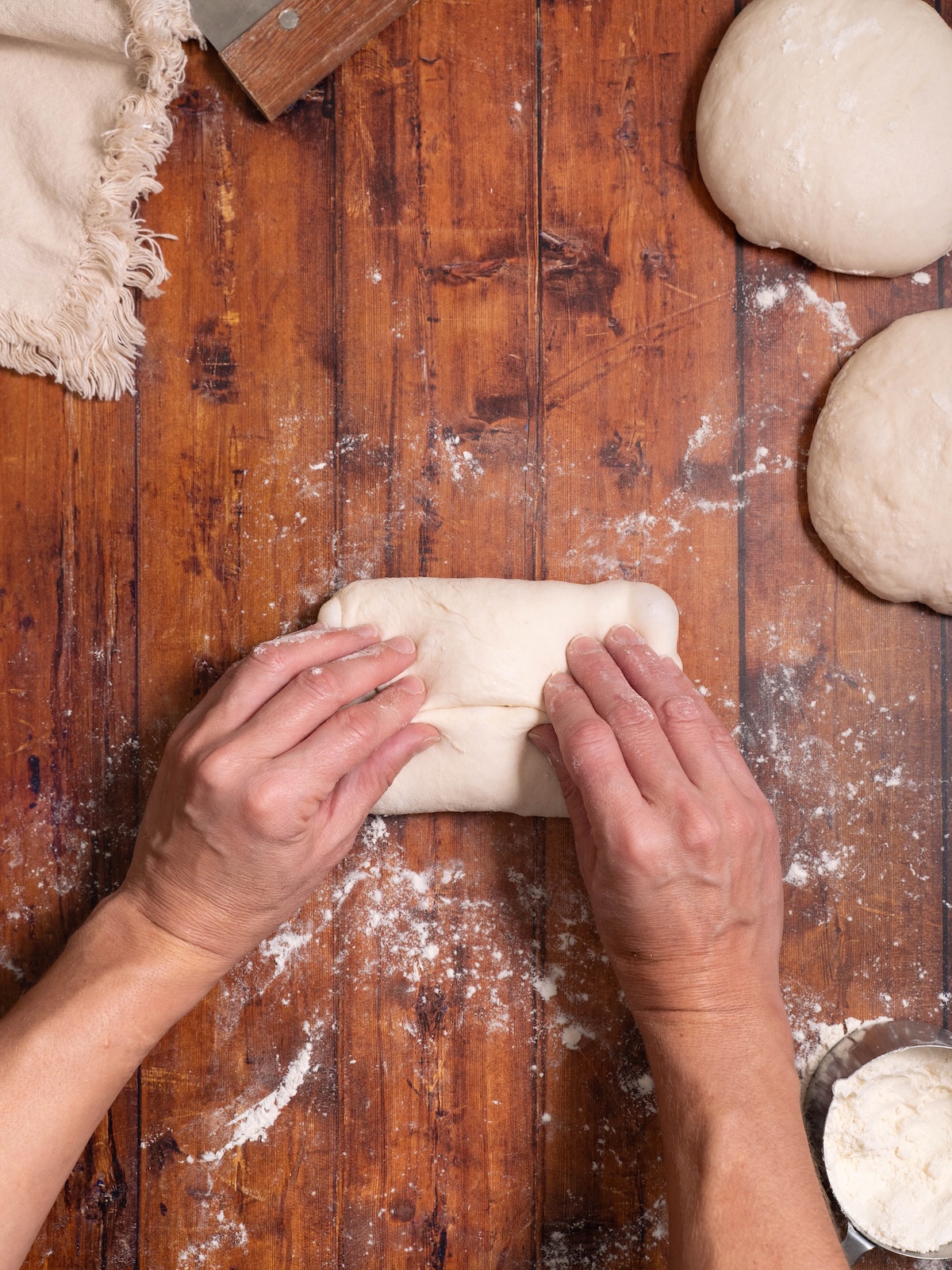
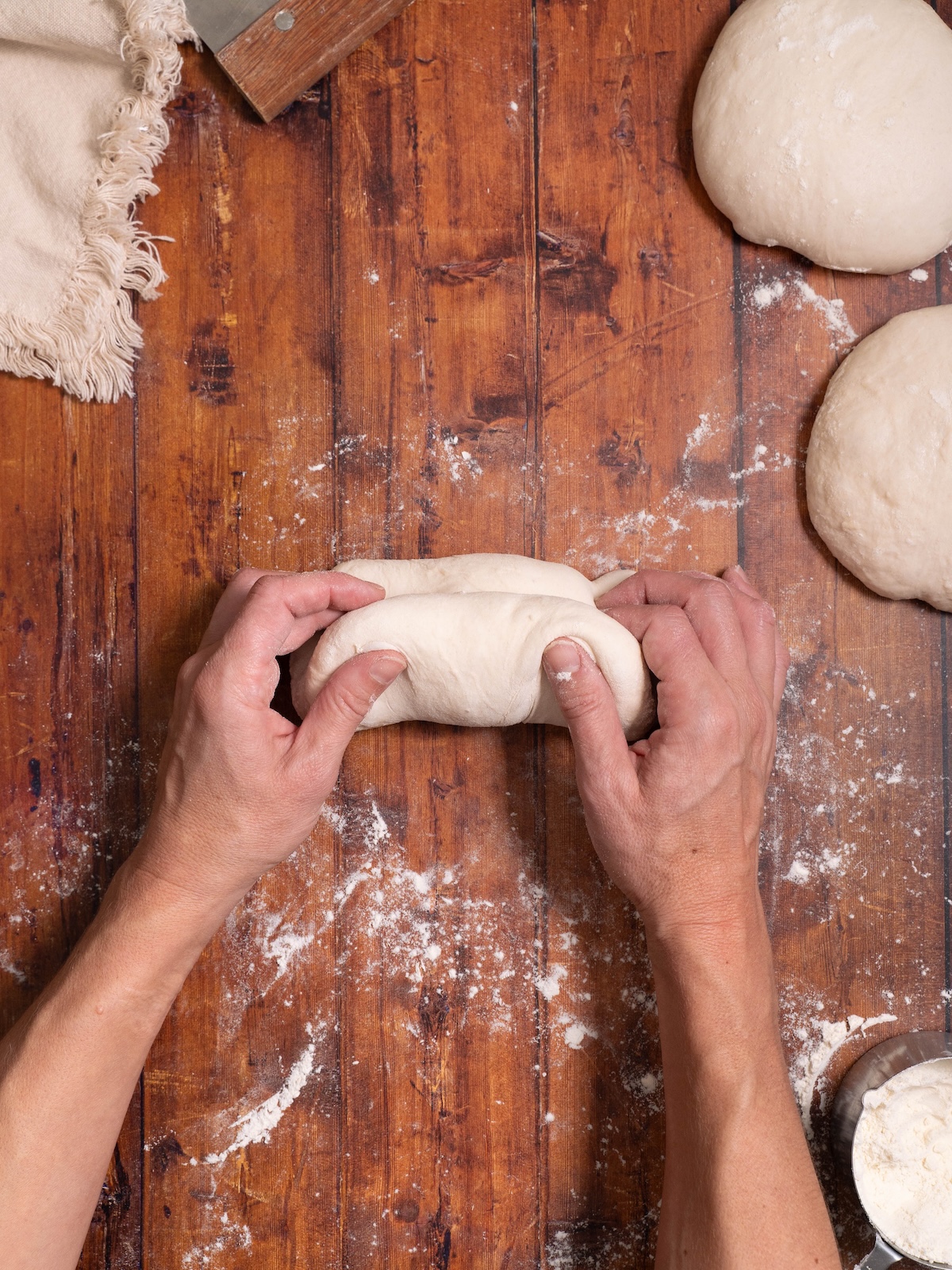
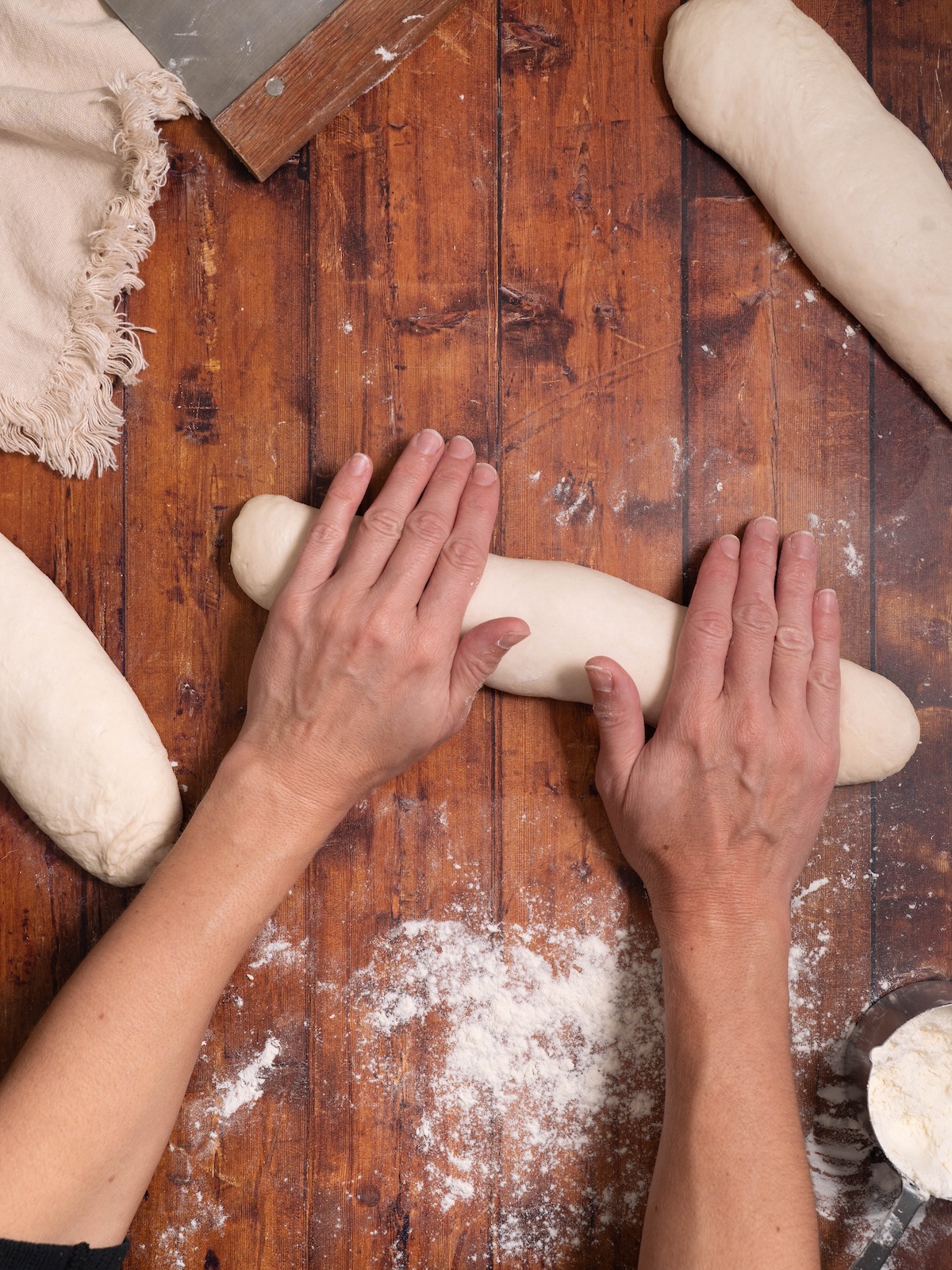
You can make your sourdough baguettes as long and thin as you like, or make them short and fat if you prefer. There’s no wrong way here! The baguettes shown in these images were rolled to about 14 inches in length and 3 inches wide.
Tip: When shaping your baguettes, make sure they’re no longer than your baking sheet.
Pro baking tips for perfect baguettes
Baguettes are all about structure, tension, and timing. Here’s how to guarantee success:
🥖 Build strong gluten structure. This is the foundation to a perfect baguette. The stretch-and-fold process strengthens the dough so it can hold its shape and trap air. By the end, it should feel smooth, elastic, and slightly springy.
⏱️ Don’t over-proof. Unlike focaccia or rustic sourdough recipes, baguette dough shouldn’t become overly puffy or fragile. It needs to stay strong enough to handle shaping, transferring, and scoring. Look for a dough that’s slightly airy but still resilient. Before baking, it should spring back when touched.
✋ Shape with intention (but gently). Shaping is where structure and tension come together. You want to create a tight outer “skin” so the baguettes hold their form, but without pressing out all the air you worked to build.
📏 Use support while proofing. Flour-lined towels (or a couche) help the baguettes hold their shape as they rise. You can prop the fabric up with books or wine bottles to create supportive folds between each loaf and on the sides.
🔪 Score with confidence. Diagonal slashes (think 45° angle) help control how the baguettes expand in the oven. Use a sharp blade and make 3-5 quick, decisive cuts down the length of each baguette.
💨 Add steam for a crisp crust. For extra crunchy crust and a super professional look, place a hot baking sheet in the oven and add ice cubes right after loading the baguettes. This creates steam, which allows the crust to expand before setting and gives you that classic crisp exterior.
🔥 Bake until deeply golden. Color = flavor. In the baking world, we refer to this lovingly as “GBD”, or “golden brown delicious”. A super golden crust means better texture and a more developed flavor. Trust me, you don’t want pale baguettes.
Serving & storing sourdough baguettes
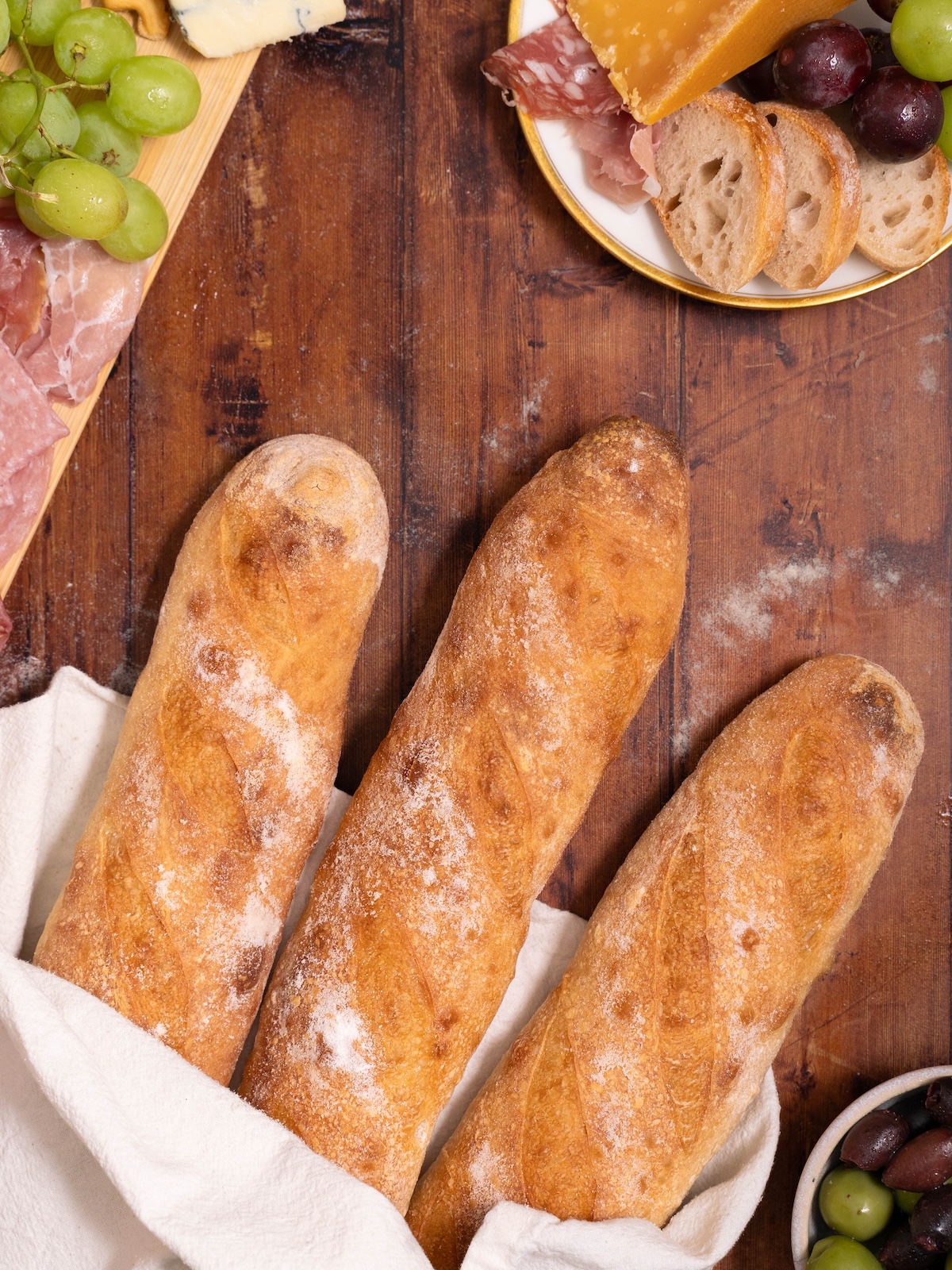
Because baguettes have a high crust-to-crumb ratio, they tend to stale more quickly than other breads, which is why they’re best enjoyed fresh on the day they’re baked. You can, however, store them for a couple days.
To store, keep them at room temperature, loosely wrapped or in a paper bag for up to 2 days. For longer storage, wrap tightly, then freeze. You can thaw at room temperature and reheat.
To refresh: Pop them in a warm oven or toaster oven for a few minutes to bring back that crisp crust and soft interior.
Serving ideas:
- Charcuterie boards: Slice into rounds and serve with cheeses, cured meats, olives, grapes, and jams
- Crostini: Toast slices and top with ricotta, herbs, roasted vegetables, or spreads
- Sandwiches: Slice horizontally for classic French-style sandwiches
- Bruschetta: Top lightly toasted slices with fresh tomatoes, basil, garlic, & olive oil
- Alongside soups & stews: Perfect for dipping and soaking up brothy dishes
- Simple & classic: Warm with salted butter or dipped in olive oil & balsamic
You can also use them as a base for just about any seasonal toppings and spreads – think thinly sliced veggies, herbs, soft cheeses, homemade hummus, or anything inspired by your garden.
FAQs
With baguettes, this usually comes down to insufficient gluten development or over-proofing. Make sure to build enough structure with stretch-and-folds and avoid letting the dough get too soft or airy before shaping or baking.
An open crumb comes from strong gluten development and proper fermentation. Make sure your starter is active and happy, and build that elasticity during the stretch-and-fold phase!
They can help, but they’re certainly not necessary. A simple flour-lined tea towel and a few heavy objects (wine bottles, cookbooks) work for supporting the shape during proofing.
Lack of steam or underbaking are the most common causes. Be sure to introduce steam at the beginning of the bake and bake through until deeply golden brown.
You can, but the overnight refrigeration improves both flavor and texture, and makes the dough easier to handle. If you want a same-day bake, you can refrigerate for a few hours and shape & bake in the evening, but expect slightly less developed flavor.
If you try this Sourdough Baguette recipe, I’d love to hear what you think! Leaving a comment and star rating below helps support my work and makes it easier for others to find and trust my recipes. Thank you!
Sourdough Baguette Recipe
Equipment
- Baking sheets
- Tea towels or couche
- Digital kitchen scale
Ingredients
- 330 grams warm water
- 10 grams salt
- 150 grams active, bubbly sourdough starter
- 500 grams bread flour
Instructions
- Mix the dough: In a large bowl, combine the 330 grams tepid water, 10 grams salt, 150 grams active sourdough starter, and 500 grams bread flour. Mix until a cohesive, shaggy dough forms. Cover the bowl and let the dough rest for 30 minutes (this rest helps hydrate the flour and begins gluten development).
- Build structure: Knead the dough briefly (about 3–5 minutes) using a stand mixer on medium-low or your hands until it begins to smooth out. Then begin a series of stretch-and-folds: every 30 minutes, gently stretch one side of the dough upward and fold it over the center. Rotate the bowl and repeat 3–4 times per round. Cover back up and let rest.Perform at least 4 sets of stretch-and-folds total, about 30 minutes apart. By the end, the dough should feel smooth, strong, and elastic. This process should take 2-3 hours total.
- Bulk ferment: After the final stretch-and-fold, let the dough rest at room temperature for about 1 hour. It should look slightly puffed and feel airy, but still have enough strength to hold its shape.
- Refrigerate overnight: Cover the dough tightly and transfer it to the refrigerator. Let it rest overnight (or up to 24 hours). This slow fermentation develops flavor and makes the dough easier to handle and shape.
- Shape: Turn the chilled dough out onto a lightly floured surface and divide it into 3 equal pieces. Gently shape each piece into a ball, pulling towards you to build some tension. Dust each dough ball with a little flour and let rest for 30 minutes, uncovered.Turn the dough balls over so the flour-dusted side is now facing your work surface. Working with one piece at a time, gently stretch the dough into an oval. Fold the bottom third up and top third down , then fold the dough in half and place seam-side down. Roll dough into a cylinder, sealing the seam as you go. Use your hands to gently roll and elongate the dough, tapering the ends slightly to form a classic baguette shape. (See shaping photos in the blog post above for guidance.)
- Proof: Place the shaped baguettes between well-floured towels (or a couche), creating folds in the fabric to support their shape. You can use wine bottles or cookbooks to support the sides, if you like. Cover and let proof at room temperature for 1–2 hours, until slightly puffy but not overly soft. If you press them gently, the dough should spring back.
- Bake: Preheat your oven to 425° F. Transfer the baguettes carefully to a parchment-lined or flour-dusted baking sheet. Using a sharp blade, score each baguette with several diagonal slashes.For steam, place a separate baking sheet on the lower rack while preheating. Add a handful of ice cubes to the hot pan right after loading the baguettes into the oven.Bake for 25–30 minutes, or until the baguettes are deeply golden brown with a crisp crust. Cool on a wire rack before slicing.
Notes
Did you try this recipe?
Be sure to leave a comment below!


I’ve been making sourdough bread for a few years, but never had luck with sourdough baguettes before. Made this yesterday, no mixer, just a lot of patience. Best bread I ever made.
That makes me so happy! Thanks for coming back to leave a review. I’m glad the baguettes turned out so well for you!