
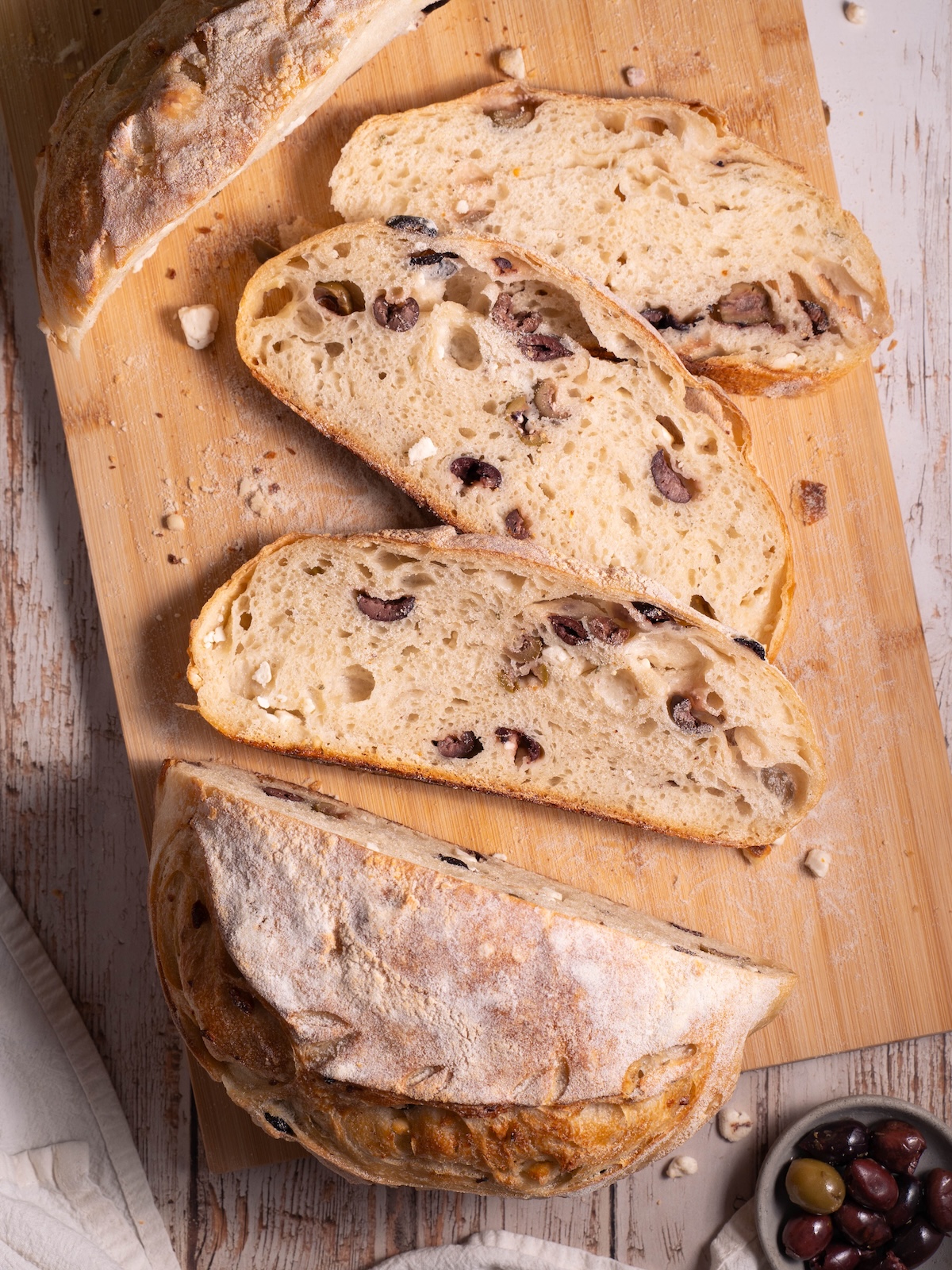
This olive feta sourdough bread is bold, savory, and absolutely loaded with flavor. It has a crackly crust, a chewy interior, and generous pockets of briny olives and tangy feta woven throughout. A little fresh rosemary and a splash of olive oil round everything out, giving this loaf unmistakable Mediterranean vibes.
This is not a timid bread. The feta brings serious punch, brightness, and a bit of saltiness, and the olives add richness and texture. If you love savory bakes and flavorful sourdough recipes, this one deserves a spot in your regular rotation.
Recipe highlights
- Bold, savory flavor from olives, feta, & fresh rosemary
- Crusty on the outside, chewy on the inside for that classic sourdough texture
- No kneading required, just a few simple stretch-and-folds
- Perfect for meals or snacking, especially with soup, salad, or spreads
- Easily adaptable if you want to mix up the add-ins
Recipe overview
⏱️ Prep: ~30 mins (active) • Bulk ferment: 3–5 hrs • Cold proof: Overnight
🔥 Bake: 45-50 mins
🍞 Yield: 1 loaf
💪 Skill level: Intermediate
😋 Flavor profile: Savory, briny, salty, bright, herby. Pairs well with: Olive oil, hummus, tomato slices, roasted vegetables, Mediterranean-inspired soups & salads, butter.
👉 If you enjoy savory sourdough recipes, check out my Roasted Garlic Parmesan Sourdough, Rosemary Sea Salt Sourdough, or Jalapeño Cheddar Sourdough.
How to make olive & feta sourdough bread
Find the full ingredients list and detailed recipe instructions in the recipe card at the bottom of this post. Here’s a quick step-by-step overview of how to make this recipe:
- Mix the dough: Combine flour, water, sourdough starter, salt, minced rosemary, and olive oil until a shaggy dough forms. Let rest for 20–30 minutes.
- Stretch & folds: Perform 4 rounds of stretch & folds, spaced 30-45 minutes apart.
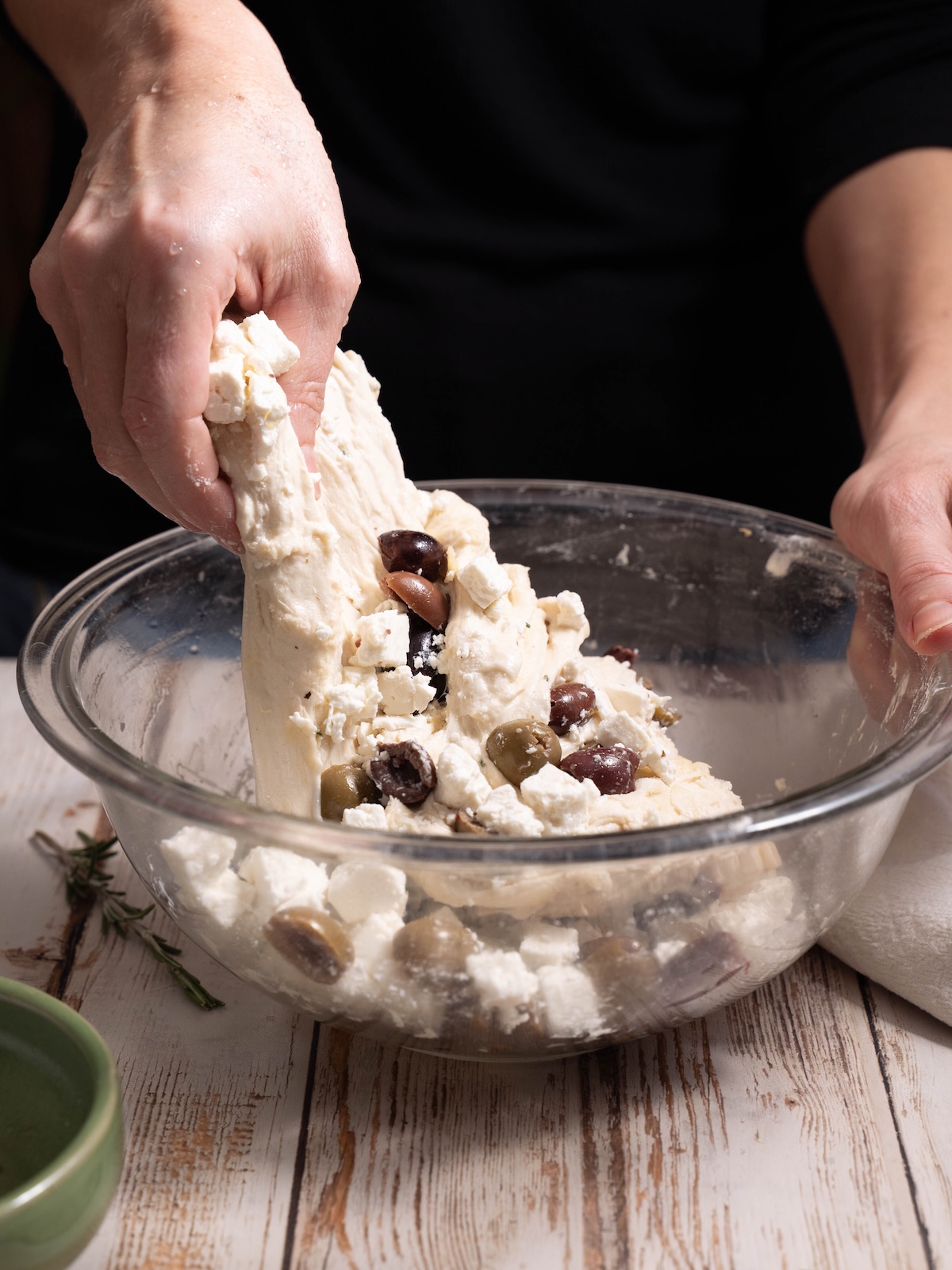
- Laminate the add-ins: During the second round of stretches, gently fold in the olives and feta.
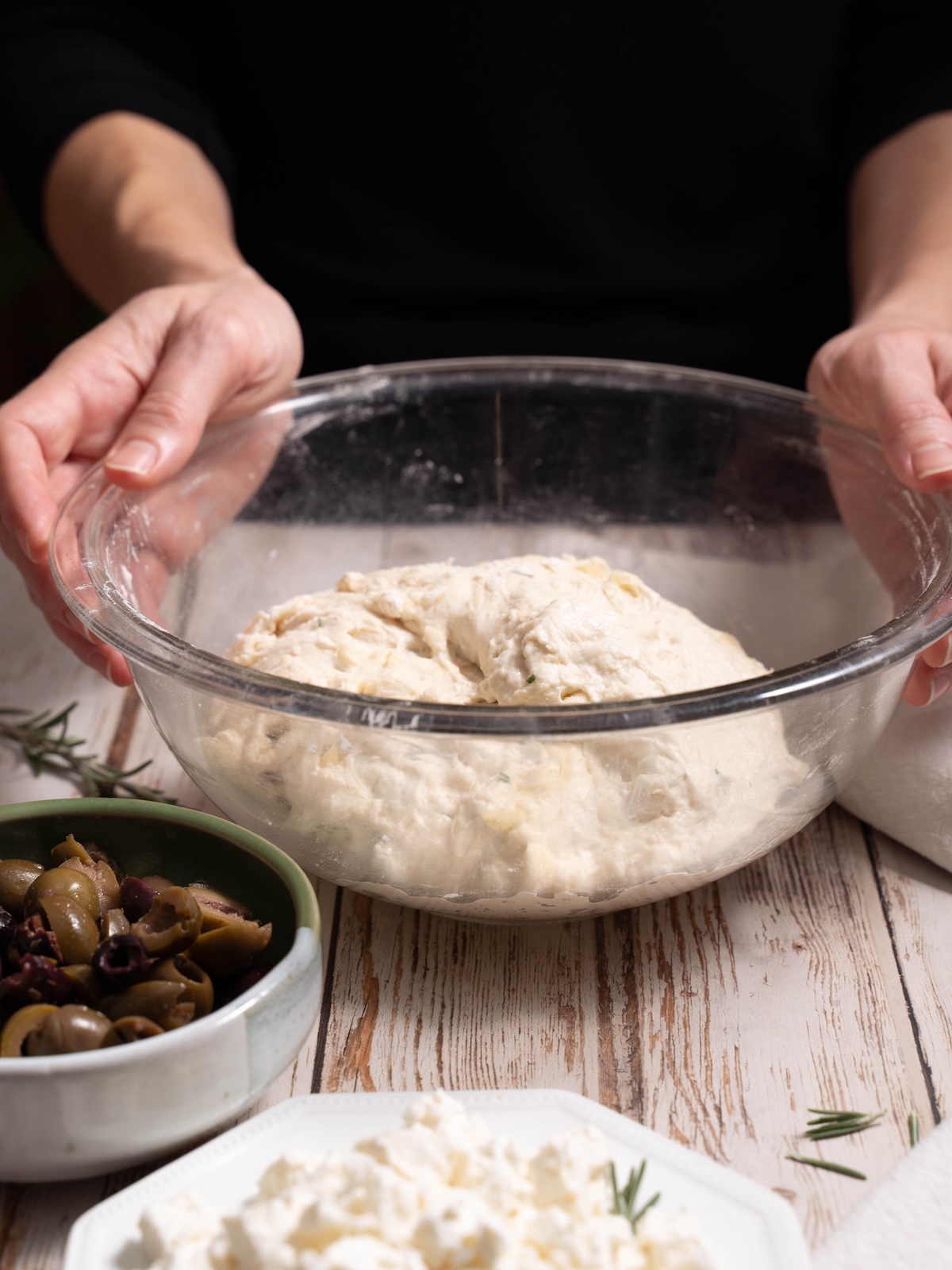
- Bulk fermentation: Let the dough ferment until puffy, aerated, and about 30–50% larger.
- Shape & cold ferment: Shape the loaf, place it seam-side up in a floured banneton, and refrigerate overnight.
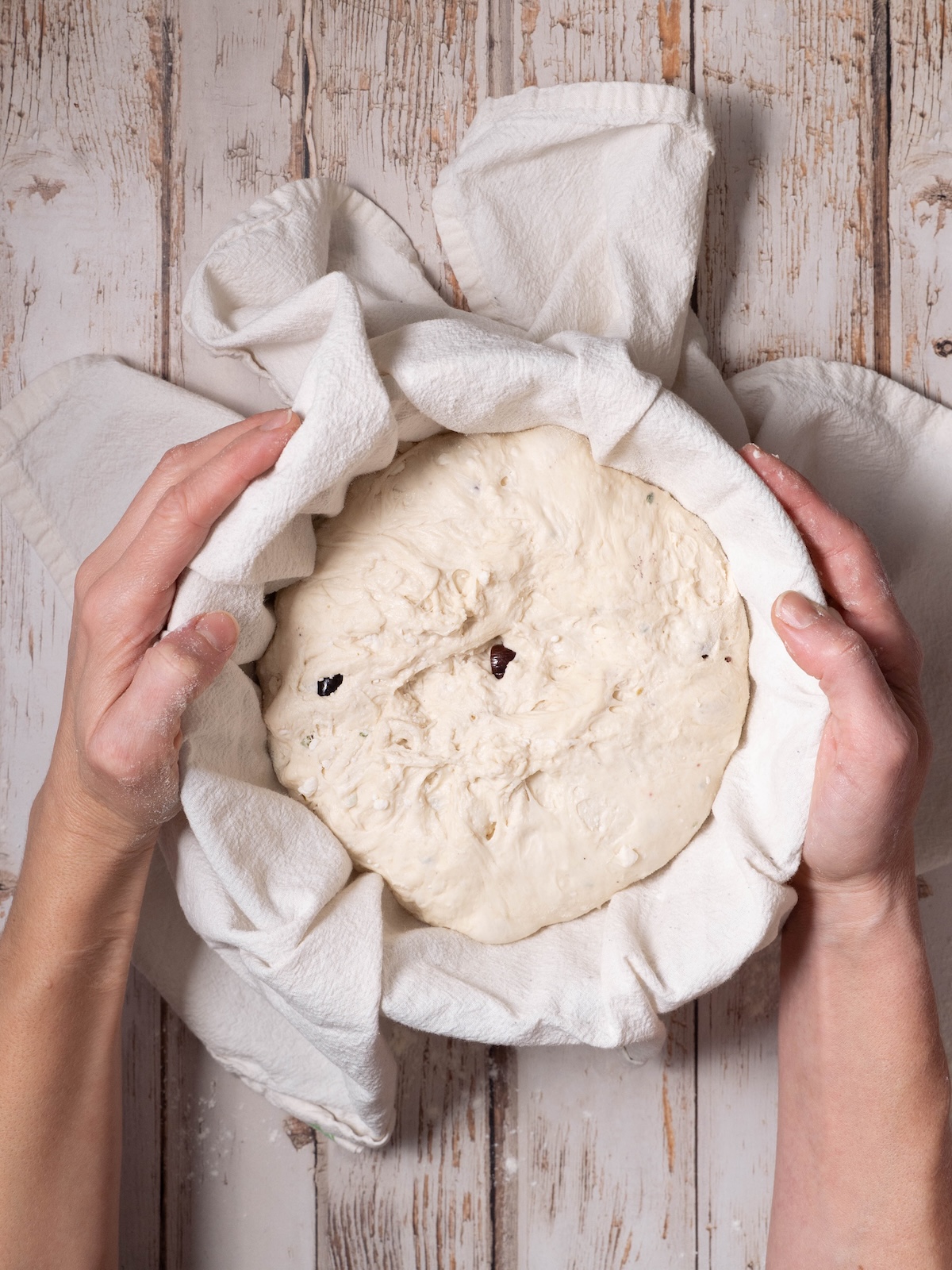
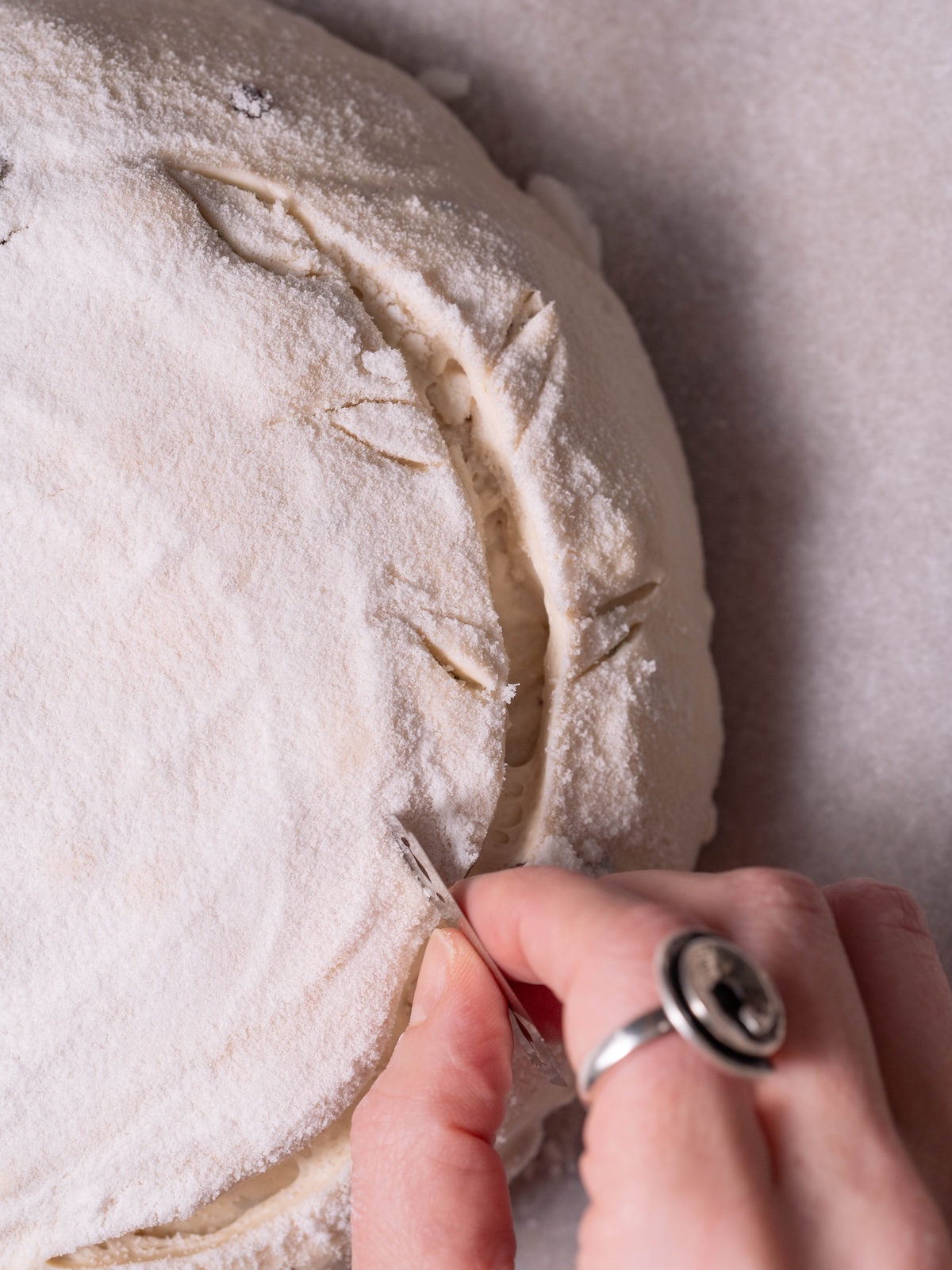
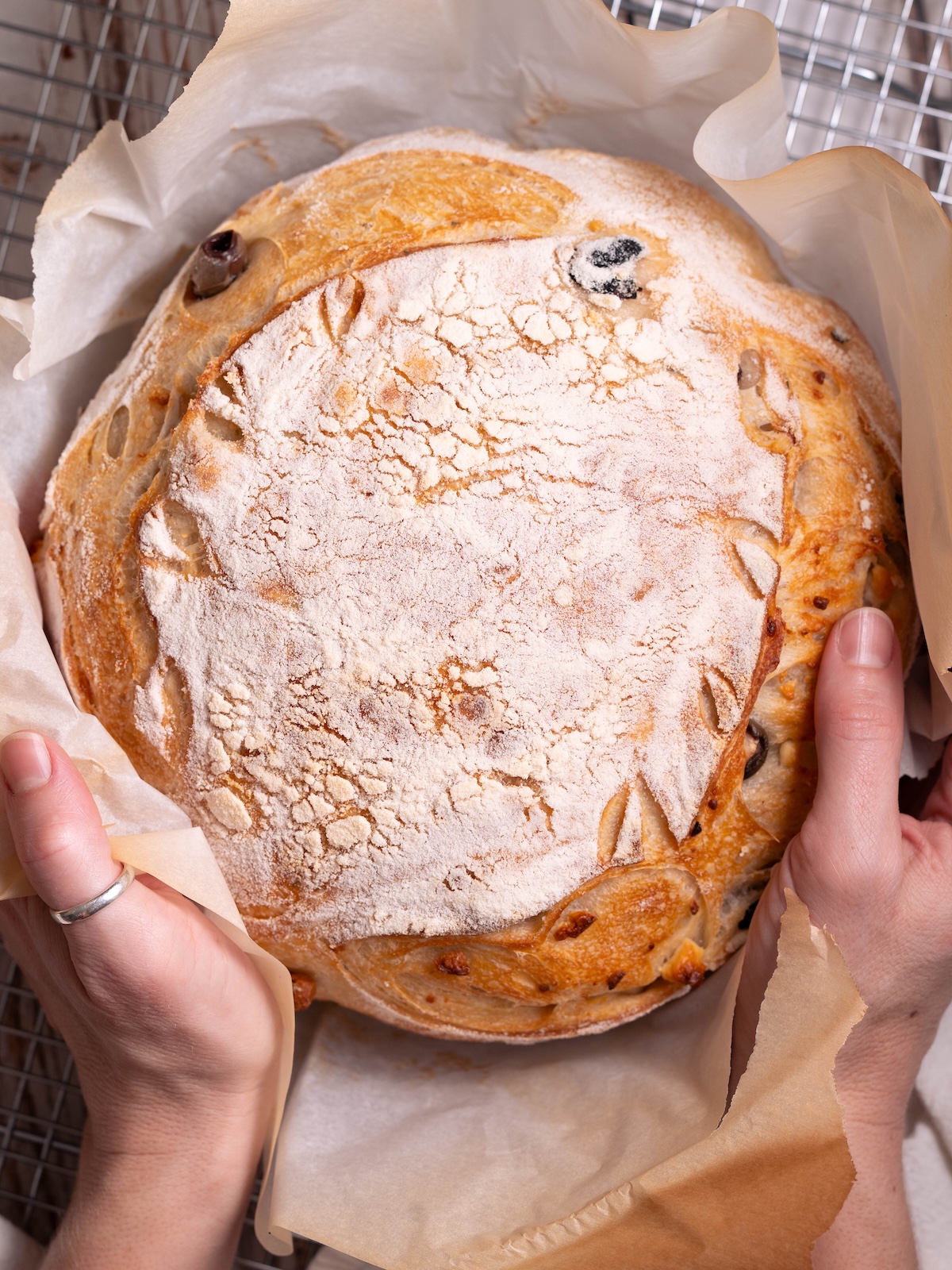
- Bake: Score and bake straight from the fridge in a preheated Dutch oven until deeply golden and baked through.
When to add olives to sourdough
Adding olives to sourdough too early can interfere with gluten development. It’s best to fold them into dough that has been developed a bit (a process called lamination in the baking world).
I like to fold in the olives and feta during the second round of stretches & folds so that the bread has already developed a bit of structure, but you still have a few rounds of stretching and folding left to help distribute the ingredients more evenly.
Pro baker’s tips
Master a basic sourdough bread recipe first. Laminated sourdoughs aren’t difficult to make, but it helps to have a good grasp on the sourdough process before you try them.
Use an active, bubbly starter. Feed your starter 4-12 hours before mixing your dough. Most sourdough bakers make their dough when their starter hits “peak rise”. You can find more info in my post about making your own sourdough starter.
Adjust the amount of feta to your preference. This sourdough loaf is intentionally bold. The flavor of the feta fully permeates the bread, so feel free to scale the cheese back slightly if you don’t want its flavor to be as strong.
Drain the olives well before adding them to the dough to prevent excess moisture.
Variations & substitutions
Make this sourdough olive bread your own! Here’s a few ideas on tweaking this recipe.
Choose your olives: Use kalamata, castelvetrano, black olives, or a mix of your favorite olives. For more flavor, you could even use an herb marinated olive blend. I like to use a combination of kalamata & castelvetrano. It makes for a bit of variation in size and flavor, and it looks pretty!
Choose your herbs: Try fresh thyme or oregano instead of rosemary. Or skip the herbs if you want a simpler flavor.
Scale down the cheese: Use half the amount of feta if you want a milder flavored loaf. You could also skip the cheese entirely if you want a classic olive loaf.
Add lemon zest: For extra brightness and contrast, fresh lemon zest is a lovely addition.
Skip the olive oil: Feel free to leave out the olive oil by replacing it with additional water.
Serving & storing olive feta sourdough
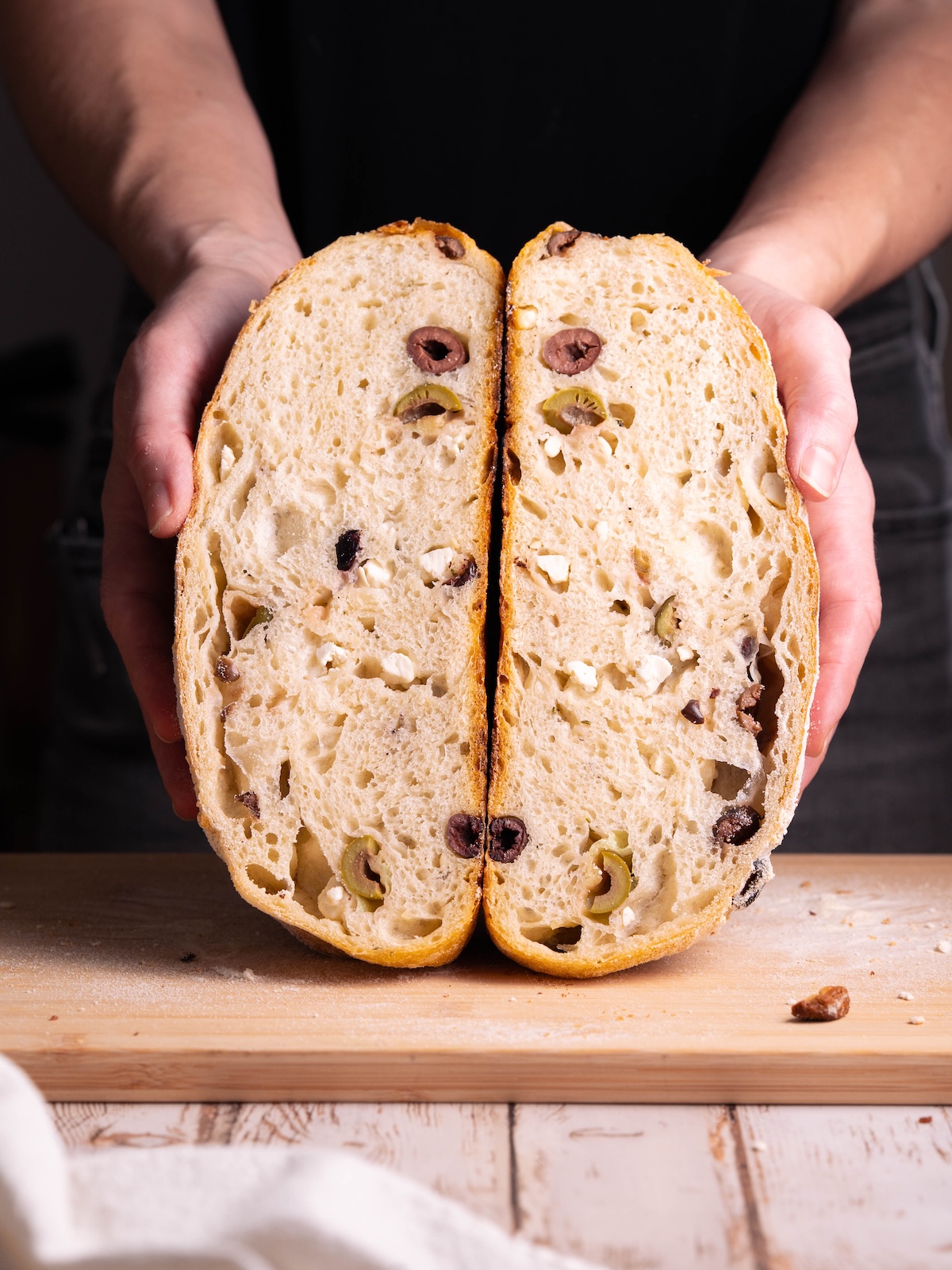
This savory sourdough bread pairs best with similar Greek and/or Mediterranean flavors. Try it:
- Slathered with hummus or baba ganoush
- Dipped into soups like Lemon White Bean Soup or Greek Lemon Chicken Soup
- Alongside a Mediterranean-inspired salad
- Served warm with olive oil and balsamic vinegar
- Toasted and topped with fresh summer tomato and/or cucumber slices
Store the bread at room temperature, loosely wrapped, for up to 3 days. Because of the moisture from the cheese and olives, this sourdough may go bad a little bit quicker than other loaves.
For longer storage, it freezes well. To freeze, wrap individual slices tightly with plastic wrap, then place them in a sealed freezer bag and store for up to 3 months. Thaw at room temperature, then toast or warm gently.
What to bake next
- Sourdough Bacon & Cheddar Scones
- Cheesy Sourdough Bread
- Jalapeño Cheddar Sourdough
- Sourdough Caprese Focaccia
- Garlic & Herb Sourdough
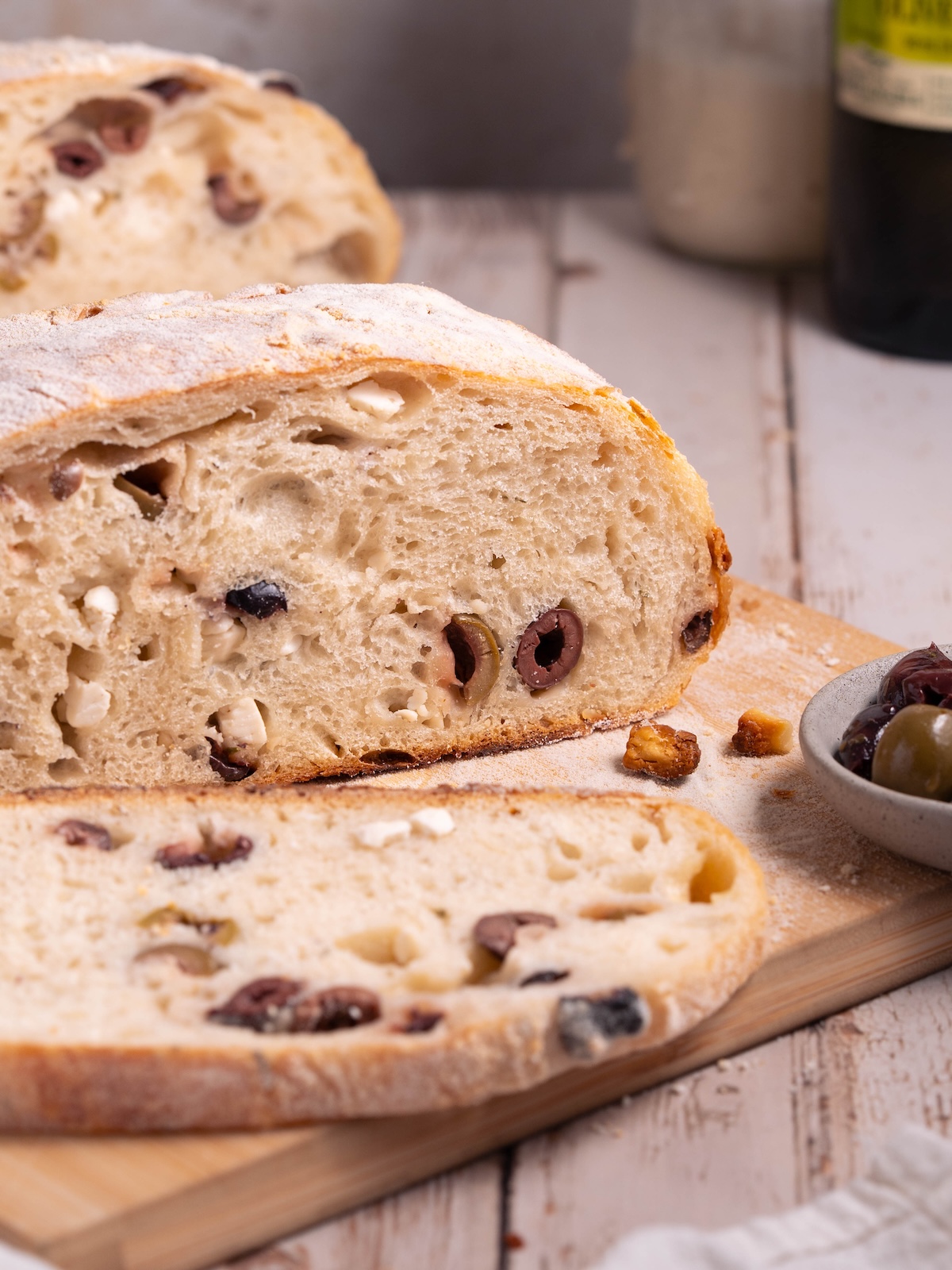
If you make this Olive Feta Sourdough Bread, please leave a comment & star rating.
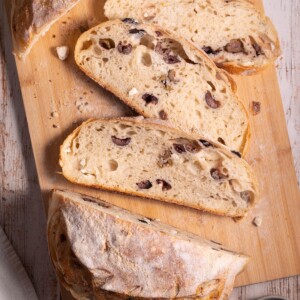
Olive Feta Sourdough
Equipment
- Dutch oven with lid (optional)
Ingredients
- 150 grams active sourdough starter
- 310 grams water
- 20 grams olive oil
- 10 grams salt
- 2 teaspoons (1 ½ grams) fresh rosemary, chopped fine
- 500 grams bread flour
- 120 grams (1 cup/4.25 oz) pitted olives, halved
- 125 grams (4 oz) feta, chopped small or crumbled
Instructions
- Mix the dough: In a large mixing bowl, combine 150 g sourdough starter, 310 g water, and 20 g olive oil. Stir to disperse the starter. Add 500 grams bread flour, 10 grams salt, and 2 tsp finely chopped fresh rosemary. Mix with your hands or a spatula until no dry flour remains and a shaggy, rough dough forms.Cover and let rest for 20–30 minutes.
- Perform the stretch and folds (round 1): With slightly damp hands, grab one side of the dough, gently stretch it upward, and fold it over itself. Rotate the bowl and repeat on all four sides. Cover and rest for 30–45 minutes.
- Laminate the olives and feta: Scatter 120 g olives and 125 g feta evenly over the surface of the dough. Fold the dough over itself several times to fully enclose the add-ins. Cover the dough and rest for another 30–45 minutes.
- Continue stretch and folds: Perform two more rounds of stretch and folds, spaced 30–45 minutes apart, just like the first round. By the final round, the dough should feel smoother, stronger, and more elastic and the olives and feta should be well distributed.
- Bulk fermentation: Cover the dough and let it ferment at room temperature until it becomes puffy, aerated, and increased in volume by about 30–50%. This usually takes 3–6 hours total from the time of mixing, depending on the temperature of your kitchen. The dough should feel lighter and show bubbles along the sides and surface.
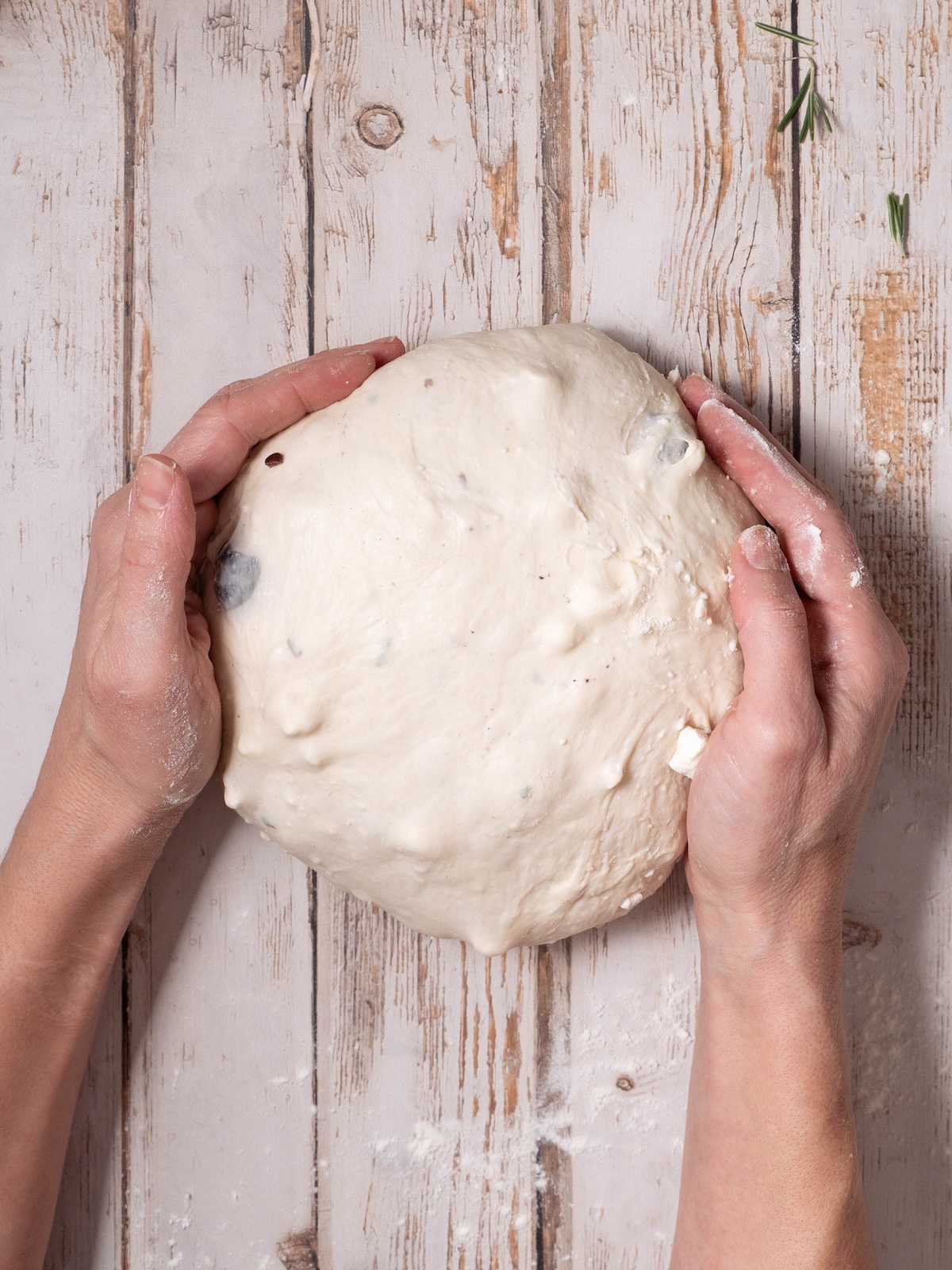
- Shape the dough: Turn the dough out onto a lightly floured surface. Gently shape it into a round or oval by folding the edges toward the center, then flip it over and use your hands or a bench scraper to create tension across the surface.
- Cold ferment overnight: Place the shaped dough seam-side up in a well-floured banneton or bowl lined with a floured towel. Cover and refrigerate overnight.
- Preheat the oven: The next day, when you're ready to bake, place a Dutch oven with lid into the oven and preheat to 450° F.
- Score and bake: Remove the dough from the fridge and gently invert it onto parchment paper. Score the top with a sharp blade or bread lame. Carefully transfer the dough into the preheated Dutch oven, cover with the lid, and bake for 20 minutes covered, then remove the lid and continue baking for another 18-25 minutes uncovered. The crust should be golden brown and the internal temperature of the bread should be 200 – 210° F.
- Cool completely before slicing: Transfer the bread to a wire rack and let cool for at least 1 hour before slicing. This allows the crumb to fully set and prevents a gummy texture.
Did you try this recipe?
Be sure to leave a comment below!

Best bread combo!
Yes, it’s super savory. Happy you like the flavors of this bread!